

Microsoft To Sell Augmented Reality Goggles To Army
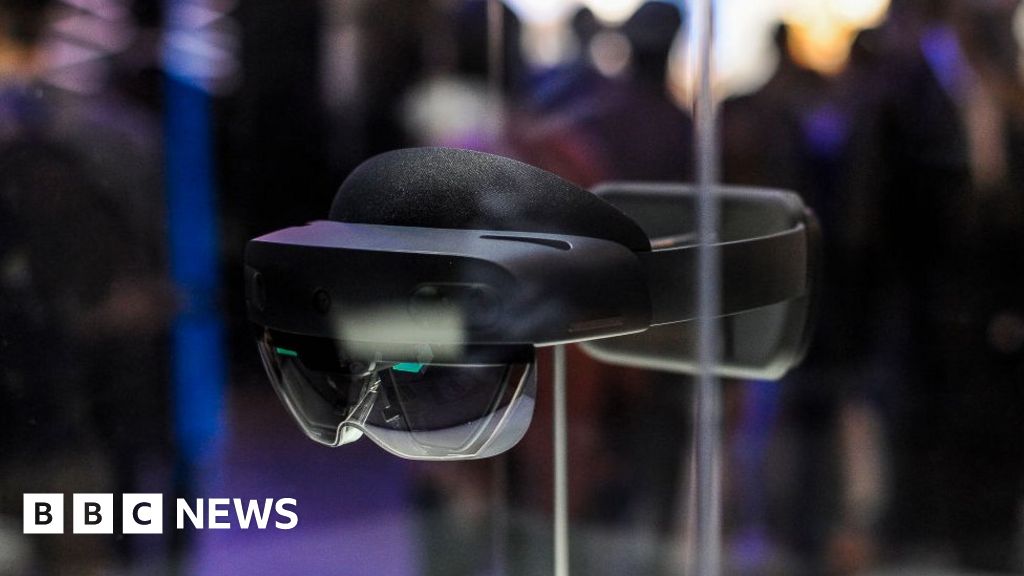
image copyrightGetty Images
US tech giant Microsoft is to sell augmented reality headsets to the US army in a bumper deal worth up to $21.9bn (£15.9bn) over 10 years.
The headsets are based on its HoloLens product, which allows users to see holograms laid over their actual environment.
The contract is for more than 120,000 headsets, which will be manufactured in the US.
Microsoft shares surged 3% after the announcement was made on Wednesday.
Augmented reality
Augmented reality differs from virtual reality, in that it adds graphics to the user's existing field of view instead of replacing it with an entirely new environment.
As a result, users can see "heads-up displays" or holographs, which can add more information to what they already see.
HoloLens is commercially available for $3,500 per headset, with Microsoft selling it primarily to businesses, who often pair it with customised software applications.
Architecture firms, hospitals, universities, car manufacturers and US space agency Nasa are among the technology's users.
Over the past two years, Microsoft has worked with the US Army on the prototyping phase of what is called the Integrated Visual Augmentation System (IVAS), which is a military-grade version of the Hololens.
The company said that the Army had moved into the production phase of the project.
In a blog post, Microsoft said the headsets "will keep soldiers safer and make them more effective".
"The program delivers enhanced situational awareness, enabling information sharing and decision-making in a variety of scenarios," the post said.
After Microsoft announced the $480m IVAS contract in 2018, at least 94 workers petitioned the company to cancel the deal and stop developing "any and all weapons technologies".
From Chip War To Cloud War: The Next Frontier In Global Tech Competition
The global chip war, characterized by intense competition among nations and corporations for supremacy in semiconductor ... Read more
The High Stakes Of Tech Regulation: Security Risks And Market Dynamics
The influence of tech giants in the global economy continues to grow, raising crucial questions about how to balance sec... Read more
The Tyranny Of Instagram Interiors: Why It's Time To Break Free From Algorithm-Driven Aesthetics
Instagram has become a dominant force in shaping interior design trends, offering a seemingly endless stream of inspirat... Read more
The Data Crunch In AI: Strategies For Sustainability
Exploring solutions to the imminent exhaustion of internet data for AI training.As the artificial intelligence (AI) indu... Read more
Google Abandons Four-Year Effort To Remove Cookies From Chrome Browser
After four years of dedicated effort, Google has decided to abandon its plan to remove third-party cookies from its Chro... Read more
LinkedIn Embraces AI And Gamification To Drive User Engagement And Revenue
In an effort to tackle slowing revenue growth and enhance user engagement, LinkedIn is turning to artificial intelligenc... Read more