

Microsoft And Meta Promise Facehugger PCs Piping Cloud Desktops Into VR Headsets
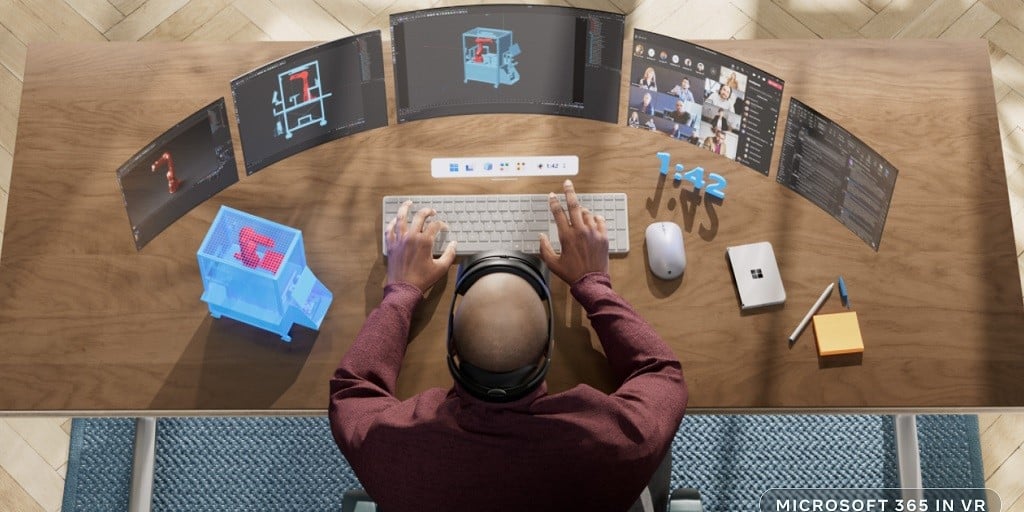
Poll Microsoft and Meta have teamed up in the metaverse, to bring the software giant's OS and productivity tools into The Social Network's Meta Quest virtual reality hardware.
The two internet giants today promised that in the future, Windows 365 will become available on Meta Quest devices, offering the chance to "stream a Windows Cloud PC including your personalized apps, content and settings."
That Cloud PC will be in your face – virtually and in a way literally – but how users will drive the machine was not explained other than with an illustration of a chap sitting in front of a mouse and keyboard. It's mysterious, given Meta's list of accessories does not include a keyboard.
Meta does offer controllers that can do the job of a mouse, and today announced a headset – the Quest Pro – that will include an eye tracker capable of interpreting facial expressions so they can be reproduced on your avatars in virtual spaces. But the tech specs for the device don't mention Bluetooth. The Qualcomm Snapdragon-powered device costs $1499, a sum that comfortably covers the cost of a conventional PC.
Microsoft's depiction of a Windows 365 Cloud PC in VR - Click to enlarge
Meta boss Mark Zuckerberg said the Quest Pro matters because avatars that reflect your face make VR even more suitable for real-world collaboration. But he also said: "The feeling of presence you get from VR, even today, can be better than video chat."
So just why virtualizing your face makes sense is not entirely clear.
Neither Zuckerberg nor Microsoft CEO Satya Nadella – who appeared together in (irony alert) a split screen video – explained how one might use Windows or Office 365 in a headset.
Zuckerberg said: "With Microsoft 365 you will be able to interact with content from your favorite productivity apps."
Nadella enthused: "With Windows 365 you will have a chance to securely stream the Windows experience to the VR device with the full power of Windows and Windows applications."
Both CEOs spruiked using Microsoft Teams in VR – again without much detail beyond assertions that it will allow more powerful interactions than are possible when using other forms of collaborationware.
(Except maybe Zoom, given Meta has also teamed with the vid meeting giant and even announced that avatars in that environment will get arms and legs.)
If you decide this stuff makes sense in your organization, Microsoft promised it will support Meta Quest devices with Azure Active Directory and its Intune endpoint manager. Zuck chimed in with teasers of a VR for business subscription service from Meta, and news that Accenture has signed up "to help companies use VR to transform the way they engage employees, interact with customers, or create products and services in the metaverse."
Will yours be one of those companies? Let us know in the poll below. ®
From Chip War To Cloud War: The Next Frontier In Global Tech Competition
The global chip war, characterized by intense competition among nations and corporations for supremacy in semiconductor ... Read more
The High Stakes Of Tech Regulation: Security Risks And Market Dynamics
The influence of tech giants in the global economy continues to grow, raising crucial questions about how to balance sec... Read more
The Tyranny Of Instagram Interiors: Why It's Time To Break Free From Algorithm-Driven Aesthetics
Instagram has become a dominant force in shaping interior design trends, offering a seemingly endless stream of inspirat... Read more
The Data Crunch In AI: Strategies For Sustainability
Exploring solutions to the imminent exhaustion of internet data for AI training.As the artificial intelligence (AI) indu... Read more
Google Abandons Four-Year Effort To Remove Cookies From Chrome Browser
After four years of dedicated effort, Google has decided to abandon its plan to remove third-party cookies from its Chro... Read more
LinkedIn Embraces AI And Gamification To Drive User Engagement And Revenue
In an effort to tackle slowing revenue growth and enhance user engagement, LinkedIn is turning to artificial intelligenc... Read more