

Micron Pledges US Memory Expansion After CHIPS Act Passes
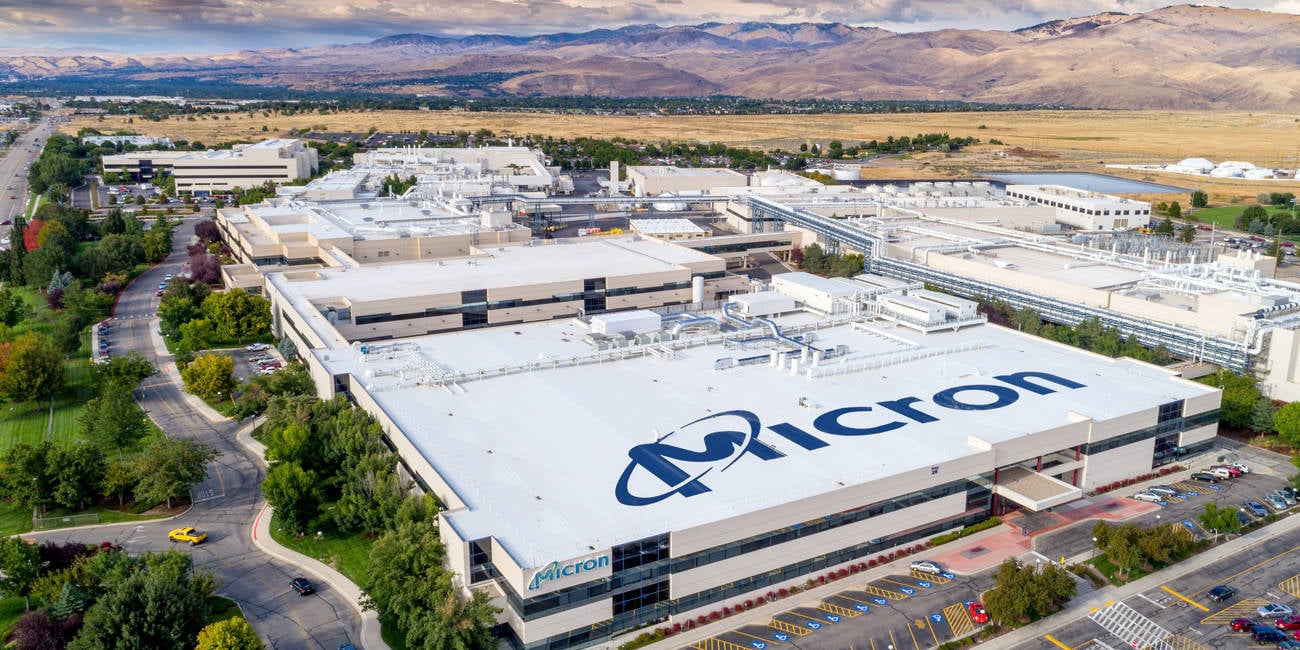
Micron wants a piece of the $52 billion in chips subsidies approved by US Congress this week. The company Friday promised to ramp up domestic memory production over the next few years.
In a brief statement, the US chipmaker commended President Joe Biden and his administration for pushing through the $280 billion CHIPs and Science Act.
Micron is one of only a handful of US chipmakers operating foundries domestically. The company is a leading manufacturer of DRAM and NAND flash memory modules, and until recently was Intel's sole supplier of 3D XPoint memory used in its Optane SSDs and persistent memory modules. Gelsinger axed the project this week.
"Today, only 2 percent of global memory supply is manufactured in the US, and all of that is produced by Micron," a statement read.
Micron aims to change that, with a vaguely worded promise to "grow domestic production of memory significantly in the years ahead."
“We look forward to sharing more details regarding our plans in the coming weeks,” the statement added.
What exactly Micron has planned remains to be seen. However it's a good bet it'll play into the chipmaker's previously announced plans to invest $150 billion into semiconductor research, development and manufacturing.
- Why Intel killed its Optane memory business
- Congress finally passes $52b subsidies for chip fabs on US soil
- Micron's 232-layer NAND is a game changer for database workloads
- SK Group pledges $22b for US chip, battery manufacturing
“Micron’s leadership in both DRAM and NAND technologies and the strength of our roadmap enable us to invest more than $150 billion with confidence to extend our industry leading memory innovation into the next decade,” CEO Sanjay Mehrotra said in a statement last October.
Despite the lofty promise, at the time, Micron wouldn’t commit to extending fab capacity, arguing that any investment on that scale would require government assistance in the form of the CHIPs and FABs Acts.
Micron’s plans come after nearly two years of debate over a chips funding bill that would subsidize the creation of new foundry capacity on US soil.
Interesting timing
However, Micron's timing could be better, according to recent reports, which show semiconductor demand slowing. This is especially true in commodity markets like DRAM and NAND flash, where two reports by TrendForce project pricing to plummet by as much as 13 percent over the next quarter.
If that weren't enough, the line for a piece of the $52 billion pie isn't getting any shorter. Over the past two weeks, we’ve seen Samsung and SK Group — two of Micron's largest competitors - step up their US manufacturing plans.
Samsung, which has already begun production on a $17 billion fab in Texas, recently teased a $200 billion expansion in the region — though the chipmaker has yet to commit to actually building any additional plans.
And this week SK Group — the parent company of memory vendor SK Hynix — said it would spend $22 billion on semiconductor manufacturing, green energy, and bioscience research in the US.
Roughly $15 billion of that is aimed at semiconductor manufacturing, research and development, and the creation of an advanced packaging facility.
It remains to be seen whether Micron's Boise, Idaho roots will give it a home-state advantage when it comes time to collect from Uncle Sam. ®
From Chip War To Cloud War: The Next Frontier In Global Tech Competition
The global chip war, characterized by intense competition among nations and corporations for supremacy in semiconductor ... Read more
The High Stakes Of Tech Regulation: Security Risks And Market Dynamics
The influence of tech giants in the global economy continues to grow, raising crucial questions about how to balance sec... Read more
The Tyranny Of Instagram Interiors: Why It's Time To Break Free From Algorithm-Driven Aesthetics
Instagram has become a dominant force in shaping interior design trends, offering a seemingly endless stream of inspirat... Read more
The Data Crunch In AI: Strategies For Sustainability
Exploring solutions to the imminent exhaustion of internet data for AI training.As the artificial intelligence (AI) indu... Read more
Google Abandons Four-Year Effort To Remove Cookies From Chrome Browser
After four years of dedicated effort, Google has decided to abandon its plan to remove third-party cookies from its Chro... Read more
LinkedIn Embraces AI And Gamification To Drive User Engagement And Revenue
In an effort to tackle slowing revenue growth and enhance user engagement, LinkedIn is turning to artificial intelligenc... Read more