

Meta's Pay-or-consent Model Under Fire From EU Consumer Group
Meta has again come under fire for its pay-or-consent model in the EU.
The complaint has come from the European Consumer Organisation (BEUC), which has written to EU enforcement authorities about concerns that Meta's latest pay-or-consent policy might be infringing laws and fall foul of the Digital Markets Act (DMA.)
The concerns include worries that the consumers might be steered toward Meta's preferred options thanks to a confusing interface design and a degradation of the service for users who don't consent for their personal data to be used by the company.
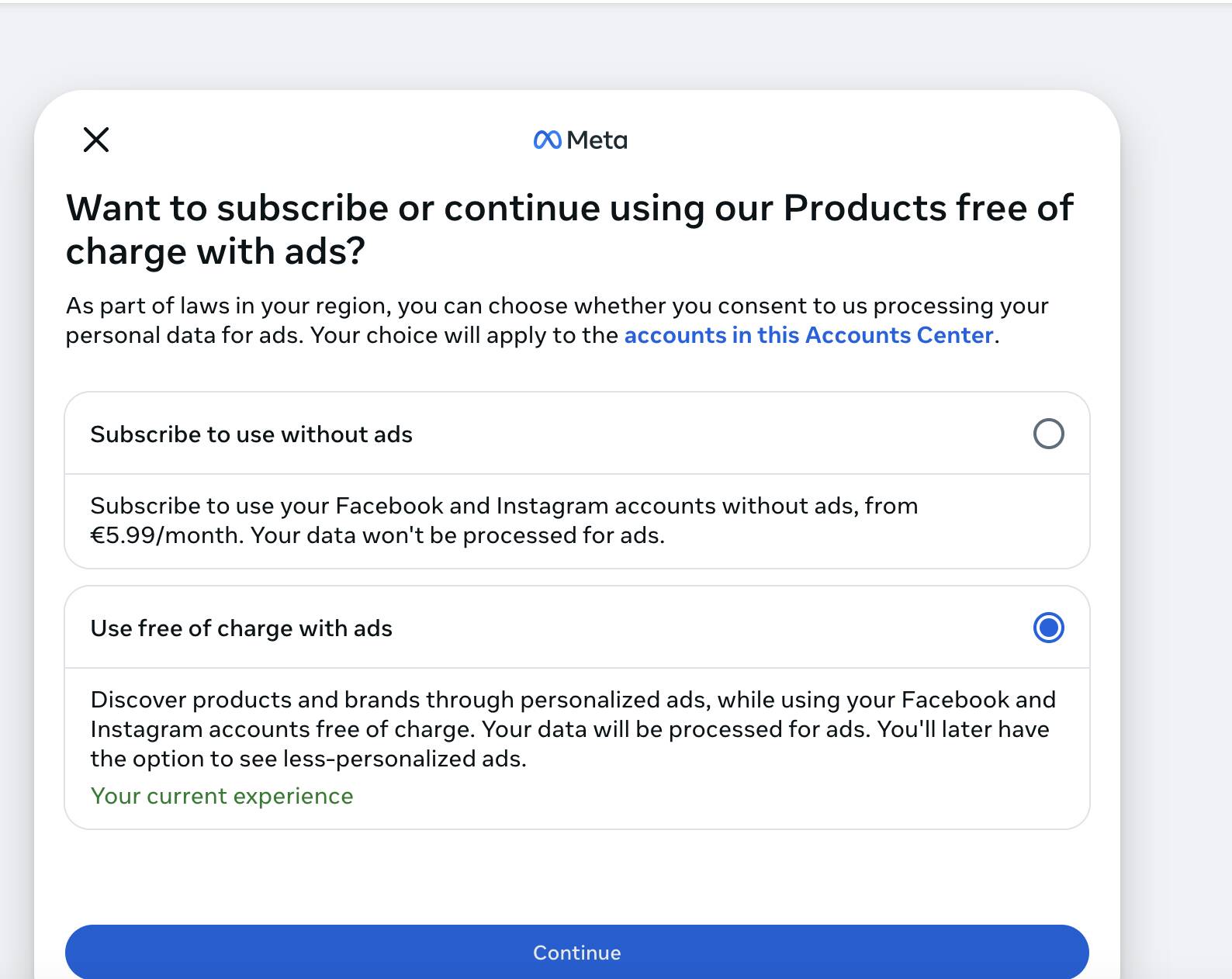
The Reg screenshotted a Pay or Consent choice screen in the EU - click to enlarge
Agustín Reyna, Director General of the European Consumer Organisation (BEUC), described the changes made by Meta in response to concerns over its policy as "cosmetic" and said:
"In our view, the tech giant fails to address the fundamental issue that Facebook and Instagram users are not being presented with a fair choice and is making a weak bid to argue it is complying with EU law while still pushing users towards its behavioral ads system.
"It is important for consumer and data protection authorities and the European Commission to quickly investigate Meta's latest policy and, if needed, take immediate and effective measures to protect consumers."
Meta's pay-or-consent model is intended to give local users a choice – pay up or consent to be profiled and tracked via data collection. The model was controversial from the start and attracted criticism early in 2024 from privacy and consumer rights groups in the EU.
The company made the changes in an attempt to comply with EU law.
In November 2024, Meta made updates to the model, which included reducing the price of the no-ads subscription by 40 percent and allowing customers using the service for free to be able to opt to be shown fewer personalized ads.
- Apple auto-opts everyone into having their photos analyzed by AI for landmarks
- Ireland fines Meta for 2018 'View As' breach that exposed 30M accounts
- IBM sued again in storm over Weather Channel data sharing
- 'Consent' LinkedIn used for data processing was not freely given, says Ireland
As far as the BEUC is concerned, this does not go far enough. The group said, "The new version of Meta's pay-or-consent policy fails to address the fundamental problems consumer groups identified in the tech giant's pay-or-consent initial approach."
Meta is less than impressed with the BEUC's statement.
Matt Pollard, Head of Privacy and Competition Communications for EMEA at Meta, told The Register, "We strongly disagree with BEUC's interpretation – the changes that we have announced go beyond what is required by EU law."
You can make your own fact-checker joke in the comments below. ®
From Chip War To Cloud War: The Next Frontier In Global Tech Competition
The global chip war, characterized by intense competition among nations and corporations for supremacy in semiconductor ... Read more
The High Stakes Of Tech Regulation: Security Risks And Market Dynamics
The influence of tech giants in the global economy continues to grow, raising crucial questions about how to balance sec... Read more
The Tyranny Of Instagram Interiors: Why It's Time To Break Free From Algorithm-Driven Aesthetics
Instagram has become a dominant force in shaping interior design trends, offering a seemingly endless stream of inspirat... Read more
The Data Crunch In AI: Strategies For Sustainability
Exploring solutions to the imminent exhaustion of internet data for AI training.As the artificial intelligence (AI) indu... Read more
Google Abandons Four-Year Effort To Remove Cookies From Chrome Browser
After four years of dedicated effort, Google has decided to abandon its plan to remove third-party cookies from its Chro... Read more
LinkedIn Embraces AI And Gamification To Drive User Engagement And Revenue
In an effort to tackle slowing revenue growth and enhance user engagement, LinkedIn is turning to artificial intelligenc... Read more