

Mercedes-Benz Becomes Latest Western Company To Pull Out Of Russia
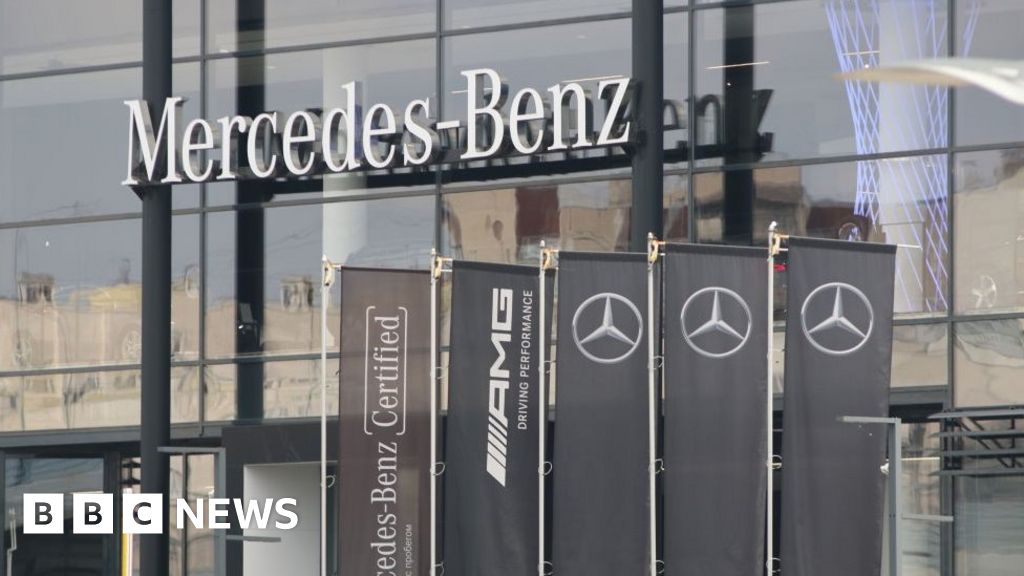
Mercedes has become the latest Western company to pull out of Russia, following the invasion of Ukraine in February.
The German-based firm stopped manufacturing in and exporting to the country in early March.
But now it says it will withdraw from the Russian market and sell shares in its subsidiaries to a local investor.
Japan's Nissan left Russia earlier this month, following the same move from Toyota and Renault.
Nissan took a $700m (£600m) loss in handing over its business to a state-owned entity for a nominal fee, reportedly less than £1.
But Harald Wilhelm, chief financial officer of Mercedes, said its move out of Russia was not expected to have any serious new effect on the company's profits.
The decision comes after many Western companies pulled out of Russia earlier in the year, including Starbucks, McDonald's and Coca-Cola.
Other car firms, including Jaguar Land Rover, General Motors, Aston Martin and Rolls-Royce, all halted deliveries to the country in the early months of the war.
James Baggott, editor-in-chief of industry website Car Dealer Magazine, said Mercedes was in step with other companies when halting exports and suspending operations in Russia earlier in the year, but many other car makers then quickly withdrew from the country altogether.
It was unusual that Mercedes did not follow, he told the BBC.
"Russia was a lucrative market for luxury car manufacturers like Mercedes prior to the war, with cars like its G Wagen off-roader and S Class very popular with its elite," he said.
"Perhaps Mercedes was hoping for a swift resolution to the war, and now that looks unlikely, the firm has finally taken the long-overdue decision to quit the country for good."
Natalia Koroleva, chief executive of Mercedes-Benz in Russia, said in a statement that the main priorities in the move were to fulfil obligations to Russian clients and preserve jobs in Russia.
The Association of European Businesses (AEB) said 9,558 Mercedes vehicles were sold in Russia from January to September, down 72.8% from a year earlier.
You may also be interested in:
Watch: Moscow residents react to McDonald's leaving Russia after 30 years
From Chip War To Cloud War: The Next Frontier In Global Tech Competition
The global chip war, characterized by intense competition among nations and corporations for supremacy in semiconductor ... Read more
The High Stakes Of Tech Regulation: Security Risks And Market Dynamics
The influence of tech giants in the global economy continues to grow, raising crucial questions about how to balance sec... Read more
The Tyranny Of Instagram Interiors: Why It's Time To Break Free From Algorithm-Driven Aesthetics
Instagram has become a dominant force in shaping interior design trends, offering a seemingly endless stream of inspirat... Read more
The Data Crunch In AI: Strategies For Sustainability
Exploring solutions to the imminent exhaustion of internet data for AI training.As the artificial intelligence (AI) indu... Read more
Google Abandons Four-Year Effort To Remove Cookies From Chrome Browser
After four years of dedicated effort, Google has decided to abandon its plan to remove third-party cookies from its Chro... Read more
LinkedIn Embraces AI And Gamification To Drive User Engagement And Revenue
In an effort to tackle slowing revenue growth and enhance user engagement, LinkedIn is turning to artificial intelligenc... Read more