

Mega UK Datacenter Greenlit, But We Still Don't Know Who's Moving In
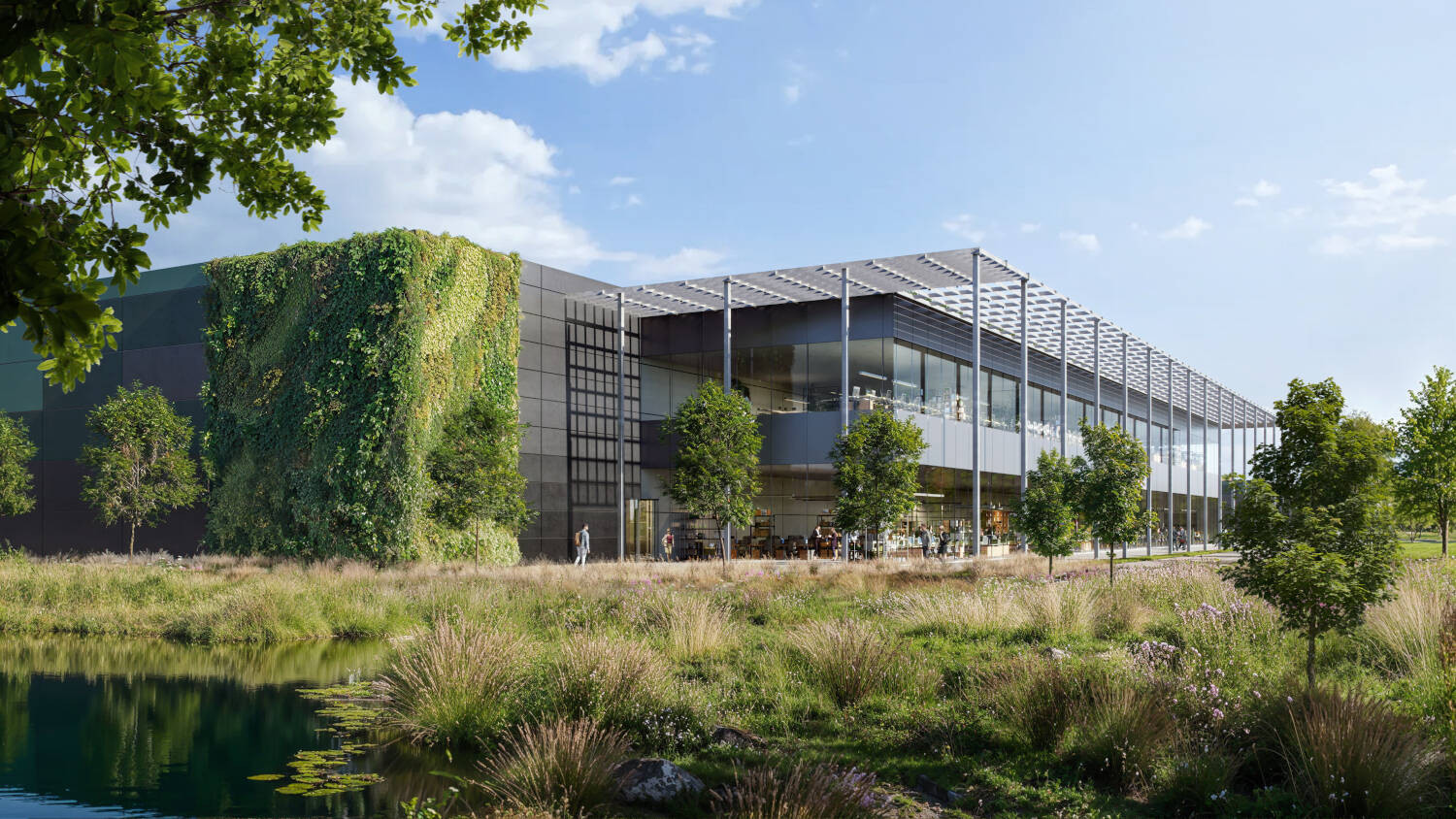
Approval was last night granted for a mega datacenter in Hertfordshire, close to London's M25 orbital motorway, clearing the way for construction to begin. The identity of the eventual occupier, said to be a hyperscale operator, has yet to be disclosed.
The planning application for the site, filed last year by a company called DC01 UK Ltd, was approved by the local authority, Hertsmere Borough Council. If all goes according to plan, facilities at the location are expected to become operational by 2030.
The biz claims that once built, the land will be home to Europe's largest cloud and AI datacenter, with up to two million square feet (about 186,000 m²) of floor space. This compares with 75,000 m² for the Covilhã facility in Portugal, and 50,000 m² for Microsoft's Dublin datacenter in Ireland.
DC01 UK isn't going to build or operate the facility. The company's role is to obtain the planning rights and ensure everything needed for construction is in place. The plot of land is close to the M25 and the A1 main road and adjacent to South Mimms motorway services.
A spokesperson for DC01 UK told The Register last year that it will be up to the ultimate occupier of the site to construct what it needs, which means the full two million square feet will not necessarily be built.
And the identity of that user is still being kept under wraps for now. The company told us at the time that it was "a known hyperscaler," but the hyperscalers that we asked – AWS, Google, Microsoft, and Meta – all declined to comment.
"Since the announcement last September, we've received significant interest and there are active, ongoing discussions that will be finalized in the near future. We will make a further announcement in due course," the spokesperson told us this time, which seems to imply that DC01 UK hasn't actually secured a buyer for the site yet.
It shouldn't have too much difficulty, since the space is located on the outer fringes of London, Europe's largest datacenter market, and the company claims to have proximity to national and international fiber optic routes and a power reservation of 400 MVA from the National Grid locked in (although the spokesperson told us last year that the latter isn't due to be connected until 2029).
Securing land, getting planning permission, and access to power are said to be the major obstacles in the way of building new bit barns in the UK.
One of the country's major commercial property developers said it would be pumping more investment into new sites if it could only obtain the energy supply needed for those facilities, but that it sometimes faces a wait of several years for local substations to be upgraded in order to increase grid capacity.
- UK prepared to throw planning rules out the window for massive datacenters
- UK gov report to propose special zones for datacenters, 'AI visas'
- Datacenter developer says power issues holding up new builds
- 'Hyperscale customer' to take massive datacenter site near London
These are issues that the British government wants to address, especially following the announcement of its AI Opportunities Action Plan this month, through which it seeks to boost the country's economy. Measures include the introduction of "AI Growth Zones" where developers will enjoy streamlined planning approvals and accelerated provisioning of power.
This follows on from the decision to designate datacenters as critical national infrastructure (CNI) last year, which as The Register noted at the time, means they are no longer subject to the same planning restrictions as before, allowing developers to more easily override local objections to proposed projects.
"While outline planning permission has been granted, we will, of course, continue to listen to and engage with residents about these exciting plans as more details are firmed up. As I've said before, I'm sure local people will see the massive value this development could bring to our area," said Hertsmere Borough Council leader Jeremy Newmark.
"The project, which is aligned with the council's vision, is set to deliver hugely significant growth and economic benefits for the area, creating jobs during and after the construction phase, as well as new businesses," he added.
This isn't always the case, however. Some sources suggest that once operational, datacenter projects may create just 30 to 50 permanent positions, while larger facilities may employ up to 200 people, which explains why locals may be less than enthusiastic about a massive site appearing on their doorstep. ®
From Chip War To Cloud War: The Next Frontier In Global Tech Competition
The global chip war, characterized by intense competition among nations and corporations for supremacy in semiconductor ... Read more
The High Stakes Of Tech Regulation: Security Risks And Market Dynamics
The influence of tech giants in the global economy continues to grow, raising crucial questions about how to balance sec... Read more
The Tyranny Of Instagram Interiors: Why It's Time To Break Free From Algorithm-Driven Aesthetics
Instagram has become a dominant force in shaping interior design trends, offering a seemingly endless stream of inspirat... Read more
The Data Crunch In AI: Strategies For Sustainability
Exploring solutions to the imminent exhaustion of internet data for AI training.As the artificial intelligence (AI) indu... Read more
Google Abandons Four-Year Effort To Remove Cookies From Chrome Browser
After four years of dedicated effort, Google has decided to abandon its plan to remove third-party cookies from its Chro... Read more
LinkedIn Embraces AI And Gamification To Drive User Engagement And Revenue
In an effort to tackle slowing revenue growth and enhance user engagement, LinkedIn is turning to artificial intelligenc... Read more