

Marmite-owner Unilever Makes Three Bids For GSK Consumer Goods Arm
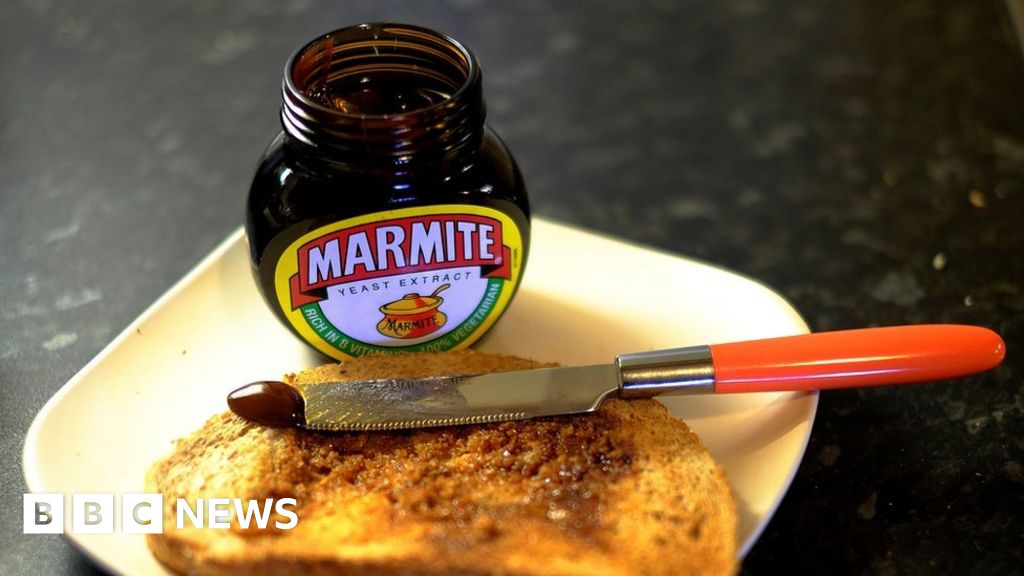
Image source, Reuters
Marmite is one of Unilever's many brands
GlaxoSmithKline has rejected three Unilever offers to buy its consumer goods division, including one worth £50bn.
GSK said the proposals "fundamentally failed" to reflect the value of the division.
With a successful bid, Unilever - which owns Marmite, Dove and PG Tips - would add Sensodyne toothpaste and Panadol to its list of household brands.
Such a deal would be one of the biggest ever involving London-listed firms.
GSK said in a statement the most recent proposal from Unilever on 20 December contained an offer for £41.7bn in cash and £8.3bn in Unilever shares.
The global healthcare company, which has its headquarters in London, has already been preparing to separate its consumer goods division from its pharmaceutical business in the middle of this year.
The firm has come under pressure from investors for failing to develop a Covid vaccine.
Unilever said in a statement the GSK consumer arm "would be a strong strategic fit as Unilever continues to reshape its portfolio".
The consumer goods giant, which became a fully British company in 2020 after previously being separated between the UK and the Netherlands, also approached Pfizer about the potential deal, since the American pharmaceutical giant owns a 34% stake in GSK's consumer goods business.
The price isn't right
Neither GSK nor Pfizer has any ideological objection to selling to Unilever. GSK had planned to spin off its consumer business later this year anyway through a demerger creating a separate publicly listed company but always said it would have an open mind to a trade sale to another party if the price was right.
GSK's problem with the Unilever bid is that the price isn't right.
Both Barclays and Goldman Sachs analysts have valued the business at around £50bn. However, that does not include a few important things.
First, the premium you would normally expect to pay for taking control of a business - somewhere in the range of 30% - although that might be reduced by the debt of about £10bn GSK was expected to leave on the books of the consumer business.
Second, the value of the cost savings GSK admits could be made to make the business more profitable.
Third, it may not reflect the higher sales growth targets GSK boss Emma Walmsley has said are possible for the business.
She has also said the benefit of a demerger is current GSK shareholders would get shares in the demerged business so retain their participation in any future growth in the consumer business.
Some will say if higher growth and greater cost reductions are possible, why haven't they happened already? Emma Walmsley has been in charge for more than four years. That's one of the questions activist shareholder Elliot Management has implicitly asked by encouraging other shareholders to agitate for a more radical greater break up of one of the UK's most valuable companies.
The BBC understands the very different ideas on what this business is worth means there are no active and ongoing discussions between GSK and Unilever.
But Unilever's intentions are very clear.
The "for sale" sign is now very visible and the elbows will get sharper as this basket of household consumer goods gets closer to the checkout.
Russ Mould, investment director at AJ Bell, said Unilever's chief executive Alan Jope was under pressure because the business had recently missed targets for sales and profit margins.
"Unilever has strong cashflow, but the heat is on Mr Jope. He wants to be seen to do something," Mr Mould said.
"But this is a high risk deal. Many investors see GSK as underperforming. But at a time when inflation is rising, consumer goods with loyal customers represent a good way for firms to try to manage profits."
The move was first reported in the Sunday Times.
GSK said its consumer goods division had the potential to increase sales by up to 6% a year in the medium term, and Unilever's offers did not take that into account. It said the proposals were not in the best interests of GSK shareholders.
Preliminary figures show sales for GSK's consumer division reached £9.6bn in 2021.
Other brands in the division include Centrum vitamins, Aquafresh toothpaste and Nicorette gum.
The company has said it is in late stage trails of a Covid vaccine it was developing with the French pharmaceutical firm, Sanofi.
From Chip War To Cloud War: The Next Frontier In Global Tech Competition
The global chip war, characterized by intense competition among nations and corporations for supremacy in semiconductor ... Read more
The High Stakes Of Tech Regulation: Security Risks And Market Dynamics
The influence of tech giants in the global economy continues to grow, raising crucial questions about how to balance sec... Read more
The Tyranny Of Instagram Interiors: Why It's Time To Break Free From Algorithm-Driven Aesthetics
Instagram has become a dominant force in shaping interior design trends, offering a seemingly endless stream of inspirat... Read more
The Data Crunch In AI: Strategies For Sustainability
Exploring solutions to the imminent exhaustion of internet data for AI training.As the artificial intelligence (AI) indu... Read more
Google Abandons Four-Year Effort To Remove Cookies From Chrome Browser
After four years of dedicated effort, Google has decided to abandon its plan to remove third-party cookies from its Chro... Read more
LinkedIn Embraces AI And Gamification To Drive User Engagement And Revenue
In an effort to tackle slowing revenue growth and enhance user engagement, LinkedIn is turning to artificial intelligenc... Read more