

Levi's And PwC Among Firms Pulling Back From Russia
By Michael Race & Lucy Hooker
Business reporters, BBC News
Image source, Getty Images
Thirty years ago when communism collapsed in the Soviet Union, Western firms stepped up their presence in Russia.
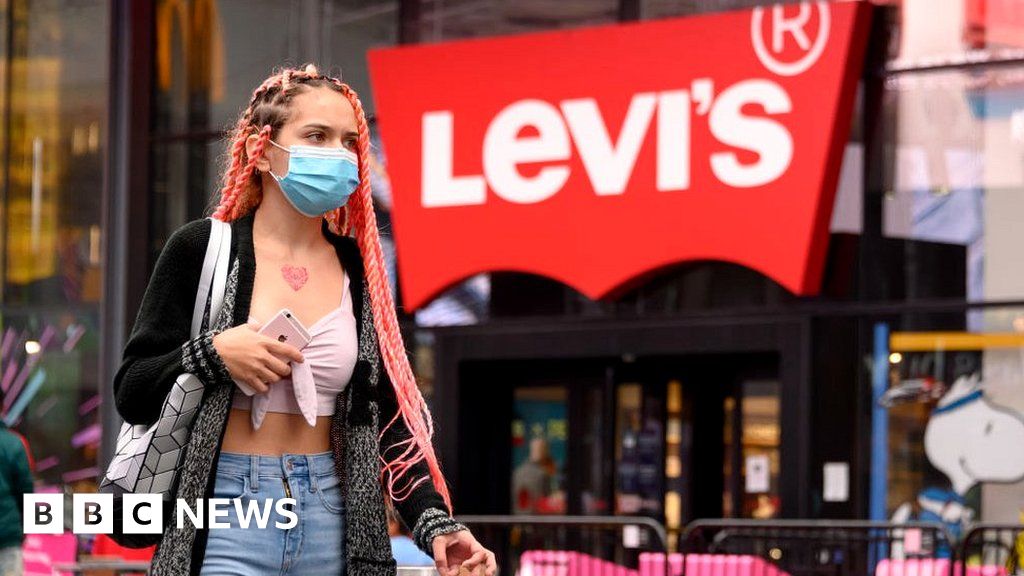
The arrival of big Western brands symbolised the start of a new era with Russians becoming eager consumers of Levi jeans and luxury goods.
Now, in the wake of President Putin's invasion of Ukraine, some firms, including Apple, Netflix, Zara and Jaguar Land Rover, have announced they are pausing activities in Russia.
So which firms, in which sectors, are exiting fastest and why have others remained silent?
Retail
Brands like Levi's and Inditex, the Spanish owner of Zara, have announced they are temporarily shutting hundreds of stores in Russia between them. The all-American jeans firm said about half of its net sales last year came from Eastern Europe and Russia, but "any business considerations are clearly secondary to the human suffering experienced by so many".
Swedish furniture giant Ikea is also halting its operations in Russia, affecting 17 stores, although its parent company is keeping its Mega shopping centres open.
Another Swedish giant, H&M, has already suspended sales in Russia, and many more brands are likely to follow suit, according to Maureen Hinton of retail consultancy GlobalData. Boohoo already has, for example.
While H&M cited "tragic developments" in Ukraine, other brands like Nike have simply said they can't currently guarantee delivery of goods to customers in Russia.
Image source, Getty Images
Russia was the fifth largest European retail market in 2021, valued at £337.2bn. Some brands may not want to burn their bridges, if there's a chance of returning at some later date.
That is why many firms, including luxury retailers like Burberry and Chanel, simply say they are "suspending" sales and temporarily shutting stores rather than withdrawing altogether, says Chris Weafer, chief executive of consulting firm Macro-advisory Limited.
With sanctions limiting forms of payment and huge uncertainty over future prices and consumer appetite, the business climate is "extremely challenging" he adds, making the decision to hit pause easier.
Consultancy firms
Large consultancy and law firms were some of the first to set up a presence in Russia after the collapse of the Soviet Union but mostly operate out of the spotlight.
Three of the Big Four accounting groups - KPMG, EY and PricewaterhouseCoopers (PwC) - have said they will no longer have a member firm in Russia because of the invasion. Top-tier law firm Freshfields says it will no longer work with any clients linked to the Russian state either.
Others say they are reviewing their client base and Russian links.
A senior executive for consultancy firm McKinsey, for example, wrote online that the company would "no longer serve any government entity in Russia." According to McKinsey's website, it serves 21 of the 30 biggest Russian companies.
A spokesman said the firm would cease existing work with state-owned entities as well. "After our remaining engagements in Russia conclude, all client service in the country will be suspended," he said.
Tamzen Isacsson, boss of the Management Consultancies Association, said its members were "strictly abiding by the updated changes to sanction rules".
That would mean "ending some work and supporting clients in adapting to making rapid changes to their operations in light of the new rules", she added.
Technology
Samsung, the leading supplier of smartphones in Russia, ahead of Xiaomi and Apple, will suspend shipments to the country but it is unclear whether Samsung's shops will close.
Reports suggest that Ukraine's vice-prime minister, Mykhailo Fedorov, who is responsible for digital operations, had urged the company to temporarily cease supplying services and products to Russia.
Apple has also halted all of its product sales in Russia, and limited other services such as Apple Pay and Apple Maps. Its shops have closed too.
Image source, Getty Images
All shops under the Re:store in Moscow have been shut as Apple halts all product sales in Russia
For a firm like Apple selling imported items, that's a relatively straightforward decision to take, suggests Macro-advisory's Chris Weafer. He has worked in Moscow for the past 24 years.
"Companies do not want to be associated with the Russian regime and what's happening in Ukraine," he says. Their Russian business may be profitable, but "the rest of the world is more important" when it comes to reputational risk.
Some tech companies, flooded by misinformation, are also restricting Kremlin-linked media outlets posting on their platforms. TikTok has suspended live streaming in Russia, for example.
Facebook was also blocked there after it said it had refused to stop fact-checking and labelling content from state-owned news organisations.
Oil and gas
When the conflict in Ukraine broke out, energy firm BP came under immediate pressure. The company owns a large stake in Russian energy giant Rosneft, but within days it had announced the operation would be hived off.
That was closely followed by pledges from Shell, ExxonMobil and Equinor to cut their Russian investments following pressure from shareholders, as well as from governments and the public.
Those energy stakes are valuable. BP's Rosneft stake accounted for a fifth of the firm's most recent profits.
Shell could be sacrificing up to $3bn (£2.2bn) for exiting its ventures with Gazprom, although it has come under fire for buying Russian crude oil recently.
Image source, Getty Images
A Rosneft oil rig drilling the first exploration well in the Khatanga Bay, Russia
Firms want to be seen to be doing the "right thing", says Russ Mould, investment director at AJ Bell.
Meanwhile, Total Energies, another big player in Russia, has said it won't fund new projects in the country, but unlike its peers does not plan to sell existing investments.
It is still far from clear what will happen to those investments - whether they can eventually be sold, recouping some of their value, or if they will simply be written off.
Entertainment
Film fans in Russia wanting to go and see Warner Bros' new blockbuster The Batman won't be able to after the company suspended new film releases in the country.
The US movie-maker was joined by Disney and Sony, with premieres of animation Turning Red and Marvel adaptation Morbius also being withdrawn.
Netflix, a fairly new entrant in Russia, has suspended its service in the country and put all "future projects" on pause.
Image source, Disney
Pixar's new animated film Turning Red won't be released in Russia
All companies said their decisions were based on the "humanitarian crisis" in Ukraine, rather than as a result of sanctions that have been imposed.
But the decision will send a similar message. Being left out "in the cultural cold" will increase Russia's sense of isolation, says Susannah Streeter, senior investment and markets analyst at Hargreaves Lansdown.
Finance
Payment giants Visa, Mastercard, American Express and PayPal are pulling out of the Russian market in protest.
PayPal has shut down services in Russia but said it would support withdrawals "for a period of time" to ensure that account balances were dispersed "in line with applicable laws and regulations".
Russian banks have, however, already downplayed the impact of the announcements on their clients.
Image source, Getty Images
Sberbank, for example, said that Visa and Mastercard-branded cards would work "to withdraw cash, make transfers using the card number, and for offline payments, as well as at online Russian stores".
They will continue to work on Russian territory, the bank said, because all payments in Russia are made through a national system.
However, Russian-issued Mastercard or Visa cards won't work abroad, and foreign-issued cards won't work inside the country.
Cars
Jaguar Land Rover, General Motors, Aston Martin and Rolls-Royce are among the car-makers that have halted deliveries of vehicles to Russia due to the conflict, while construction equipment manufacturer JCB has paused all operations.
Image source, PA Media
Jaguar Land Rover said sales were paused due to "trading challenges"
Cars are the biggest UK export to Russia, but still only 1% of UK cars went to Russia last year.
So any decision to stop exporting won't be particularly costly, and will have been made easier by nagging concerns over whether or not payments will arrive, says investment analyst Russ Mould.
Transporting cars to Russia could prove difficult anyway, with the world's two largest cargo shipping companies, MSC and Maersk, suspending routes to and from Russia, except for food, medical and humanitarian supply deliveries.
Some car manufacturers, such as Volkswagen and BMW have had to pause production at some European plants because of a lack of parts from Ukraine.
Who remains?
While the flood of announcements from firms stepping back goes on, there are calls for more to join them.
Attention has turned to big food firms like McDonald's, KFC and Burger King who are yet to comment on their plans despite repeated requests by the BBC. Other major Western brands such as Pepsi, Coca-Cola and Starbucks are also yet to talk.
Some firms will also find it much harder to extricate themselves, even if pressure mounts in the coming days and weeks.
Image source, Getty Images
In retaliation against sanctions introduced by Western countries, Moscow has banned the sale of Russian assets. So firms that, in recent years, have been encouraged to establish a presence in Russia, to make breakfast cereals or detergents, are "locked in" with local businesses, staff and supply chains.
Marks & Spencer, for example, has 48 shops in Russia but they are operated by a Turkish franchise company called FiBA. M&S has said it is suspending shipments of its goods to FiBA's Russian business, but the shops in the country remain open.
British American Tobacco has said it is suspending its operations in Ukraine to ensure the "safety and wellbeing" of its staff, but its work in Russia will continue. It says it is complying will all international sanctions.
Mr Weafer predicts it is likely that large consumer brands may express concerns over the military conflict, but try to "ride it out".
War in Ukraine: More coverage
From Chip War To Cloud War: The Next Frontier In Global Tech Competition
The global chip war, characterized by intense competition among nations and corporations for supremacy in semiconductor ... Read more
The High Stakes Of Tech Regulation: Security Risks And Market Dynamics
The influence of tech giants in the global economy continues to grow, raising crucial questions about how to balance sec... Read more
The Tyranny Of Instagram Interiors: Why It's Time To Break Free From Algorithm-Driven Aesthetics
Instagram has become a dominant force in shaping interior design trends, offering a seemingly endless stream of inspirat... Read more
The Data Crunch In AI: Strategies For Sustainability
Exploring solutions to the imminent exhaustion of internet data for AI training.As the artificial intelligence (AI) indu... Read more
Google Abandons Four-Year Effort To Remove Cookies From Chrome Browser
After four years of dedicated effort, Google has decided to abandon its plan to remove third-party cookies from its Chro... Read more
LinkedIn Embraces AI And Gamification To Drive User Engagement And Revenue
In an effort to tackle slowing revenue growth and enhance user engagement, LinkedIn is turning to artificial intelligenc... Read more