

Intel Takes Deep Dive Into Immersion Cooling With GRC
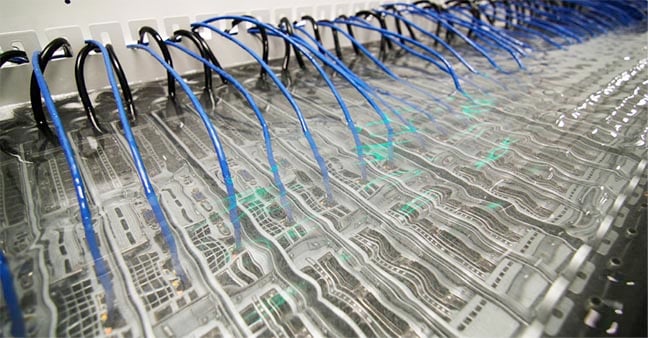
Intel has partnered with Green Revolution Cooling (GRC) on a joint whitepaper about liquid immersion cooling. The pair make the case for sustainability, claiming it reduces the power needed to cool a datacenter as well as cutting operational costs.
The companies announced a multi-year project in January aimed at helping the datacenter industry reduce the environmental impact of digital infrastructure. GRC also received a $28 million investment from South Korean company SK Lubricants in March.
GRC, co-author of the whitepaper, specializes in immersion cooling technology, and Intel also unveiled in May that it is building its own lab to qualify, test, and demo immersion-cooling technologies.
Central to the argument is that datacenters use approximately 1.5-2 percent of the world's entire electricity supply. Left unchecked, this could expand to as much as 13 percent in the next decade. This references work by David Mytton, a former researcher on the sustainability team at Uptime Institute.
Up to 40 percent of this power consumption is estimated to go into cooling all datacenter infrastructure and, as the power density of processors continues to increase, servers are now pushing the limits of what air cooling systems can cope with. This chimes with what Cisco told our sister site The Next Platform recently, warning that some of the upcoming generation of CPUs from Intel and AMD are set to reach the threshold where air cooling is no longer sufficient.
Many datacenter operators are aware of this with as many as three-quarters of are now thinking about the importance of sustainability as a competitive differentiator, according to Intel and GRC findings. However, the pair claim that datacenters have hit a wall in power usage effectiveness (PUE), which on average has been hovering around 1.6 for almost a decade.
- Intel's net positive water use only tells part of the story
- Your top 5 liquid cooling quandaries answered, according to Omdia
- Fujitsu: Ammonia could power datacenters in the near future
- Microsoft's Dublin datacenter to help take pressure off Ireland's renewable energy
Addressing that 40 percent of power consumed by cooling systems is a start, and the whitepaper adds that the removal of internal server fans reduces energy consumption by 10-15 percent. The hot components inside the chassis still have to be cooled somehow, but that could just as easily be a system where a liquid coolant is circulated through heatsinks attached to components such as CPUs.
Inspur, supplier of servers to the hyperscale market, is now offering such a system as an option across its entire portfolio.
However, Intel and GRC contend that full immersion liquid cooling enables more servers to be fitted into a given space. They are perhaps on shakier ground with the assertion that this reduces the amount of equipment such as switch gear, cabling, and stand-by generators due to the decreased power load, which they say means lower capex and opex costs.
But Omdia's Senior Principal Analyst for Data Center Physical Infrastructure, Moises Levy, told The Register this week that there are pitfalls to watch out for with liquid cooling, including the operational costs and procedures required for using this technology.
"People sometimes don't know they need a filtering system, they need software, they will be tracking the quality of dielectric fluids," he said. "It's another type of monitoring which requires higher skilled labor."
Intel said that as industries such as the cloud and telecom markets move to adopt liquid cooling solutions, the company is designing silicon with immersion cooling in mind, which means rethinking elements like the heat sink. ®
From Chip War To Cloud War: The Next Frontier In Global Tech Competition
The global chip war, characterized by intense competition among nations and corporations for supremacy in semiconductor ... Read more
The High Stakes Of Tech Regulation: Security Risks And Market Dynamics
The influence of tech giants in the global economy continues to grow, raising crucial questions about how to balance sec... Read more
The Tyranny Of Instagram Interiors: Why It's Time To Break Free From Algorithm-Driven Aesthetics
Instagram has become a dominant force in shaping interior design trends, offering a seemingly endless stream of inspirat... Read more
The Data Crunch In AI: Strategies For Sustainability
Exploring solutions to the imminent exhaustion of internet data for AI training.As the artificial intelligence (AI) indu... Read more
Google Abandons Four-Year Effort To Remove Cookies From Chrome Browser
After four years of dedicated effort, Google has decided to abandon its plan to remove third-party cookies from its Chro... Read more
LinkedIn Embraces AI And Gamification To Drive User Engagement And Revenue
In an effort to tackle slowing revenue growth and enhance user engagement, LinkedIn is turning to artificial intelligenc... Read more