

Intel Brings Evo Thin, Light Laptop Spec To VPro Systems
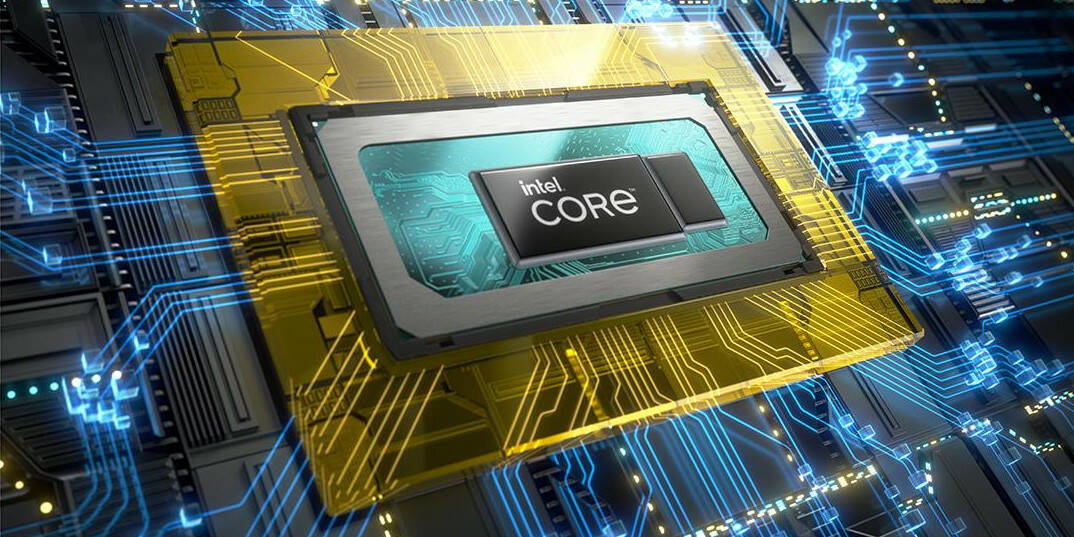
Intel has applied the Evo specification it uses to define thin and light consumer-grade laptops to PCs that employ the vPro standard it uses for business kit.
The move will result in the emergence of thin and light notebooks labelled "vPro An Evo Design" aimed at business buyers. Some 35 such machines should debut in 2022, Intel told The Register in a briefing last week to introduce its 12th-Gen Core P-series and U-series processors that are designed to work well in laptops.
Both microprocessor families [summary PDF] use Intel's 10nm (aka Intel 7) Alder Lake architecture and a mix of Performance and Efficient cores (P-cores and E-cores).
The P-series features at its top end a Core i7-1280P with 14 CPU cores – eight of them P-cores and eight E-cores – capable of running twenty threads. There are also four Core i7 and i5 models that each have a dozen cores capable of running 16 threads; eight of the physical CPU cores are E, and four are P.
A lone Core i3 gets by with just two P-cores and eight E-cores. P-core clock speeds range from 2.2GHz to 1.5GHz, and can burst to somewhere between 4.4GHz and 4.8GHz as needed.
All P-series silicon requires 28W for normal operations and 64W in turbo mode. The U-series can work with just 9W of input – the smaller of two packaging options that measures 28.5mm x 19mm x 1.1mm. A bigger 50mm x 25mm x 1.3mm package requires 15W.
All U-series Core i7, i5 and i3 models have a pair of P-cores. The Core i7 and i5 sport eight E-cores, and the sole Core i3 model has just four. Speed hits 1.8GHz in the i7 and steps down through models that run at 1.7GHz, 1.6GHz, 1.3GHz, and 1.2GHz.
Intel's venerable Pentium and Celeron brands also get U-series silicon, with single P-Cores that run at 1.2GHz and 1.1GHz respectively, and four E-cores that chug along at 0.9GHz.
Wi-Fi 6e, PCIe 4 and 3, Thunderbolt 4 and gigabit Ethernet are supported across both P and U processor series.
- Intel CEO Gelsinger spells out five-year renewal plan inspired by iconic leaders
- Intel reveals GPU roadmap with hybrid integrated discrete graphics
- Top chipmakers ignore India's semiconductor factory subsidies
- Intel buys Tower Semiconductor to expand fab business
Interestingly, Intel spoke very cautiously of the battery life the new silicon can deliver. Execs in the briefing admitted that Evo designs can achieve previously claimed battery lives of 24 hours – when screens are dimmed and Wi-Fi disabled. This year's revision of Evo is instead targeting battery life of nine hours or more when running common workloads.
Intel is also very keen on enhanced image processing talent in the new silicon, as it's said to enhance the on-board camera's performance during video chats and make the need for an external camera unnecessary.
As ever, Intel pointed out the new silicon is faster than previous generations of product. But in the case of the P-Series the predecessor – Tiger Lake – is just nine months old.
Intel also teased its own smartphone integration software as likely to debut by year's end – an interesting addition given Windows includes the My Phone app and that Microsoft and Samsung have made much of their collaboration aimed at making Galaxy devices play nice on the desktop.
Also in the works are a version of the Evo spec for foldable devices, and Evo-rated accessories. ®
From Chip War To Cloud War: The Next Frontier In Global Tech Competition
The global chip war, characterized by intense competition among nations and corporations for supremacy in semiconductor ... Read more
The High Stakes Of Tech Regulation: Security Risks And Market Dynamics
The influence of tech giants in the global economy continues to grow, raising crucial questions about how to balance sec... Read more
The Tyranny Of Instagram Interiors: Why It's Time To Break Free From Algorithm-Driven Aesthetics
Instagram has become a dominant force in shaping interior design trends, offering a seemingly endless stream of inspirat... Read more
The Data Crunch In AI: Strategies For Sustainability
Exploring solutions to the imminent exhaustion of internet data for AI training.As the artificial intelligence (AI) indu... Read more
Google Abandons Four-Year Effort To Remove Cookies From Chrome Browser
After four years of dedicated effort, Google has decided to abandon its plan to remove third-party cookies from its Chro... Read more
LinkedIn Embraces AI And Gamification To Drive User Engagement And Revenue
In an effort to tackle slowing revenue growth and enhance user engagement, LinkedIn is turning to artificial intelligenc... Read more