

IBM: Give Us Three Years To Solve Quantum Computing Scaling
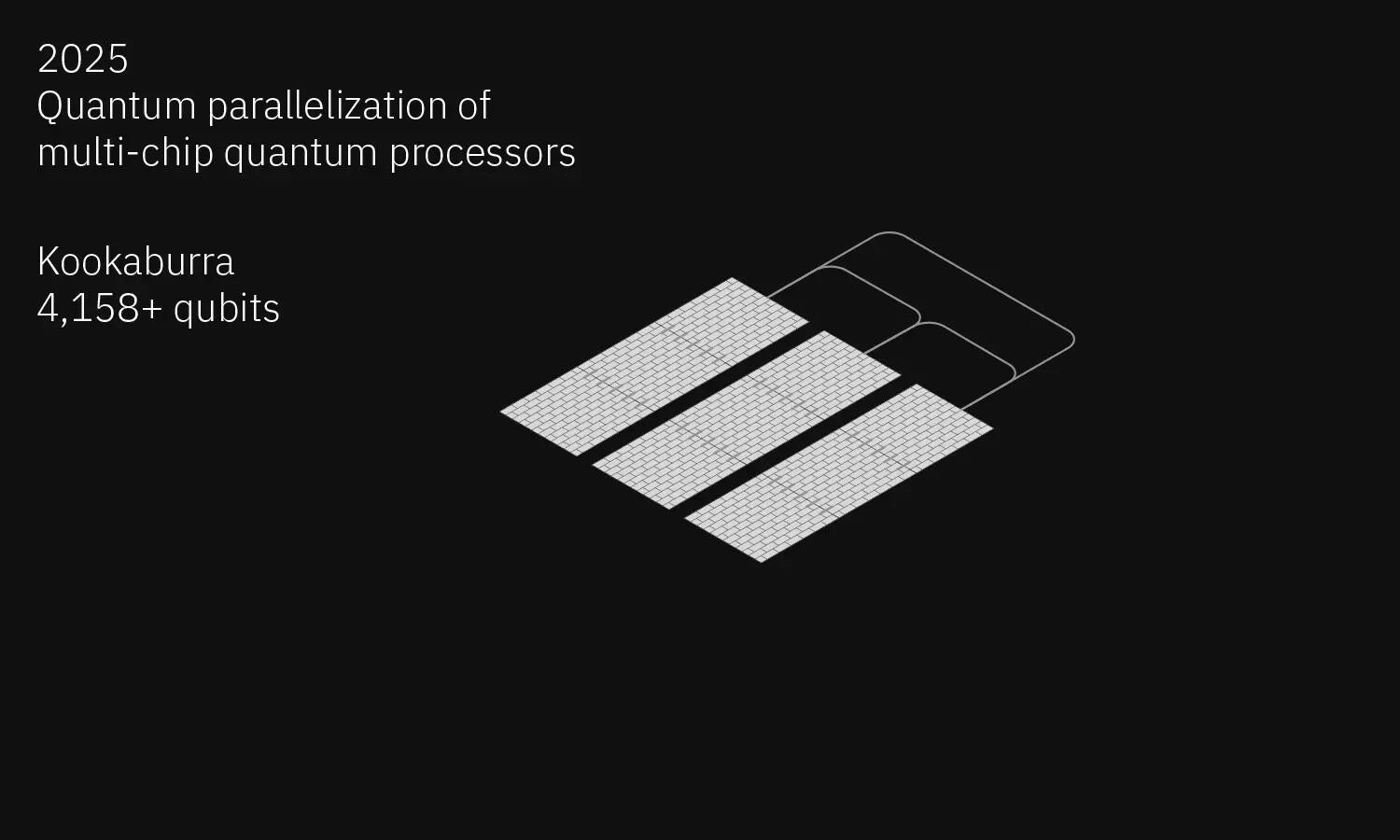
IBM Think IBM has big plans for its quantum computing gambit, including the launch of a 4,158-qubit system by 2025. To put that in context, the company just launched it's 127-qubit "Eagle" system in 2021.
The ambitious qubit count goal was presented at IBM Think 2022 during a tour of IBM's expanded supercomputing roadmap, which takes Big Blue through 2025, the year IBM Quantum VP Jay Gambetta said says "will have effectively removed the main boundaries in the way of scaling quantum processors."
IBM telegraphed its quantum computing plans in 2020 when it revealed its plan to design quantum computers that work with classical computers and interconnects to form one big datacenter style quantum system.
"The power isn't in quantum alone, but in a combination of quantum and classical computing," Gambetta said.
IBM's quantum plans for the next three years follow that philosophy, starting with the addition of threads to its cloud-native Qiskit Runtime in 2023. Qiskit threads will allow for quantum processors to be parallelized, which forms the basis of IBM's data center supercomputing approach.
In 2023, IBM said it will be integrating "serverless quantum computing" into its core software stack, which in this case means that IBM has built a front end for its quantum platform. With this model, users submit classical and quantum code for an experiment, and IBM's Cloud Code Engine decides how to distribute the workload across classical and quantum systems.
- Biden orders new quantum push to ensure encryption isn't cracked by rivals
- Google Cloud hopes to woo factories with its usual fare: Analytics and AI
- Nvidia starts laying groundwork for future open and parallel code
- Quantum-tunneling memory could boost AI energy efficiency by 100x
IBM said its first parallelization-read quantum processor, a 133-qubit model dubbed "Heron" and scheduled for release in 2023, will connect three processors using classical communication techniques.
IBM also has plans for a three-chip system called "Crossbill" that will be connected by chip-to-chip couplers IBM said will make the system feel more like using one larger processor.
In 2024, IBM said it will be introducing the third version of its coupled chips, called "Flamingo," which will have a built-in quantum link that will allow three Flamingo chips to be combined into a 1,386-qubit system. 2025 is when the fabled 4,158-qubit "Kookaburra" chip will appear, along with its purported boundary-breaking scaling capabilities.
"The combination of these technologies — classical parallelization, multi-chip quantum processors, and quantum parallelization — gives us all the ingredients we need to scale our computers to wherever our roadmap takes," Gambetta said.
Gambetta also admits that there's some "incredibly tough engineering and physics problems" to be solved if IBM wants to realize its plans. Those problems are without solutions for now, and it remains to be seen if any can even be found. ®
From Chip War To Cloud War: The Next Frontier In Global Tech Competition
The global chip war, characterized by intense competition among nations and corporations for supremacy in semiconductor ... Read more
The High Stakes Of Tech Regulation: Security Risks And Market Dynamics
The influence of tech giants in the global economy continues to grow, raising crucial questions about how to balance sec... Read more
The Tyranny Of Instagram Interiors: Why It's Time To Break Free From Algorithm-Driven Aesthetics
Instagram has become a dominant force in shaping interior design trends, offering a seemingly endless stream of inspirat... Read more
The Data Crunch In AI: Strategies For Sustainability
Exploring solutions to the imminent exhaustion of internet data for AI training.As the artificial intelligence (AI) indu... Read more
Google Abandons Four-Year Effort To Remove Cookies From Chrome Browser
After four years of dedicated effort, Google has decided to abandon its plan to remove third-party cookies from its Chro... Read more
LinkedIn Embraces AI And Gamification To Drive User Engagement And Revenue
In an effort to tackle slowing revenue growth and enhance user engagement, LinkedIn is turning to artificial intelligenc... Read more