

Hyperscalers To Eat 61% Of Global Datacenter Capacity By Decade's End
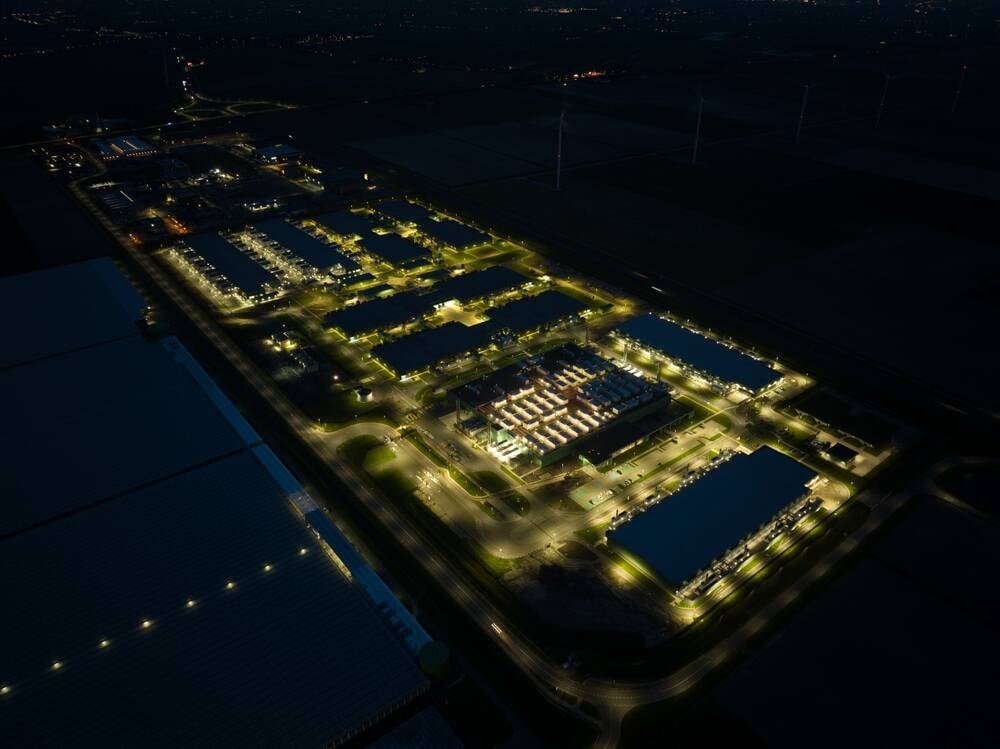
Hyperscale operators are expected to account for 61 percent of all datacenter capacity by 2030, thanks in part to the growth of cloud services and rising demand for compute to feed AI.
According to data from Synergy Research Group, the growing proportion of capacity accounted for by the likes of AWS, Microsoft and Google isn't due to a decline in on-prem deployment. On-prem is actually still growing on the back of enterprise investment in GPU servers for AI processing, but it is being outpaced by hyperscale expansion.
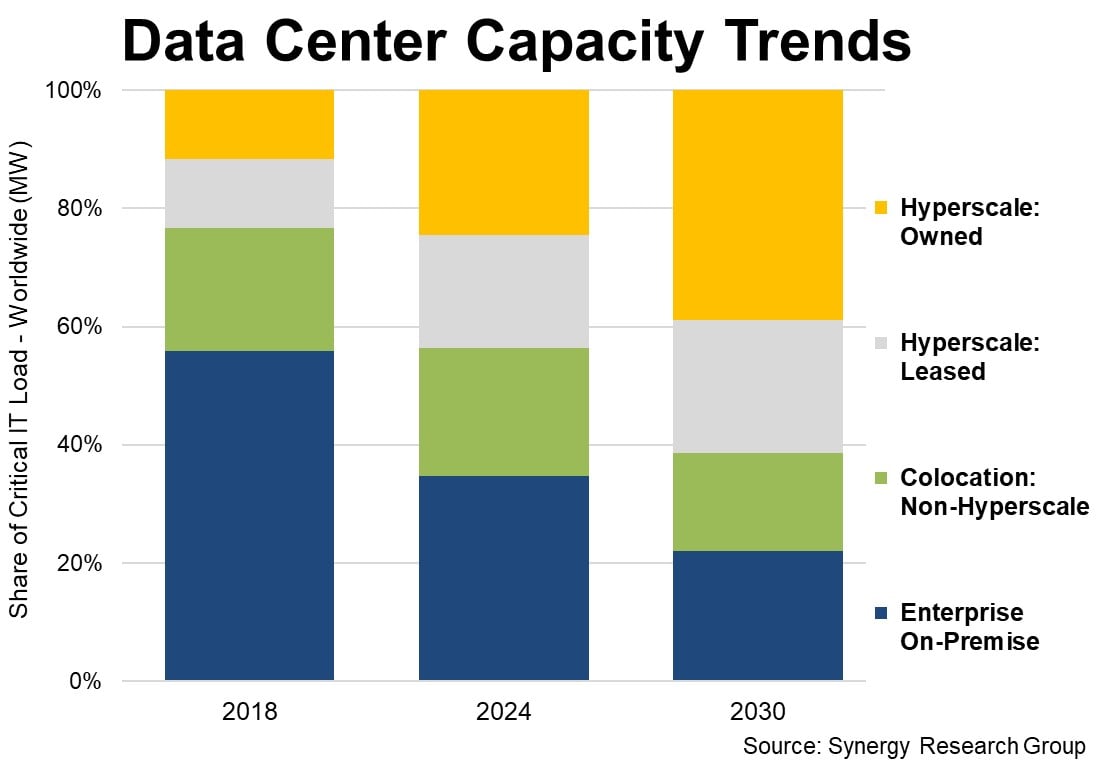
The trend marks a reversal from 2018, when 56 percent of all bit barn capacity was comprised of on-premises deployment. By the end of this decade, the on-prem share is estimated to shrink to 22 percent, while the hyperscale firms are on track to expand their presence by nine times.
Click to enlarge
As the situation stood at the end of last year, hyperscalers – the big three and Meta – made up 44 percent of worldwide bit barn capacity. Another notable change is that half of that figure is now represented by facilities built and owned by the companies themselves, with the balance being leased.
On-prem infrastructure currently accounts for 34 percent of total capacity, with the remaining 22 percent comprising colocation capacity.
Between now and the end of the decade, capacity will continue to rise rapidly, driven primarily by hyperscale capacity growing threefold, Synergy forecasts, though the company refused to share the exact numbers.
Both on-prem and colocation will continue to add capacity over the same period, but in both cases, they will represent a decreasing share of the total as the hyperscale portion inflates relentlessly.
- Datacenter market offers us captive customer base, say investors
- Interactive IEA tracker shows where AI is guzzling the most energy
- Nvidia bets on Gates-backed nuclear startup to keep its AI ambitions from melting down
- Digital Realty CTO on why storage is the datacenter challenge no one's talking about
Synergy Research chief analyst John Dinsdale pointed to cloud and other digital services as the drivers of the expansion, with the rush for AI infrastructure giving this a boost.
The makeup of the bit barn capacity mix also differs region by region, he told us.
"Hyperscaler-owned datacenter capacity is much more prevalent in the US than in either the EMEA or APAC regions. Overall though, the trends are all heading in the same direction: all regions will see double-digit annual growth rates in overall datacenter capacity over the forecast period, and all regions will see the hyperscale-owned portion of that capacity growing by at least 20 percent per year."
The unspoken assumption in such predictions, of course, is that the AI hype will continue to drive the investment feeding all this new infrastructure. However, there are those who say there's a risk of the datacenter market overheating, including Digital Realty's European managing director, Fabrice Coquio, and Baidu CEO Robin Li, who described the AI sector as an "inevitable bubble," similar to the dotcom boom-and-bust of the late 1990s. ®
From Chip War To Cloud War: The Next Frontier In Global Tech Competition
The global chip war, characterized by intense competition among nations and corporations for supremacy in semiconductor ... Read more
The High Stakes Of Tech Regulation: Security Risks And Market Dynamics
The influence of tech giants in the global economy continues to grow, raising crucial questions about how to balance sec... Read more
The Tyranny Of Instagram Interiors: Why It's Time To Break Free From Algorithm-Driven Aesthetics
Instagram has become a dominant force in shaping interior design trends, offering a seemingly endless stream of inspirat... Read more
The Data Crunch In AI: Strategies For Sustainability
Exploring solutions to the imminent exhaustion of internet data for AI training.As the artificial intelligence (AI) indu... Read more
Google Abandons Four-Year Effort To Remove Cookies From Chrome Browser
After four years of dedicated effort, Google has decided to abandon its plan to remove third-party cookies from its Chro... Read more
LinkedIn Embraces AI And Gamification To Drive User Engagement And Revenue
In an effort to tackle slowing revenue growth and enhance user engagement, LinkedIn is turning to artificial intelligenc... Read more