

Huawei Under Investigation For Having Tech Installed Near US Missile Silos
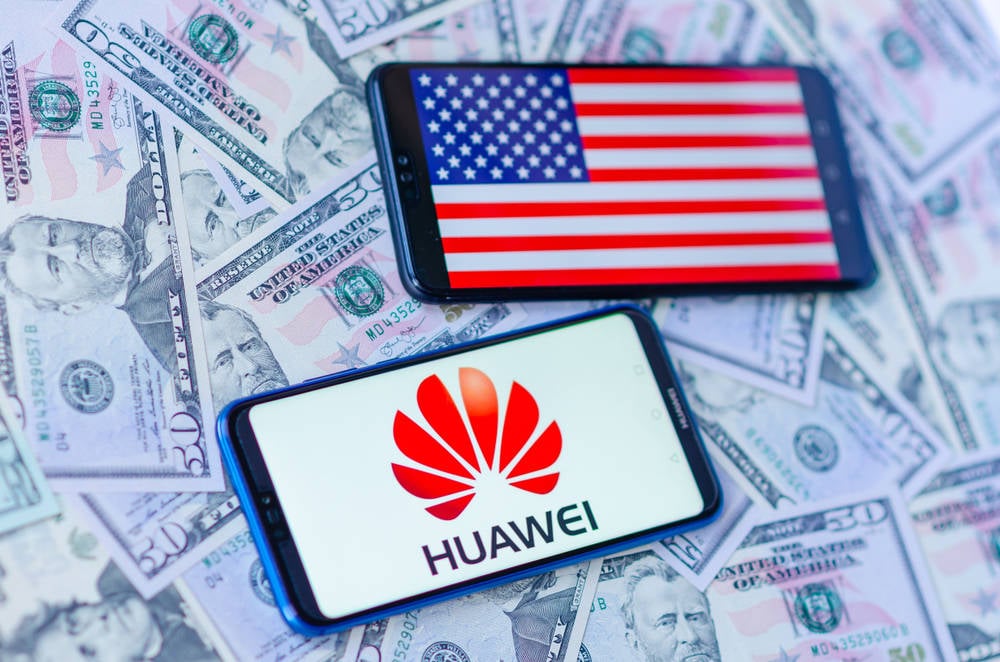
The Biden administration has quietly probed Huawei over fears cell towers outfitted with its hardware could be spying on US military bases and missile silos.
The investigation, according to Reuters, was opened by the US Commerce Department in early 2021, subpoenaing Huawei in April for information on "the company's policy on sharing data with foreign parties that its equipment could capture from cell phones, including messages and geolocational data."
FCC Commissioner Brendan Carr said that cell towers around Montana's Malmstrom Air Force Base, which oversees part of the US's missile fields, contain Huawei technology. Intercontinental ballistic missile silos in Nebraska and Wyoming are also adjacent to cell towers that run on Huawei tech.
Reuters failed to find any information that would help it determine the location and scope of Huawei equipment near US military facilities, or whether such equipment was capable of collecting the information US authorities claim.
Just another day at heavily sanctioned Huawei
The US government has cracked down aggressively on Chinese tech companies since a 2019 executive order that put telecommunications equipment coming from "foreign adversaries" like China and Russia under close scrutiny. Huawei was one of the largest targets, with 70 of its affiliates placed on the US entity list that blocks companies from doing business with US firms shortly after the order went into effect.
- Huawei looks to staff for strategy to reverse declining fortunes
- Huawei claims it's halved the time needed to build a 1,000-rack datacenter
- Leica and Huawei terminate trading agreement amid US sanctions
- Canada bans Huawei and ZTE from 5G networks, citing national security risks
Huawei has repeatedly asserted its innocence.
Per Reuters, Huawei's April subpoena was one of the first issued using the 2019 order as its justification. It gave Huawei 30 days to provide seven years of records of its relationship with foreign entities that would have access to US user data.
US sanctions against the Chinese tech giant have resulted in considerable downturn in results, with a 28.6 percent drop in Huawei's revenue in 2021 and continued drops in the first quarter of 2022. Huawei has even turned to its employees for advice on the company's direction in the face of revenue-crushing sanctions, urging them to speak freely if they have ideas on how to transform the business.
Huawei and rival Chinese telecom company, ZTE, were further targeted by a 2021 Federal Communications Commission program that would offer US telecoms reimbursement for "ripping and replacing" Chinese hardware. The program was recently revealed to be $3 billion short thanks to an excess of applications.
Due to the shortfall, it was reported that a Nebraska telecom provider with extensive Huawei hardware deployments wouldn't begin any removals until the FCC could cover costs.
If China is listening, it's sure to get down to business now that its alleged window into US military facilities has been propped open. ®
From Chip War To Cloud War: The Next Frontier In Global Tech Competition
The global chip war, characterized by intense competition among nations and corporations for supremacy in semiconductor ... Read more
The High Stakes Of Tech Regulation: Security Risks And Market Dynamics
The influence of tech giants in the global economy continues to grow, raising crucial questions about how to balance sec... Read more
The Tyranny Of Instagram Interiors: Why It's Time To Break Free From Algorithm-Driven Aesthetics
Instagram has become a dominant force in shaping interior design trends, offering a seemingly endless stream of inspirat... Read more
The Data Crunch In AI: Strategies For Sustainability
Exploring solutions to the imminent exhaustion of internet data for AI training.As the artificial intelligence (AI) indu... Read more
Google Abandons Four-Year Effort To Remove Cookies From Chrome Browser
After four years of dedicated effort, Google has decided to abandon its plan to remove third-party cookies from its Chro... Read more
LinkedIn Embraces AI And Gamification To Drive User Engagement And Revenue
In an effort to tackle slowing revenue growth and enhance user engagement, LinkedIn is turning to artificial intelligenc... Read more