

HSBC Climate Change Adverts Banned By UK Watchdog
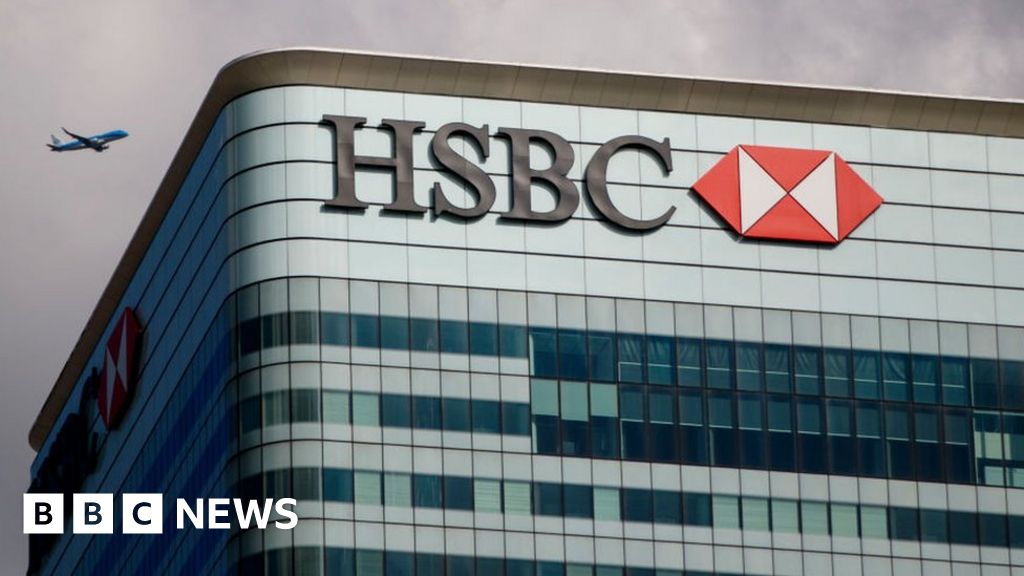
One of the banned ads seen in London
The UK's advertising regulator has banned two HSBC advertisements for being "misleading" about the company's work to tackle climate change.
The Advertising Standards Authority (ASA) said the banking giant can no longer run the ads which promoted its plans to reduce harmful emissions.
The watchdog said that the posters "omitted material information" about HSBC's activities.
It marks the ASA's first action against a bank for so-called "greenwashing".
An HSBC spokesperson told the BBC that "The financial sector has a responsibility to communicate its role in the low carbon transition to raise public awareness and engage its customers."
"We will consider how best to do this as we deliver our ambitious net zero commitments," they added.
Greenwashing - branding something as eco-friendly, green or sustainable when this is not the case - misleads consumers into thinking they are helping the planet by choosing those goods or services.
The adverts were seen at bus stops in London and Bristol last October, in the lead up to the highly-anticipated United Nations COP26 climate change summit.
The posters outlined HSBC's efforts to plant trees and help its customers achieve "net zero" emissions. Net zero means not adding to greenhouse gases already in the atmosphere by cutting and trying to balance out emissions.
One poster showed an image of waves crashing on a shore with text that said "Climate change doesn't do borders. Neither do rising sea levels. That's why HSBC is aiming to provide up to $1 trillion in financing and investment globally to help our clients transition to net zero".
The other advert was of tree growth rings and text which read "Climate changes doesn't do borders. So in the UK, we're helping to plant 2 million trees which will lock in 1.25 million tonnes of carbon over their lifetime".
The ASA upheld complaints that the ads "omitted significant information about HSBC's contribution to carbon dioxide and greenhouse gas emissions."
"Customers... would not expect that HSBC, in making unqualified claims about its environmentally beneficial work, would also be simultaneously involved in the financing of businesses which made significant contributions to carbon dioxide and other greenhouse gas emissions," the regulator added.
Climate change scrutiny
HSBC's efforts to address climate change have come under scrutiny in recent months.
In February, campaigners accused big banks, including HSBC, of pumping billions of dollars into new oil and gas production despite being part of a green banking group.
London-based ShareAction called on the banks to demand green plans from fossil fuel firms before funding them.
ShareAction said that 24 big banks, which joined the Net Zero Banking Alliance last year, had since provided $33bn (£29.1bn) for new oil and gas project.
At the time, a HSBC spokesman said the bank was "committed to working with our customers to achieve a transition towards a thriving low carbon economy".
Meanwhile, a senior HSBC executive drew controversy in May when he accused central bankers and other officials of exaggerating the risks of climate change.
Stuart Kirk, who was the global head of responsible investing at the bank's asset management division, said: "There's always some nut job telling me about the end of the world."
His role, which was based in London, involved considering the impact of investments on environmental, social and governance issues.
In July, Mr Kirk resigned from the bank and said that his comments had made his position "unsustainable".
You may also be interested in:
How can I deal with my eco-anxiety?
From Chip War To Cloud War: The Next Frontier In Global Tech Competition
The global chip war, characterized by intense competition among nations and corporations for supremacy in semiconductor ... Read more
The High Stakes Of Tech Regulation: Security Risks And Market Dynamics
The influence of tech giants in the global economy continues to grow, raising crucial questions about how to balance sec... Read more
The Tyranny Of Instagram Interiors: Why It's Time To Break Free From Algorithm-Driven Aesthetics
Instagram has become a dominant force in shaping interior design trends, offering a seemingly endless stream of inspirat... Read more
The Data Crunch In AI: Strategies For Sustainability
Exploring solutions to the imminent exhaustion of internet data for AI training.As the artificial intelligence (AI) indu... Read more
Google Abandons Four-Year Effort To Remove Cookies From Chrome Browser
After four years of dedicated effort, Google has decided to abandon its plan to remove third-party cookies from its Chro... Read more
LinkedIn Embraces AI And Gamification To Drive User Engagement And Revenue
In an effort to tackle slowing revenue growth and enhance user engagement, LinkedIn is turning to artificial intelligenc... Read more