

HP Pilots Paper Delivery Service For Instant Ink Subscribers
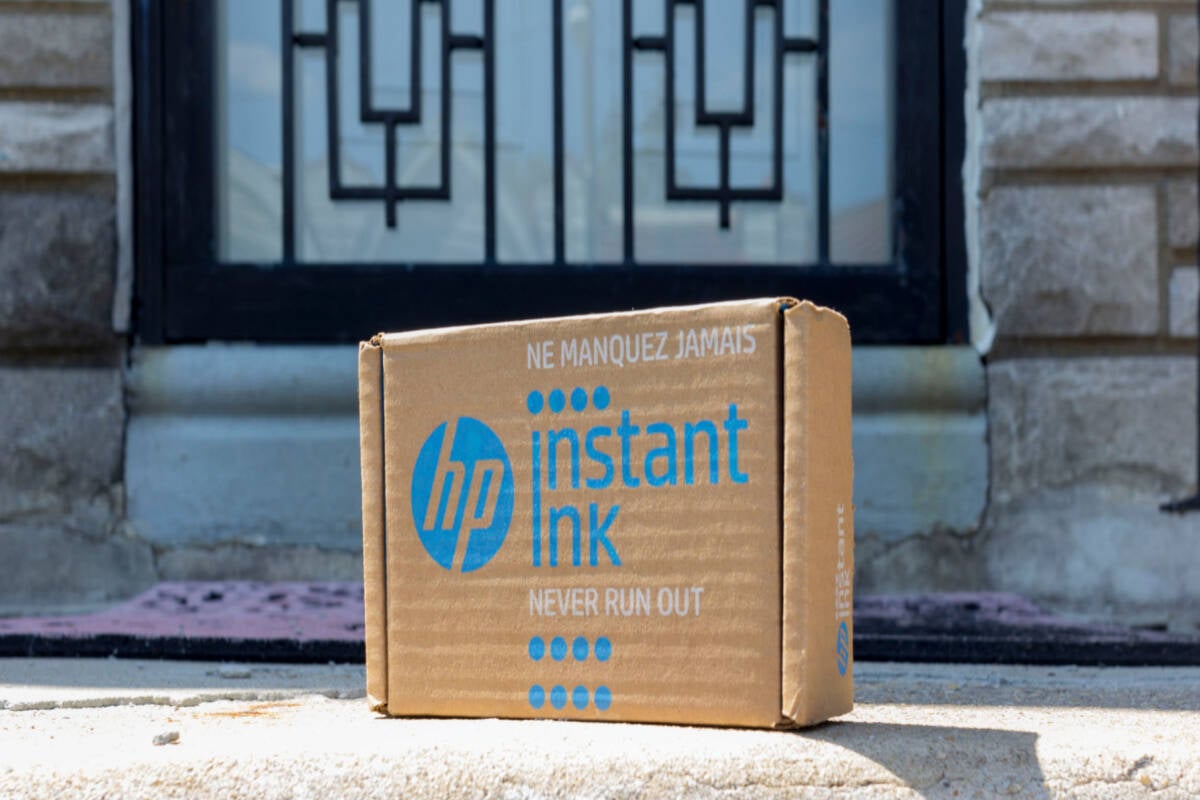
HP Inc is piloting a paper delivery service for Instant Ink subscribers as it looks to increase the amount of profit it can wring from customers.
The world is going to print fewer and fewer pages now that employees work from both the office and home, so achieving a greater "share of wallet", as it is often referred to by tech execs, is top of mind for print vendors.
According to IDC, some 2.8 trillion pages were printed in 2020, down 14 percent year-on-year (or 450 million fewer sheets) but it may recover to some degree.
"The amount of printing in the office will be around 80 percent of what we were projecting it to be before the pandemic started," Enrique Lores, CEO at HP, told attendees of the Cowan 50th Annual Technology, Media and Telecom Conference.
"There's going to be an impact because with fewer people in the offices there will be fewer pages printed in the office," he added.
That 80 percent is subject to change, and could be revised downwards. It is not certain how many people will return to their offices and the frequency at which they do.
HP changed tack in 2020 to rebalance profitability between print hardware and supplies following a drop in its bottom line and a proliferation of consumables remanufacturers. Ink was traditionally where HP made the lion's share of its profits.
Lores told the conference that HP had been "losing money with close to 25 percent of our customers.".
The solution? It raised the upfront price of hardware for customers that do not want to use HP-branded supplies and made printers that locked out non-HP consumables, meaning users couldn't load up off-brand toner. This is known as HP+, and gives customers one of these two options across the portfolio.
The heavy promotion of subscriptions has grown the installed base of Instant Ink customers to 11 million worldwide from 8 million 18 months ago. Lores said he sees Instant Ink "as one of the most exciting and more rewarding things from an investor perspective."
He added: "[W]hen we shift customers to the Instant Ink model, the subscription model… we make more money per customer. It's also a better value proposition for the customer. So it's a win-win for both. And we make sure that this customer is always using HP supplies. So really our goal is to shift as many consumers as we can to the subscription model."
Between 20 to 30 percent of new customers are buying printing in this way but HP would like that figure to be closer to 50 to 60 percent.
"It's very critical," Lores added, "not only because of the impact it has in the Print business, but also because of… making more money per customer, also because it's now a platform to sell additional services."
- Instant Ump: HP Inc's subscription ink services hiking prices from next month
- Canon: Chip supplies are so bad that our ink cartridges will look as though they're fakes
- BOFH: Where do you think you are going with that toner cartridge?
- HP bows to pressure, reinstates free monthly ink plan... for existing customers
And those services? A new one was piloted last quarter.
"We have been testing now the service of delivering paper to these customers, which is another key value proposition because if you print at home having to go buy paper [is] heavy, very painful, and we are going to be delivering that."
He added: "And this is just an example of additional services that we are going to be building on top of the platform. And for every service, we will increase the amount of money that we make per customer."
HP said this will be scaled in the following months.
The Register has asked HP for more details of the pilot, including where it is taking place, what other services is HP preparing and where the paper is sourced.
Readers may be wondering if HP paper is competitive with market rates. The cost of print ink from all of the branded vendors is not cheap, costing on average 286 percent more than third party alternatives. ®
From Chip War To Cloud War: The Next Frontier In Global Tech Competition
The global chip war, characterized by intense competition among nations and corporations for supremacy in semiconductor ... Read more
The High Stakes Of Tech Regulation: Security Risks And Market Dynamics
The influence of tech giants in the global economy continues to grow, raising crucial questions about how to balance sec... Read more
The Tyranny Of Instagram Interiors: Why It's Time To Break Free From Algorithm-Driven Aesthetics
Instagram has become a dominant force in shaping interior design trends, offering a seemingly endless stream of inspirat... Read more
The Data Crunch In AI: Strategies For Sustainability
Exploring solutions to the imminent exhaustion of internet data for AI training.As the artificial intelligence (AI) indu... Read more
Google Abandons Four-Year Effort To Remove Cookies From Chrome Browser
After four years of dedicated effort, Google has decided to abandon its plan to remove third-party cookies from its Chro... Read more
LinkedIn Embraces AI And Gamification To Drive User Engagement And Revenue
In an effort to tackle slowing revenue growth and enhance user engagement, LinkedIn is turning to artificial intelligenc... Read more