

How To Level Up Your Multi-site IT
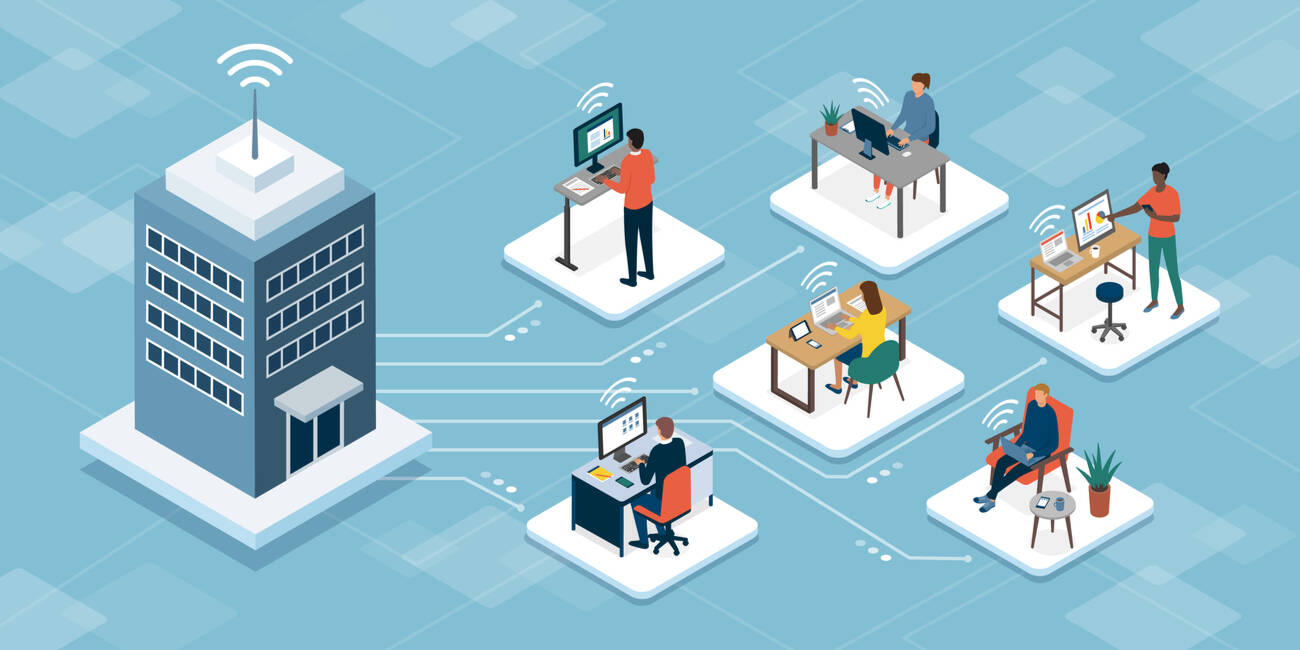
Partner content For organizations with multiple sites, each location must continue operating if it loses connectivity to the core datacenter or the cloud. Remote offices, branch offices (ROBO), point-of-sale, manufacturing control systems, scheduling, and security cannot depend solely on WAN availability. Rising VMware costs now threaten the ability to maintain this independence. Some will consider pushing more ROBO workloads into the cloud to offset the licensing expense, but that increases dependence on constant connectivity and adds risk.
Use this moment to rethink infrastructure
The VMware shift is not just a financial problem. It's an opportunity to re-examine the entire ROBO infrastructure. This is the time to simplify complexity, consolidate functions, and acquire new capabilities that enhance operations and site resiliency, all while reducing costs. A well-chosen alternative should not only replace the hypervisor but prepare the organization for AI workloads, both at the edge and in the core. That means supporting GPU resources, handling low-latency inference at the site, and enabling large-scale training or analytics in the data center.
Is the cloud a VMware alternative?
The cloud appears to be a simple answer to VMware's rising costs. It removes the need to purchase and maintain on-premises hardware, shifts spending to a subscription model, and offers rapid scalability.
However, the cloud is as dependent on a reliable network connection as a core data center. If connectivity drops or latency increases, site operations can be interrupted, making it unsuitable as the sole infrastructure option for environments that require continuous local processing.
Over time, the ongoing expense of renting compute, storage, and networking resources becomes a budget challenge. In many cases, the total cost of ownership (TCO) can exceed the cost of owning and operating hardware. The key is to find infrastructure software that removes the complexity of operating and maintaining on-premises hardware.
Where the right alternative can cut costs
The right infrastructure platform can reduce expenses and complexity in multiple areas:
- Networking: Integrates routing, switching, and network segmentation into the platform, reducing or removing the need for standalone network appliances.
- Data Protection: Includes built-in snapshots, replication, and disaster recovery workflows. It enables organizations to retire third-party backup systems and appliances.
- Hardware: Runs on a wide range of commodity servers, avoiding high-margin proprietary hardware requirements.
- Management: Centralizes control of all sites with a single interface that works even with intermittent connectivity, reducing tool sprawl and the labor needed to manage multiple environments.
- AI Readiness: Supports GPUs and flexible workload placement so AI tasks can run where they make the most sense without additional infrastructure.
What to look for in a replacement
When evaluating options, don't stop at VMware-compatible or hypervisor-only solutions. Look for a platform that:
- Collapses the stack: Integrates storage, virtualization, networking, and client-consumable AI into the core infrastructure software, removing the need for separate systems.
- Runs the same stack everywhere: The core, edge, and remote offices should run the same software stack so updates, security policies, and workflows are consistent.
- Scales down without losing capability: Supports small two-node or three-node deployments with the same functionality as larger clusters.
- Keeps sites running through outages: Maintains full operational capability at each site without dependency on the WAN or cloud.
- Provides built-in protection and recovery: Offers snapshots, replication, and restore options that meet your RPO/RTO needs without extra tools.
- Offers multi-site visibility and management: Uses a single console to monitor and manage every site, with real-time health data, policy enforcement, and configuration control.
- Supports broad hardware choice: Runs on multiple server brands to avoid lock-in and reduce procurement costs.
- Delivers AI capability at core and edge: Hosts GPU-powered workloads locally or centrally, with the flexibility to move tasks as needs change.
- Handles fleet management: Enables automated, non-disruptive upgrades that can be deployed quickly during the often-limited windows when venues are available for IT maintenance. Includes a high-level, estate-wide management GUI to oversee every site's status and performance from a single view.
The risks of waiting or narrow thinking
Delaying a decision means absorbing higher VMware costs while missing a chance to modernize. Replacing only the hypervisor preserves the same operational complexity and vendor sprawl. By broadening the scope of the replacement, organizations can consolidate functions, simplify operations, and prepare for future demands without redesigning again in a few years.
VergeOS is an example of a platform that delivers these benefits today. It replaces VMware while consolidating virtualization, storage, networking, and data protection into one software-defined infrastructure. It runs identically at the core, ROBO, and edge, providing independence during outages, lowering hardware costs, and enabling AI workloads both locally and centrally.
Read more about how Topgolf is choosing VergeOS for its 100+ venues, and explore the broader context in The Infrastructure Problem.
Join us for a live discussion with the Topgolf IT team as they share their VMware exit experience and why they chose VergeOS: Register for the Infrastructure Tee-Off Webinar.
Contributed by VergeIO.
From Chip War To Cloud War: The Next Frontier In Global Tech Competition
The global chip war, characterized by intense competition among nations and corporations for supremacy in semiconductor ... Read more
The High Stakes Of Tech Regulation: Security Risks And Market Dynamics
The influence of tech giants in the global economy continues to grow, raising crucial questions about how to balance sec... Read more
The Tyranny Of Instagram Interiors: Why It's Time To Break Free From Algorithm-Driven Aesthetics
Instagram has become a dominant force in shaping interior design trends, offering a seemingly endless stream of inspirat... Read more
The Data Crunch In AI: Strategies For Sustainability
Exploring solutions to the imminent exhaustion of internet data for AI training.As the artificial intelligence (AI) indu... Read more
Google Abandons Four-Year Effort To Remove Cookies From Chrome Browser
After four years of dedicated effort, Google has decided to abandon its plan to remove third-party cookies from its Chro... Read more
LinkedIn Embraces AI And Gamification To Drive User Engagement And Revenue
In an effort to tackle slowing revenue growth and enhance user engagement, LinkedIn is turning to artificial intelligenc... Read more