

How Fixed Wireless Access Can Bridge The Digital Divide Wherever You Are
Sponsored feature The potential of online education was starkly illustrated during the pandemic, when entire families turned to digital devices and online platforms during lockdown. But not everyone was in a position to benefit.
For children and teachers in geographically remote areas, like Bone Regency in South Sulawesi, Indonesia, the digital divide is not a theoretical concept. It's a physical thing, shaping their life chances. And it is not easily bridged by conventional fiber.
Researchers from Universitas Cahaya Prima in Indonesia highlighted this in their study on Examining Digitalization and Education Equity in Remote Areas. It investigated disparities in digital access in Bone Regency.
They showed how children and teachers don't just need the right devices to benefit from online education. They also need to have stable internet access. Its lack of availability in more remote areas means these children will continue to struggle to access distance learning and certification opportunities. Those are the things that can deliver new skills outside of big cities.
This digital divide isn't just an issue for less developed or geographically challenging countries. In the US, for example, FCC figures show 7.2 million homes and businesses do not have access to high-speed internet. Meanwhile, the National Telecommunications and Information Administration found that in 2022, 24 million people in the US live in households where no-one uses the internet at home. Needless to say these households are concentrated in rural and low income communities, which are likely to be bypassed by fiber.
Ironically, there's a technology that can perfectly bridge this digital divide and offset the challenges of rolling out fiber.
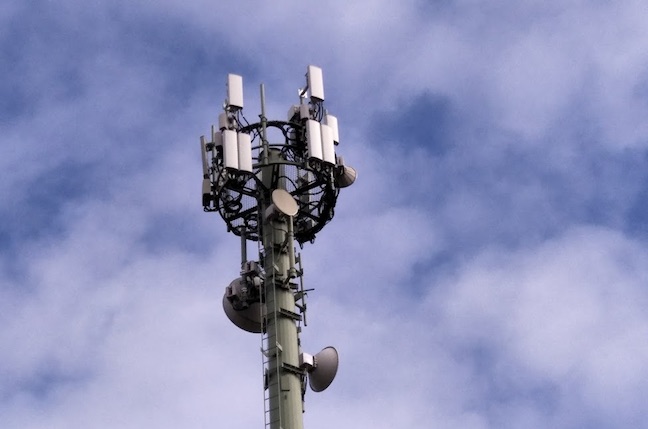
Fixed wireless access (FWA) has been part of the data connectivity tool kit since at least the 1970s. The premise is simple: Use wireless technology to offer broadband-like connectivity to premises over radio waves rather than fiber or copper. Instead of a traditional router, the customer has a wireless device which connects to a cell tower, which is then connected to the backhaul network.
Theoretically, FWA makes for a fast deployment. Once the cell tower equipment is in place, a customer premise only needs an antenna or other transceiver to get online. And moving that connection is far less complex than moving a traditional fixed broadband connection.
But take up of FWA has not been as strong as might be expected. Likewise, the public is relatively unaware of the technology. There were some drawbacks to earlier versions of the technology. These included the need for very large antennas and high power demands, which made for complications at the customer end.
Moreover, the bandwidth available was frequently sub-par while customers often complained of latency issues. Added to this, the general focus over the last couple of decades has been on rolling out fiber as the answer to bringing fast internet to the masses.
But this could all be changing. That's partly because fiber has already been extended into those areas where it is easy to deploy. The underserved areas are often in rural or geographically challenging areas where rolling out fiber may be prohibitively expensive or challenging, even with government or other support.
Fixed wireless moves ahead
At the same time, new applications are emerging that lend themselves to FWA. For example, IoT applications in industry demand high-speed connectivity, but fiber might not be feasible or even desirable. Likewise, advances in telemedicine and, of course, remote education are predicated on reliable, high-bandwidth connectivity if they are to reach people in remote areas.
Matching these demands, FWA technology has come on in leaps and bounds and has benefited from the roll-out of 5G and even 6G technologies and the development of their broader ecosystem.
5G operates at 25GHz and above, meaning that it relies on millimeter waves. These can deliver between ten and 100 times more bandwidth and capacity than previous wireless network technologies, and with much lower latency. With speeds of 1Gbps and latency of less than 20ms, this easily puts FWA on a par with fiber.
At the same time, 5G relies on massive Multiple Input Multiple Output technology (MIMO). This puts a large number of antennas at the base station, serving multiple users with highly focused narrow beams. This further boosts its ability to support more users and more traffic, even in more challenging environments.
This has boosted take up of FWA, with the market growing from $8.49bn in 2023 to $9.47bn in 2024 according to Wise Guys Reports, and set to reach $22.6bn by 2032. The GSA says 567 operators across 188 countries offered 5G FWA services as of May 2025. This is, a massive jump on the 41 operators offering the technology just three years before.
These developments have massively boosted the potential of FWA to handle high-bandwidth applications. It's now a viable alternative to fiber in any environment, not just a fallback in challenging locations that have yet (or may never) get fiber connectivity.
That makes it a great choice for reaching areas like Bone Regency, or those underserved areas of the US. But as a ZTE spokesperson explains, FWA also lends itself to challenging urban environments. These include historical areas with older buildings and infrastructure, which present issues to rolling out fiber. Likewise, temporary or short-term structures such as those supporting sporting events or natural disaster response may need internet access without fixed fiber.
FWA has also been used to bring broadband access to Finland's many sparsely populated islands. These would not justify a traditional fiber rollout, but Finnish operators have worked with ZTE to hook up over 400,000 5G FWA users.
The technology can be improved further to overcome consumer or enterprise pain points. These include network complexity or latency. There's room for enhancements to help operators run their networks more efficiently, reduce congestion, and manage their equipment. That is what ZTE has focused on with its upgraded Green Intelligence and Security (GIS) product philosophy.
The application of AI
GIS 2.0 incorporates AI into ZTE's FWA technology to optimize performance right up the stack. This includes using AI to learn from user behavior. It categorizes over 4,000 different applications.
So, as the ZTE spokesperson explains, when it detects a user is gaming, "The system prioritizes bandwidth allocation for gaming traffic to ensure smooth gameplay." This can deliver a 20 percent boost in bandwidth efficiency and reduce network congestion by 30 percent.
The technology also detects and blocks cyberthreats in real time. And it uses power more efficiently, for example, learning when domestic users are likely to be at work and shutting down functions accordingly.
Stepping up a level, ZTE's full-stack AI FWA Solution features AI-driven features such as AI Multi-Scenario Application, AI QoS Management, AI Voice Control, AI Application Recognition, AI Children Protection, and real-time AI Network Optimization.
Operators also benefit from its AI-based Smart Cloud Platform. This allows them to manage FWA devices across their estate more efficiently and further slash the need to make onsite visits. Again, while improving customer experience.
On the consumer side, the ZTE G5 Ultra features a 13dBi smart beam switching antenna, which delivers peak data rates of 19Gbps and supports tri-band Wi-Fi 7 and dual 2.5G network ports. This connectivity is supplemented by AI-powered voice control and QoS management. It automatically optimizes the user experience depending on application, such as gaming or video conferencing. This delivers optimal performance while also minimizing power use.
But ZTE's technology is not just targeted at home consumers or office applications. Its FWA technology is also packaged into devices for IoT and vehicle applications.
This further boosts ZTE's position in FWA. It already holds more than 1000 FWA-related patents and works with over 130 operators across 100 countries. As of 2024, it had shipped nearly 10 million 5G FWA and MBB terminals, while 100 million FWA and MBB devices have shipped with ZTE created silicon.
That leaves the company remarkably well positioned to contribute to and benefit from the continued growth in FWA, whether that's in connecting consumers in apartment blocks in rapidly expanding cities, business users, or sensors and robots across smart cities or factories.
Or children in areas like Bone Regency. Now they can finally benefit from the full array of digital education, no matter how far away they are from a traditional fiber connection.
Sponsored by ZTE.
From Chip War To Cloud War: The Next Frontier In Global Tech Competition
The global chip war, characterized by intense competition among nations and corporations for supremacy in semiconductor ... Read more
The High Stakes Of Tech Regulation: Security Risks And Market Dynamics
The influence of tech giants in the global economy continues to grow, raising crucial questions about how to balance sec... Read more
The Tyranny Of Instagram Interiors: Why It's Time To Break Free From Algorithm-Driven Aesthetics
Instagram has become a dominant force in shaping interior design trends, offering a seemingly endless stream of inspirat... Read more
The Data Crunch In AI: Strategies For Sustainability
Exploring solutions to the imminent exhaustion of internet data for AI training.As the artificial intelligence (AI) indu... Read more
Google Abandons Four-Year Effort To Remove Cookies From Chrome Browser
After four years of dedicated effort, Google has decided to abandon its plan to remove third-party cookies from its Chro... Read more
LinkedIn Embraces AI And Gamification To Drive User Engagement And Revenue
In an effort to tackle slowing revenue growth and enhance user engagement, LinkedIn is turning to artificial intelligenc... Read more