

House Prices Fall After Mini-budget, Says Nationwide
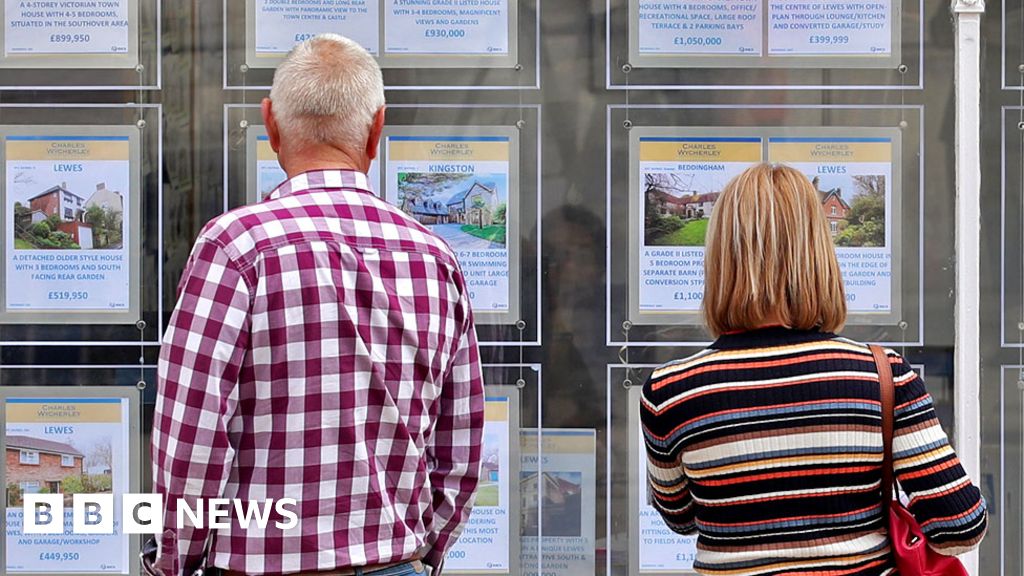
UK house prices fell for the first time in over a year last month, according to Nationwide, which said the turmoil sparked by Truss' government's mini-budget had hit housing sales.
Prices fell by 0.9% month-on-month in October, the first monthly decline in 15 months, the mortgage lender said.
The monthly fall was the largest since June 2020, at the height of the Covid pandemic.
Annual UK house price growth also slowed sharply last month.
"The market has undoubtedly been impacted by the turmoil following the mini-budget, which led to a sharp rise in market interest rates," said Robert Gardner, Nationwide's chief economist.
"Higher borrowing costs have added to stretched housing affordability at a time when household finances are already under pressure from high inflation," he added.
Investors reacted badly to the plan unveiled by the previous prime minister Liz Truss and her chancellor Kwasi Kwarteng in September, which promised billions of pounds of tax cuts without explaining how they would be paid for.
Mortgage rates rose and lenders also suspended hundreds of mortgage products, amid uncertainty over how to price these long term loans.
Across the UK, the average house price in October was £268,282.
Meanwhile, there was a sharp slowdown in annual house price growth last month, to 7.2% from 9.5% in September, and the housing market looks set to slow in the coming months, Nationwide said.
The figures paint a picture of "sharply weakening demand", said Susannah Streeter, senior investment and markets analyst at Hargreaves Lansdown.
"The disaster of the Trussenomics mini-budget, which saw bond markets take fright and lenders dramatically pull cheaper deals almost overnight, has clearly taken its toll on confidence among buyers," she said.
Ms Streeter warned that the property market will remain in sharp focus, with the Bank of England expected to raise interest rates again this week in an attempt to bring down the current rate of inflation.
"Housing affordability has been stretched so thinly any elastic in the market looks like it's about to snap, particularly with the Bank of England intent on more rate rises," she said.
This is another sign of a change to what we have become used to with the UK housing market.
A period of low mortgage rates and significantly rising house prices looks to be over.
Whether price rises slow, stall, or reverse - and to what extent - is still a matter of debate.
The race for space seen among buyers during Covid seems like a long time ago too.
While first-time buyers might finally get the lower house prices many have craved, they are now hit with the reality of mortgage payments taking a bigger chunk of their income than they might have expected - and another financial headache.
From Chip War To Cloud War: The Next Frontier In Global Tech Competition
The global chip war, characterized by intense competition among nations and corporations for supremacy in semiconductor ... Read more
The High Stakes Of Tech Regulation: Security Risks And Market Dynamics
The influence of tech giants in the global economy continues to grow, raising crucial questions about how to balance sec... Read more
The Tyranny Of Instagram Interiors: Why It's Time To Break Free From Algorithm-Driven Aesthetics
Instagram has become a dominant force in shaping interior design trends, offering a seemingly endless stream of inspirat... Read more
The Data Crunch In AI: Strategies For Sustainability
Exploring solutions to the imminent exhaustion of internet data for AI training.As the artificial intelligence (AI) indu... Read more
Google Abandons Four-Year Effort To Remove Cookies From Chrome Browser
After four years of dedicated effort, Google has decided to abandon its plan to remove third-party cookies from its Chro... Read more
LinkedIn Embraces AI And Gamification To Drive User Engagement And Revenue
In an effort to tackle slowing revenue growth and enhance user engagement, LinkedIn is turning to artificial intelligenc... Read more