

Homes Set To Be Heated By Sewage Plants In Future
By Roger Harrabin
BBC environment analyst
image copyrightGetty Images
Waste heat from data centres and sewage works may keep many people warm in a future low-carbon Britain.
Heat from industries and incineration could also be captured and piped to homes, hospitals, schools, and offices.
Warmth may also be sucked out rivers and the sea - and from old coalmines - using heat pumps which work like fridges in reverse.
A fifth of heat needed for buildings could come from so-called district heat networks, government advisers said.
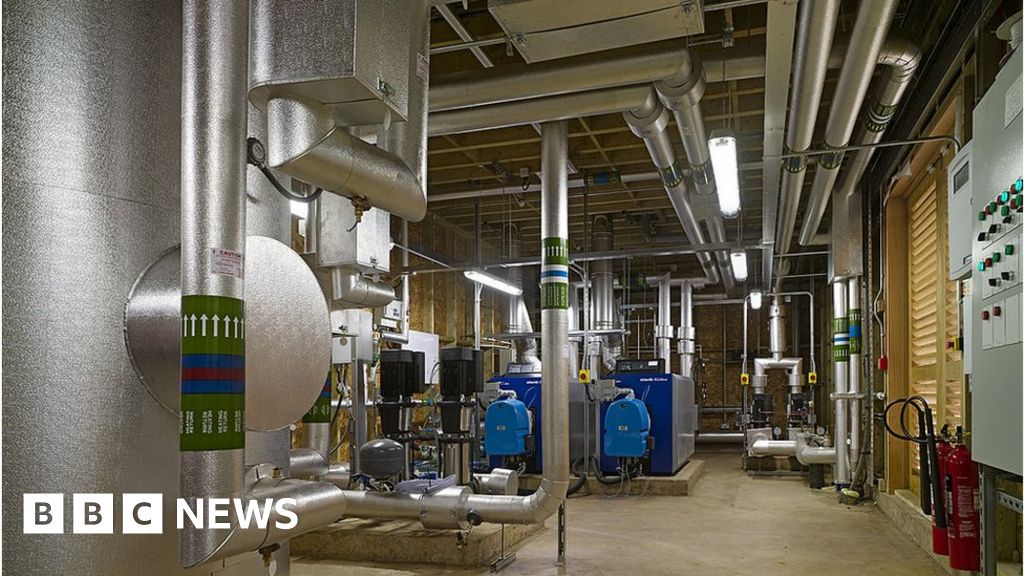
These are grids of pipes laid under city streets to convey warm water generated at a centralised location by low-carbon technology.
It's part of a heating revolution being forced ahead by the UK's commitment to combat climate change by ending the burning of gas for heat.
So far, debate has focused on the battle between individual air source heat pumps or hydrogen heating for people's homes.
But Chris Stark from the government's advisory Climate Change Committee told BBC News: "It's really important to get district heating into the discussion. It's so appealing in population-dense cities.
"And it's the best answer for conservation areas, because it offers a low-carbon solution for housing where it would be difficult or expensive to upgrade the fabric of the building itself."
Coalmine heat
District heating networks like this are common in Scandinavia, where many are fuelled by scrap from the timber industry or municipal waste from people's homes.
image copyrightGov
Mr Stark said each town and city should start planning and zoning its own heat decarbonisation. "The sooner we get on with it the better," he said. He expects £20bn to be invested into district heating by 2030.
Flooded abandoned coal mines might provide a useful source of heat, he says.
And London has already opened the first stage of a heat network harvesting warmth from the Tube.
The CCC is urging the government in its forthcoming Heat and Buildings Strategy to provide multi-year funding for district schemes.
Bigger radiators
It's an immense challenge for the UK's fledgling district heat industry, which currently supplies just 2% to 3% of heat.
What's more, that is almost all provided by large boilers running on gas - and these will have to convert to low-carbon sources to make the plan work.
People may have to fit new radiators up to a fifth bigger so the heat system can work at more efficient lower temperatures.
Simon Woodward from the industry body UK District Energy Association (UKDEA) told BBC News: "There's enough heat wasted every day in the UK from industry and other sources to heat every home.
"The big question is: how do we capture that waste heat and get it to the places that need the heat?"
The government is working on a plan to define zones suitable for district heating by 2025.
Local authorities will be expected to be involved in either commissioning or delivering the schemes.
Mr Woodward said district heating would mainly be used for larger buildings.
He admitted that some users of district heating had been ripped off in the past.
He urges ministers to adopt a system in which the local authority charges users based on a fair price of energy, rather than on insisting on 100% return of costs.
From Chip War To Cloud War: The Next Frontier In Global Tech Competition
The global chip war, characterized by intense competition among nations and corporations for supremacy in semiconductor ... Read more
The High Stakes Of Tech Regulation: Security Risks And Market Dynamics
The influence of tech giants in the global economy continues to grow, raising crucial questions about how to balance sec... Read more
The Tyranny Of Instagram Interiors: Why It's Time To Break Free From Algorithm-Driven Aesthetics
Instagram has become a dominant force in shaping interior design trends, offering a seemingly endless stream of inspirat... Read more
The Data Crunch In AI: Strategies For Sustainability
Exploring solutions to the imminent exhaustion of internet data for AI training.As the artificial intelligence (AI) indu... Read more
Google Abandons Four-Year Effort To Remove Cookies From Chrome Browser
After four years of dedicated effort, Google has decided to abandon its plan to remove third-party cookies from its Chro... Read more
LinkedIn Embraces AI And Gamification To Drive User Engagement And Revenue
In an effort to tackle slowing revenue growth and enhance user engagement, LinkedIn is turning to artificial intelligenc... Read more