

Hitachi Train Cracks Report Calls For Standards Review
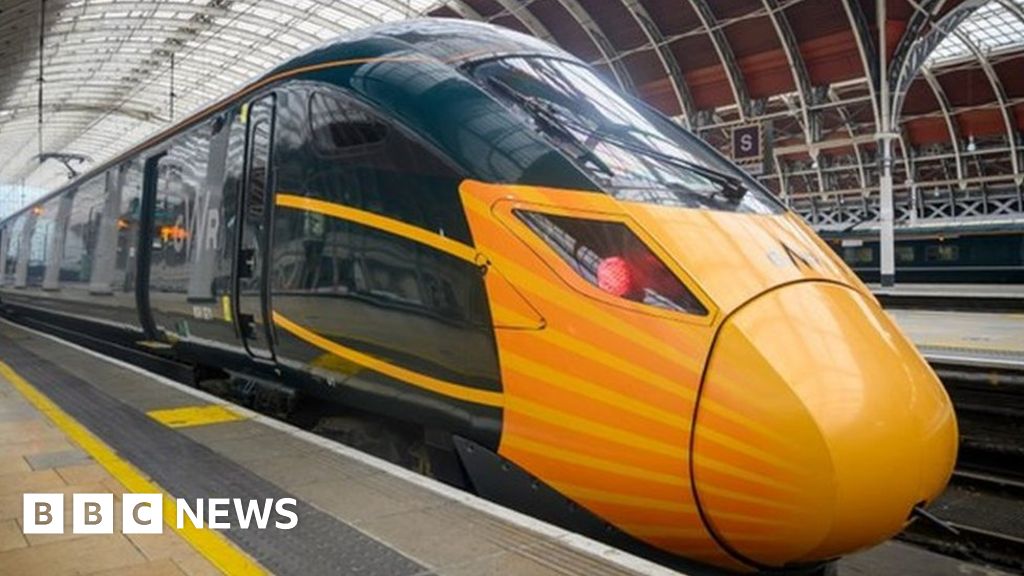
Image source, GWR
182 Hitachi trains were withdrawn from service due to cracks
Industry standards should be reviewed after fatigue and corrosion led to high-speed trains being withdrawn from service, the rail regulator has found.
Cracks were found in more than 180 Hitachi trains being used by Great Western Railway (GWR) and London North Eastern Railway (LNER) last year.
The Office of Rail and Road (ORR) said the damage was partly due to the trains being corroded by salt in the air.
Hitachi Rail said it took "appropriate action to prioritise safety".
In May 2021, the withdrawal of the damaged Hitachi Class 800 and 385 series trains led to a week of delays and cancellations for travellers.
Affected operators were Great Western Railway, London North Eastern Railway, TransPennine Express and Hull Trains.
Cracks were also found after examination of ScotRail's Class 385 and Southeastern's Class 395 trains.
The ORR investigation found the design of the trains complied with existing standards but that corrosion cracks were found on lifting points - which allow carriages to be raised during maintenance work - resulting from the use of a particular type of aluminium, which was corroded by salt in the air.
It said fatigue cracking was caused by the "trains experiencing greater loads from train movement than allowed for in the original design".
It added: "It is not yet known for certain why this happened, although potential factors include wheel wear and track design."
The trains first entered service in 2017.
'No safety failures'
The ORR recommended further work was carried out to identify the reasons for cracks developing in the rolling stock.
It said it had been assured of "no safety failures and trains have performed as specified" since they returned to service.
Ian Prosser, ORR's chief inspector of railways, said Hitachi Rail and other operators had put in place "robust plans to make sure the right safety issues are being managed".
"Our review provides a clearer picture of the issue and we will continue our oversight to ensure work moves forward to agree the permanent solution and our recommendations are acted on," he added.
"It is important that the whole industry works together to learn lessons from what has happened."
Hitachi Rail has proposed a plan to replace and modify affected parts to be completed over six years in order to minimise the number of trains out of service at one time.
In a statement, the company said the report confirmed "all Hitachi trains meet relevant standards and that we took the appropriate action to prioritise safety and maintain train availability".
"The proposed engineering solutions outlined in the report are currently being reviewed by all partners," it added.
"We are working together to finalise the plan for their implementation, while always prioritising safety and train availability to support consistent passenger services."
Analysis
By Paul Clifton, BBC South transport correspondent
When the cracks were discovered it caused chaos with Great Western Railway reduced to running just three intercity trains for a time.
Tens of thousands of people found they could not travel.
Now we are told it will take up to six years to put right.
And the precise solution to the hairline cracks still hasn't been agreed.
What we do know is that Hitachi will rent space at Eastleigh Works in Hampshire, and take trains out of service one at a time to fix them - it won't be cheap.
For now, Great Western Railway says it has enough trains available to match its timetable, and passengers should not be affected.
Follow BBC South on Facebook, Twitter, or Instagram. Send your story ideas to south.newsonline@bbc.co.uk.
Related Internet Links
The BBC is not responsible for the content of external sites.
From Chip War To Cloud War: The Next Frontier In Global Tech Competition
The global chip war, characterized by intense competition among nations and corporations for supremacy in semiconductor ... Read more
The High Stakes Of Tech Regulation: Security Risks And Market Dynamics
The influence of tech giants in the global economy continues to grow, raising crucial questions about how to balance sec... Read more
The Tyranny Of Instagram Interiors: Why It's Time To Break Free From Algorithm-Driven Aesthetics
Instagram has become a dominant force in shaping interior design trends, offering a seemingly endless stream of inspirat... Read more
The Data Crunch In AI: Strategies For Sustainability
Exploring solutions to the imminent exhaustion of internet data for AI training.As the artificial intelligence (AI) indu... Read more
Google Abandons Four-Year Effort To Remove Cookies From Chrome Browser
After four years of dedicated effort, Google has decided to abandon its plan to remove third-party cookies from its Chro... Read more
LinkedIn Embraces AI And Gamification To Drive User Engagement And Revenue
In an effort to tackle slowing revenue growth and enhance user engagement, LinkedIn is turning to artificial intelligenc... Read more