

Gone In 40 Days: US Drops Ban On Export Of Chip Design Tools To China
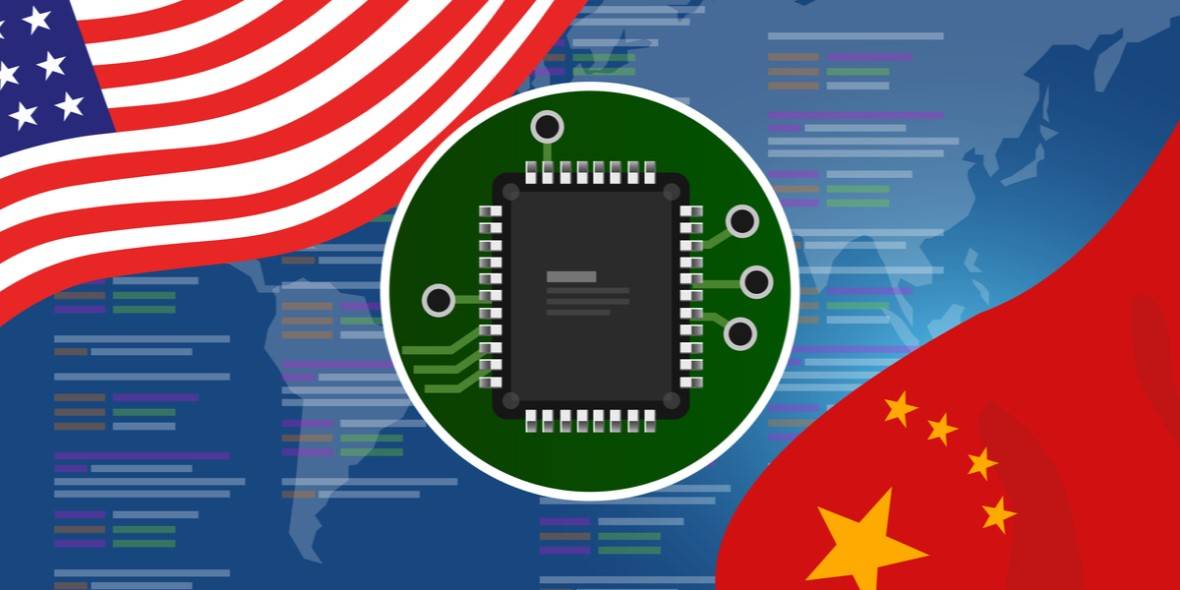
World War Fee The US has lifted the requirement to secure a license before exporting Electronic Design Automation (EDA) tools to China, say EDA vendors.
EDAs are critical semiconductor chip design, test, and validation tools and the Trump Administration introduced the licensing requirement in May.
Doing so was consistent with US policy to deny China access to the most advanced semiconductor technology, on grounds that China uses it for military purposes and to advance its economic development in ways that make it a more formidable competitor in all fields.
On Wednesday, the Bureau of Industry and Security (BIS) of the US Department of Commerce ended the licensing requirement.
Statements from EDA vendors Synopsys and Siemens EDA both state that the BIS sent them a letter that says export controls on their wares have ended. Another key EDA vendor, Cadence Design Systems, reportedly also received a similar letter.
Siemens said BIS advised it of the ban on May 23rd, and its statement dated July 3rd says the regulator "recently" advised it of the new rule. The licensing requirement therefore lasted fewer than six weeks.
There's no word on why BIS lifted the licensing requirement, although the slightly more congenial tone of recent trade talks between the US and China are an obvious reason for Washington to ease export restrictions.
Whatever the reason for the change, investors appear to have appreciated it as the share price for Cadence and Synopsys rose a few points on Wednesday.
- Chip design is a RISC-y business: Codasip puts itself up for sale
- Chip designers latest casualties in US-China trade war
- Intel tweaks its 18A process with variants tailored to mass-market chips, big AI brains
- Nvidia software exec Kari Briski on NIM, CUDA, and dogfooding AI
Also on Wednesday, BIS announced it reached a settlement with California-based company Alpha and Omega Semiconductor (AOS), which makes power management chips used in many electronics – and in 2019 allegedly sold 1,650 of them to Huawei in defiance of US bans.
A BIS Order [PDF] requires AOS to pay a civil penalty of $4.25 million, an outcome the company said "brings to an end the US government's five-year-plus investigation, which resulted in no criminal charges."
The company declared itself "pleased to bring this matter to a close with only limited administrative export control charges." ®
From Chip War To Cloud War: The Next Frontier In Global Tech Competition
The global chip war, characterized by intense competition among nations and corporations for supremacy in semiconductor ... Read more
The High Stakes Of Tech Regulation: Security Risks And Market Dynamics
The influence of tech giants in the global economy continues to grow, raising crucial questions about how to balance sec... Read more
The Tyranny Of Instagram Interiors: Why It's Time To Break Free From Algorithm-Driven Aesthetics
Instagram has become a dominant force in shaping interior design trends, offering a seemingly endless stream of inspirat... Read more
The Data Crunch In AI: Strategies For Sustainability
Exploring solutions to the imminent exhaustion of internet data for AI training.As the artificial intelligence (AI) indu... Read more
Google Abandons Four-Year Effort To Remove Cookies From Chrome Browser
After four years of dedicated effort, Google has decided to abandon its plan to remove third-party cookies from its Chro... Read more
LinkedIn Embraces AI And Gamification To Drive User Engagement And Revenue
In an effort to tackle slowing revenue growth and enhance user engagement, LinkedIn is turning to artificial intelligenc... Read more