

Foxconn Faces Fine For Unsanctioned Chinese Chip Investments
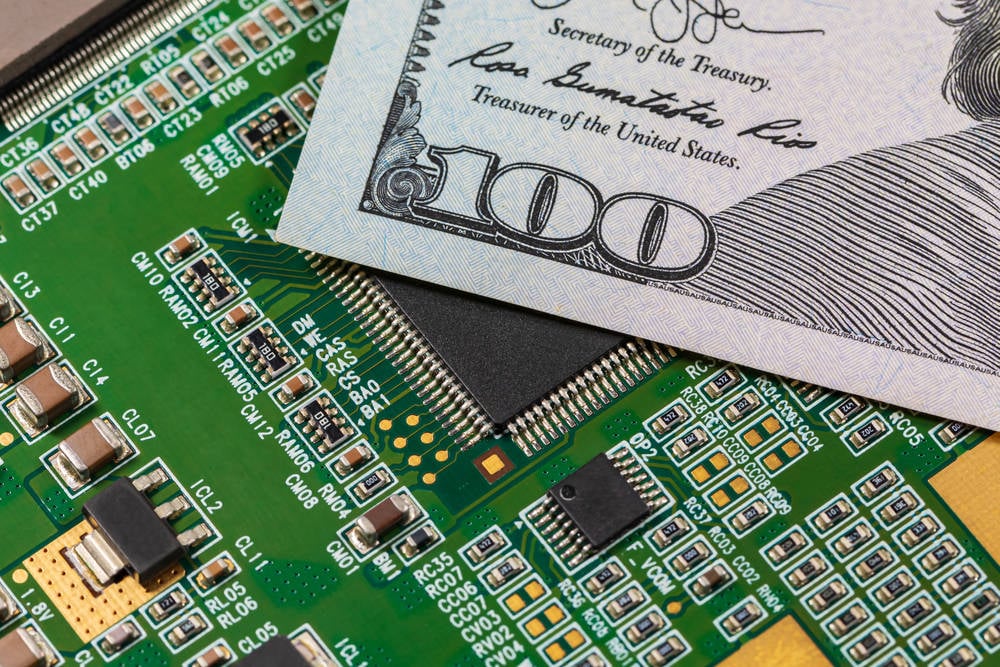
Foxconn is in hot water this week after the Taiwanese electronics manufacturer became a major stakeholder in Chinese semiconductor manufacturer Tsinghua Unigroup without regulatory approval.
Reuters reports the Taiwanese government is now weighing a $835,600 fine against Foxconn after it invested more than $798 million by way of a subsidiary. A fraction of a percent.
The deal comes as China looks to accelerate its domestic semiconductor manufacturing capabilities, which have lagged behind Taiwan, South Korea, and the United States by several generations. Taiwan is home to one of the largest and most advanced foundry operators, TSMC, which produces cutting-edge chips for the likes of AMD, Apple, Nvidia, Qualcomm, and others.
Foxconn’s decision to back the Chinese conglomerate could land the electronics giant afoul of Taiwanese law, which explicitly prohibits high-tech investments among Chinese firms perceived to be a national security at risk.
Citing unnamed officials within the Taiwanese government, Reuters reports that authorities believe Foxconn is not only guilty of failing to obtain regulatory approval, but might also be in violation of these laws. If true, Foxconn could find itself fined repeatedly until it pulls out of the deal.
Tsinghua Unigroup is a major chipmaker and foundry operator in China, with subsidiaries responsible for mobile chip design, NAND flash manufacturing, IoT, security chips, and IT infrastructure. These include Guoxin Micro, UNISOC, Yangtze Memory Technologies Co., Linxens, and Unicloud.
The company also holds a substantial stake in HPE’s H3C business, which produces networking appliances and servers, predominantly for the Chinese market.
- Beijing bails out bankrupt Chinese chipmaker Tsinghua Unigroup
- China's chip-making ambitions face setbacks
- China plans to toss foreign-made PCs from government agencies 'in two years'
- Foxconn factory fiasco could leave Wisconsinites on the hook for $300m
However the company has struggled in recent years. Its debts, then more than $30 billion, finally caught up with them last summer when the company was forced to file for bankruptcy.
This spring, Tsinghua Unigroup received a reprieve in the form of a $9.4 billion bailout from government-backed Beijing Jianguang Asset Management Co. Ltd. The company emerged from Bankruptcy proceeding this week.
Despite the cash infusion, China’s domestic foundry operators remain years behind their rivals in the U.S., South Korea, and Taiwan.
Semiconductor Manufacturing International Co., China’s largest domestic chip fab operates four foundries in China, but only recently began producing chips based on a 14nm manufacturing process.
By comparison, Intel began selling chips based on a 14nm node as far back as 2014. Today TSMC and Samsung are producing chips based on a 4nm process.
SMIC is reportedly laying the ground work to bring its own 7nm node to market. When those chips will arrive remains to be seen, but semiconductor manufacturing is a notoriously challenging market, where delays aren’t uncommon. Intel for example saw its 7nm manufacturing process delayed by more than year after defects were discovered in process in 2020.
However, Tsinghua Unigroup, SMIC, and other domestic chipmakers are likely to benefit from nationalist efforts within the Chinese government to eliminate foreign made systems and replace them Chinese-design and manufactured alternatives. This spring authorities reportedly directed government agencies to begin replace all foreign-made personal computers. ®
From Chip War To Cloud War: The Next Frontier In Global Tech Competition
The global chip war, characterized by intense competition among nations and corporations for supremacy in semiconductor ... Read more
The High Stakes Of Tech Regulation: Security Risks And Market Dynamics
The influence of tech giants in the global economy continues to grow, raising crucial questions about how to balance sec... Read more
The Tyranny Of Instagram Interiors: Why It's Time To Break Free From Algorithm-Driven Aesthetics
Instagram has become a dominant force in shaping interior design trends, offering a seemingly endless stream of inspirat... Read more
The Data Crunch In AI: Strategies For Sustainability
Exploring solutions to the imminent exhaustion of internet data for AI training.As the artificial intelligence (AI) indu... Read more
Google Abandons Four-Year Effort To Remove Cookies From Chrome Browser
After four years of dedicated effort, Google has decided to abandon its plan to remove third-party cookies from its Chro... Read more
LinkedIn Embraces AI And Gamification To Drive User Engagement And Revenue
In an effort to tackle slowing revenue growth and enhance user engagement, LinkedIn is turning to artificial intelligenc... Read more