

Fire Up That Macintosh II: Retro Techhead Gives The Web A Netscape 1.1 Makeover
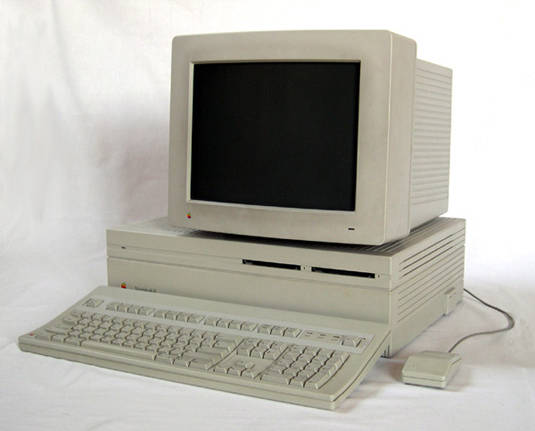
Feature Times change, and so has the www. Cast your mind back 20 years. Web pages used to be svelte little things, really just text and images, with the occasional Flash banner ad thrown in for good measure.
Now, they're applications, with even the simplest of pages buried under a mountain of JavaScript.
We could argue all day over whether this is a necessary evil or a cancer on the modern internet. One thing is certain: the march of time has rendered the web all but inaccessible to older (yet still functional) machines.
One new project aims to change that, translating the cacophony of the modern web to something that can be comprehended by the most early of web browsers.
FrogFind, created by Philadelphia-based retro computing enthusiast Sean Malseed, effectively distils the DuckDuckGo search engine into its most basic form, stripping out anything that might confound browsers of Netscape vintage. Think CSS, JavaScript, SSL, and even tables.
The same treatment is dished out to search results. Clicking on a page sees it immediately translated through Mozilla's Readability library, and further processed to remove modern browser elements.
Put simply: you click a link and it spits back text and images... and that's about it.
The end result is a modern version of the internet that can trundle along happily on machines older than this writer. Malseed claims FrogFind can run on classic 68K Macs with a measly 512x384 resolution.
We've been unable to confirm this as your correspondent's Macintosh Classic is currently in a state of complete disassembly pending a full capacitor replacement, but testing on a PowerBook G3 Pismo running Mac OS 9 and Internet Explorer 5 showed the site working smoothly.
There are limitations, however. You can't just head to a website through the search bar. Everything must go through FrogFind and thus DuckDuckGo. And while you can navigate to other pages, the only links that are rendered are those within the body of a page. And you can forget about anything that requires interaction, or real-time asynchronous rendering.
News sites are typically fine. More interactive fare, less so.
Malseed's previous exploits include a souped-up Apple Power Mac G4 Cube capable of smoothly running tween timewaster Minecraft, and creating a version of Google News that works sufficiently well on John Sculley-era Macintosh computers.
Malseed said FrogFind was conceived as a thought experiment to see how much of the internet he could de-bloat. From our perspective, it proved remarkably illustrative of how bulky modern sites are, with pages loading almost instantaneously, even though they'd travelled through an intermediate service.
They don't make them like they used to, eh? ®
From Chip War To Cloud War: The Next Frontier In Global Tech Competition
The global chip war, characterized by intense competition among nations and corporations for supremacy in semiconductor ... Read more
The High Stakes Of Tech Regulation: Security Risks And Market Dynamics
The influence of tech giants in the global economy continues to grow, raising crucial questions about how to balance sec... Read more
The Tyranny Of Instagram Interiors: Why It's Time To Break Free From Algorithm-Driven Aesthetics
Instagram has become a dominant force in shaping interior design trends, offering a seemingly endless stream of inspirat... Read more
The Data Crunch In AI: Strategies For Sustainability
Exploring solutions to the imminent exhaustion of internet data for AI training.As the artificial intelligence (AI) indu... Read more
Google Abandons Four-Year Effort To Remove Cookies From Chrome Browser
After four years of dedicated effort, Google has decided to abandon its plan to remove third-party cookies from its Chro... Read more
LinkedIn Embraces AI And Gamification To Drive User Engagement And Revenue
In an effort to tackle slowing revenue growth and enhance user engagement, LinkedIn is turning to artificial intelligenc... Read more