

Fibre Broadband Uptake In UK Lags Behind OECD Countries

Optical-fibre internet now makes up 32 per cent of fixed broadband subscriptions across the OECD countries, and is the fastest growing broadband technology. However, there is a mixed picture with cable still dominant in the Americas and the UK still predominantly DSL.
These figures come from an update to the OECD's broadband portal, indicating that fibre subscriptions grew by 15 per cent across the OECD countries between June 2020 and June 2021, with demand for faster internet speeds as employees worked remotely due to COVID-19 restrictions cited as one reason.
Fixed broadband subscriptions in OECD countries totalled 462.5 million as of June 2021, up from 443 million a year earlier, while mobile broadband subscriptions totalled 1.67 billion, up from 1.57 billion a year earlier.
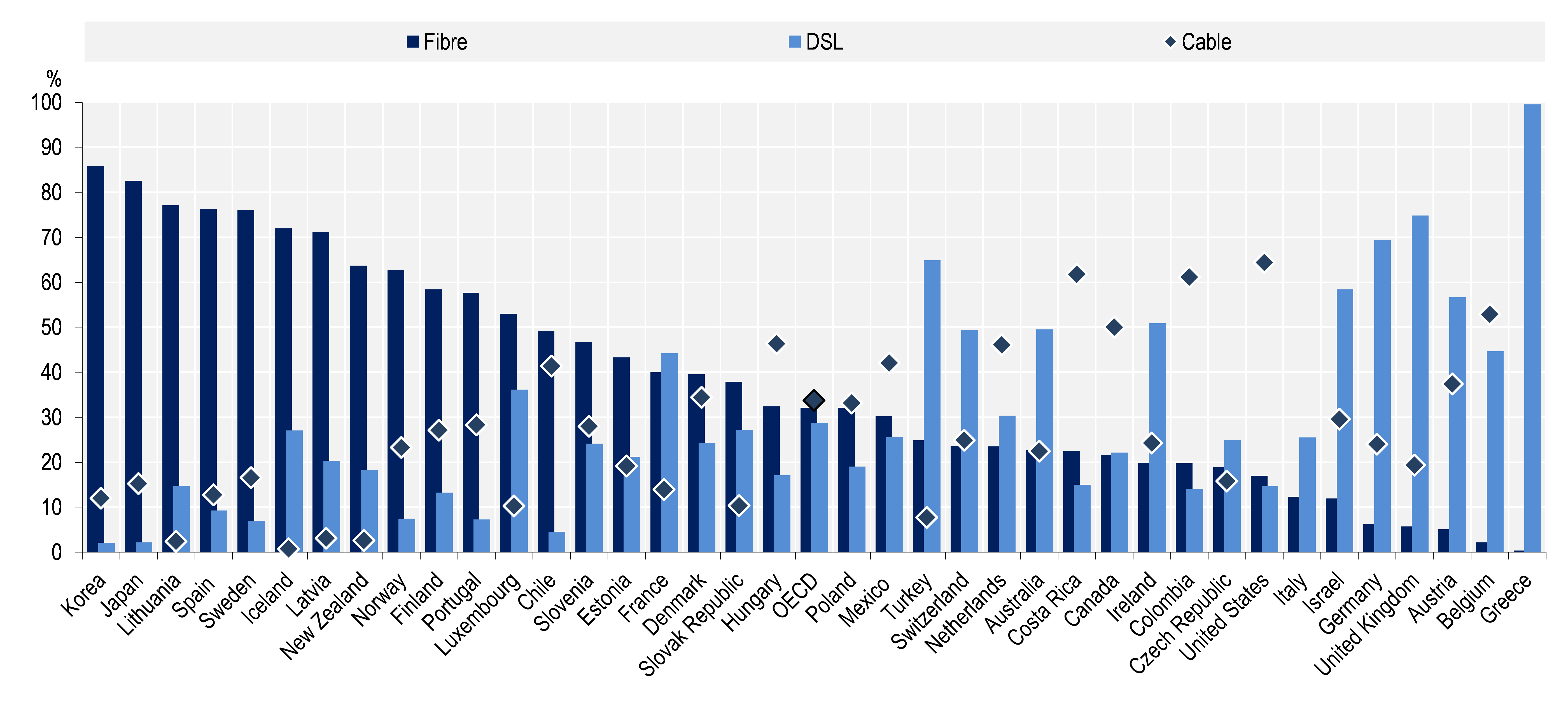
OECD fibre internet chart
While nations across the OECD feature different mixes of broadband technologies, 23 now have a higher proportion of fibre than copper-wire DSL in their total amount of fixed broadband connections, according to the latest data. This figure is up from 20 countries just a year ago.
The greatest increases in fibre uptake appear to have been in Latin American OECD countries. Costa Rica had a growth rate of 74 per cent, with Chile at 71 per cent, Colombia at 43 per cent for, and Mexico 26 per cent. Other countries boasting impressive growth in fibre connections included Israel on 76 per cent, Ireland with 54 per cent, and Italy with 53 per cent.
Korea leads the way in terms of those countries with the highest percentage of fibre making up their broadband mix at 86 per cent, followed by Japan at 83 per cent, and Lithuania with 77 per cent. The UK lags behind with fibre broadband in single figures, cable accounting for about 20 per cent of broadband subscriptions, and DSL making up the rest.
- The data must flow: America's 'Team Telecom' backs switch-on of Google and Meta's US-APAC undersea cable
- Brits complained a bit less about connectivity when they were allowed to go outside and see people in the flesh
- BT shelves efforts to find investor to share FTTP build, says Openreach can run project alone
- Having made £1bn in gross savings well ahead of March 2023 deadline, more cuts could be on BT's agenda
Cable remains the dominant broadband technology across North and South America, making up 64 per cent of subscriptions in the United States, 62 per cent in Costa Rica, 61 per cent in Colombia, and 50 per cent in Canada. In Europe, cable is the dominant technology in some countries, making up 53 per cent in Belgium, and 46 per cent in Hungary and The Netherlands.
Across the OECD, DSL subscriptions declined by 6 per cent between June 2020 and June 2021, with sharp declines in some countries, such as a fall of 37 per cent in Chile and 32 per cent in New Zealand.
The OECD figures also show mobile broadband continuing to grow, with a 6.3 per cent increase in subscriptions during the year to June 2021. However, the number of data-only subscriptions actually declined in 17 out of 38 countries, which the OECD ascribes to the greater use of fixed network connections at home during home during COVID-19. ®
From Chip War To Cloud War: The Next Frontier In Global Tech Competition
The global chip war, characterized by intense competition among nations and corporations for supremacy in semiconductor ... Read more
The High Stakes Of Tech Regulation: Security Risks And Market Dynamics
The influence of tech giants in the global economy continues to grow, raising crucial questions about how to balance sec... Read more
The Tyranny Of Instagram Interiors: Why It's Time To Break Free From Algorithm-Driven Aesthetics
Instagram has become a dominant force in shaping interior design trends, offering a seemingly endless stream of inspirat... Read more
The Data Crunch In AI: Strategies For Sustainability
Exploring solutions to the imminent exhaustion of internet data for AI training.As the artificial intelligence (AI) indu... Read more
Google Abandons Four-Year Effort To Remove Cookies From Chrome Browser
After four years of dedicated effort, Google has decided to abandon its plan to remove third-party cookies from its Chro... Read more
LinkedIn Embraces AI And Gamification To Drive User Engagement And Revenue
In an effort to tackle slowing revenue growth and enhance user engagement, LinkedIn is turning to artificial intelligenc... Read more