

FCC Commissioner Demands Review Of Starlink Rural Broadband Subsidies
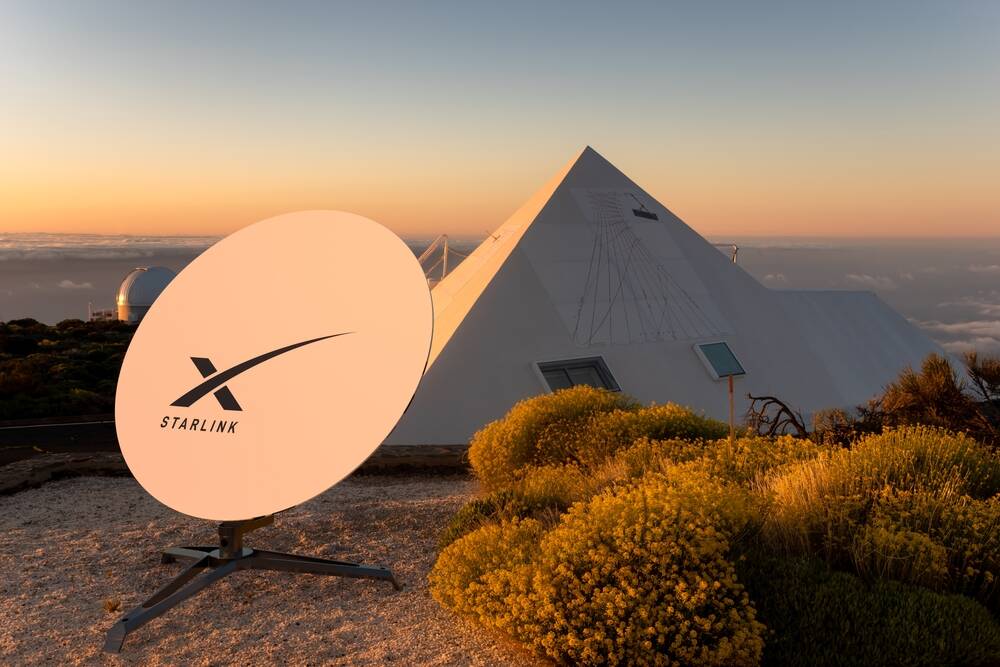
A member of the Federal Communications Commission's leadership team has come out swinging on behalf of SpaceX after the company's bid for rural broadband subsidies via its Starlink satellite business was rejected.
The FCC withdrew its award of $885.5 million under Rural Digital Opportunity Fund (RDOF) in August, claiming the funding for Starlink "would not be the best use of limited Universal Service Fund dollars to bring broadband to unserved areas across the United States."
Chairwoman Jessica Rosenworcel said at the time: "Starlink's technology has real promise, but the question before us was whether to publicly subsidize its still developing technology for consumer broadband – which requires that users purchase a $600 dish – with nearly $900 million in universal service funds until 2032."
The decision raised eyebrows even within the FCC itself. Commissioner Brendan Carr said he only found out through a press release while on a work trip to remote Alaska, adding that the agency should be making it easier for poorly served communities to get service, "not rejecting a proven satellite technology that is delivering robust, high-speed service today."
He continued: "To be clear, this is a decision that tells families in states across the country that they should just keep waiting on the wrong side of the digital divide even though we have the technology to improve their lives now."
SpaceX appealed against the decision on Friday, describing it as "flawed" and "grossly unfair" in a regulatory filing.
"The decision appears to have been rendered in service to a clear bias towards fiber, rather than a merits-based decision to actually connect unserved Americans," wrote David Goldman, SpaceX's senior director of satellite policy.
On Monday, another FCC Commissioner, Nathan Simington, released a statement [PDF] in support of the company's appeal.
"SpaceX won that award in a robust, competitive auction," he said. "Prior to the recent Wireline Competition Bureau decision, SpaceX appeared to me to be on track to deliver a novel high-speed, affordable service, not merely for the specific rural areas that it promised to serve as part of the RDOF program, but also for the rest of the country and potentially much of the world as well.
"While acknowledging the Bureau's concerns about Starlink service achieving required benchmarks, I would point out that certain other RDOF bidders have yet to begin construction and are thus intrinsically farther behind.
- Elon Musk claims SpaceX was in talks with Apple on iPhone 14 satellite services
- US court backs FCC decision to let SpaceX fly Starlink sats at lower altitudes
- T-Mobile US and SpaceX hope to deliver phone service from space
- After suffering $1b subsidy snub, Starlink lands $2m US Air Force deal
"I am concerned that a confluence of factors both within and without the FCC, including this decision, our lengthy review of SpaceX's application to launch more satellites, and the NTIA's decision to exclude satellite broadband providers from the $42.5 billion BEAD program, will all combine to keep millions of rural Americans disconnected and excluded from our digital economy for years to come."
He went on to say that pulling support from SpaceX would only give Chinese satellite internet companies an advantage in "serving the rest of the world" because they have the "full support of their government."
"This would be especially troubling because it might raise questions for low Earth orbit connectivity companies worldwide about the regulatory risks of choosing to domicile in the United States," he added.
He also suggested that something had gone amiss during the decision-making process:
The ruling does seem somewhat at odds with another FCC decision to let Starlink satellites operate at lower altitudes in order to improve coverage in Alaska and other remote locations.
Competitors Viasat, Amazon, and Dish kicked up a stink with the Court of Appeals, making claims of environmental impact and increased collision risk, but the court upheld the approval.
Starlink is approaching more than 3,000 satellites in low-Earth orbit that beam broadband internet down to tens of thousands of customers in the US alone. Users pay $599 for a terminal then a $110 monthly fee for the service. The constellation can provide speeds of around 100Mbps.
Tesla and SpaceX CEO Elon Musk has publicly come out against government subsidies and tax incentives for US businesses in the past. In his "Person of the Year" interview in Time last year December, he said the government was not a good "steward of capital." ®
From Chip War To Cloud War: The Next Frontier In Global Tech Competition
The global chip war, characterized by intense competition among nations and corporations for supremacy in semiconductor ... Read more
The High Stakes Of Tech Regulation: Security Risks And Market Dynamics
The influence of tech giants in the global economy continues to grow, raising crucial questions about how to balance sec... Read more
The Tyranny Of Instagram Interiors: Why It's Time To Break Free From Algorithm-Driven Aesthetics
Instagram has become a dominant force in shaping interior design trends, offering a seemingly endless stream of inspirat... Read more
The Data Crunch In AI: Strategies For Sustainability
Exploring solutions to the imminent exhaustion of internet data for AI training.As the artificial intelligence (AI) indu... Read more
Google Abandons Four-Year Effort To Remove Cookies From Chrome Browser
After four years of dedicated effort, Google has decided to abandon its plan to remove third-party cookies from its Chro... Read more
LinkedIn Embraces AI And Gamification To Drive User Engagement And Revenue
In an effort to tackle slowing revenue growth and enhance user engagement, LinkedIn is turning to artificial intelligenc... Read more