

EV Battery Can Reach Full Charge In 'less Than 10 Minutes'
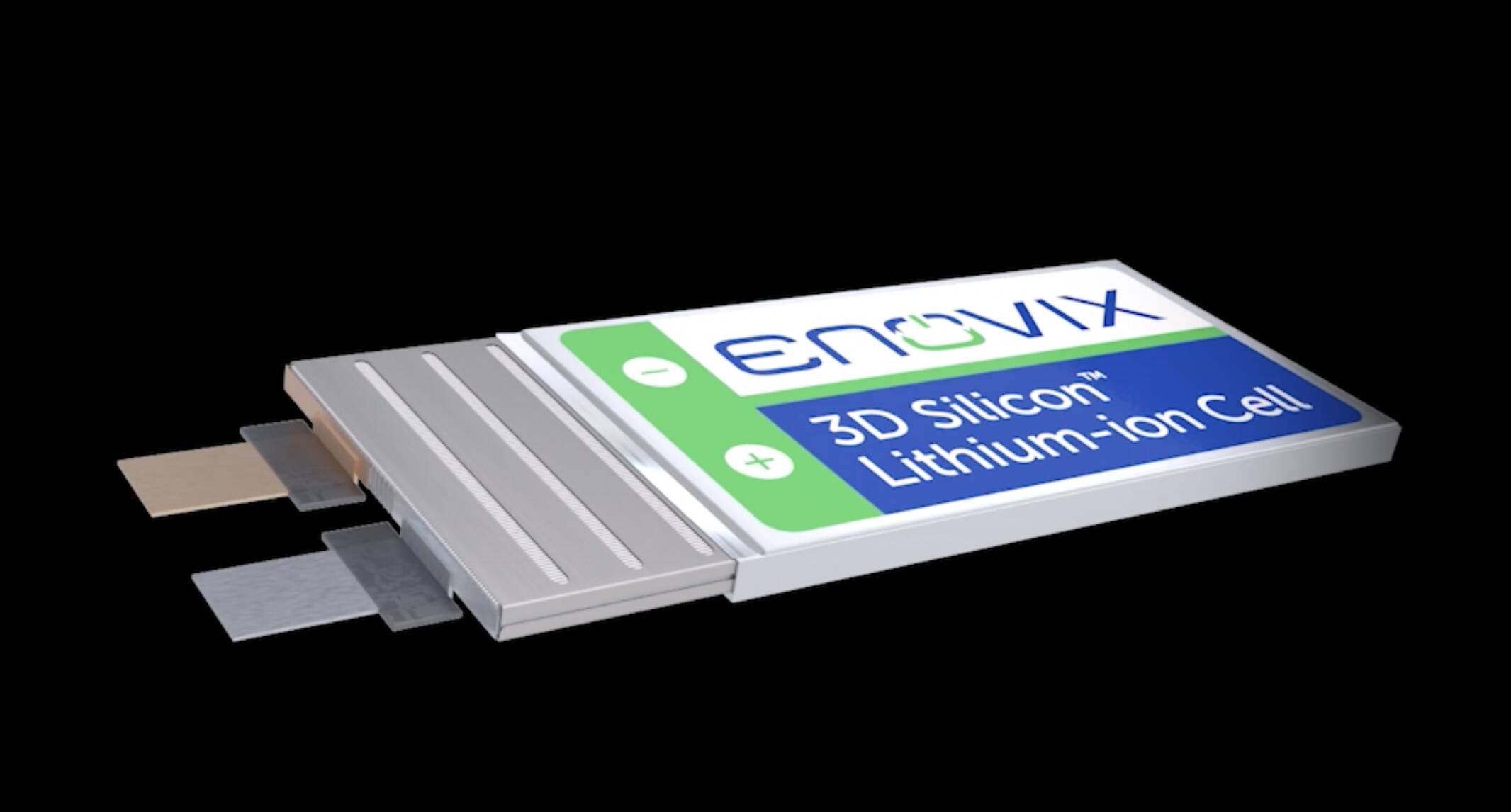
A new type of silicon-anode lithium-ion battery could be the solution the EV market is waiting for, as it can apparently charge from empty to full in less than 10 minutes.
Designed and built by California-based Enovix, the battery also maintains 93 percent of its capacity past 1,000 charges and was minimally affected by six months of operation at elevated temperatures, the company claims. These are both key parts of the US Advanced Battery Consortium's (USABC) high-performance EV battery goals.
Per the USABC [PDF], a battery that can reach 80 percent charge in 15 minutes and handle at least 1,000 charging cycles can be called "advanced," and by that standard Enovix has accomplished goals that USABC considered mid- to long-term.
Enovix's rendering of its battery
Enovix's battery technology has, we're told, already been put into cells of different sizes, including a smartwatch being manufactured by an unnamed OEM that Enovix said is "one of the top consumer electronics companies in the world."
The same technology is in its EV batteries. They're built with a proprietary architecture that Enovix said eliminates the problems that come with using silicon as an anode. Graphite, the typical anode material, has far less energy storage capacity than silicon, but has remained the standard due to silicon's technical problems, like swelling, which greatly reduces life cycle.
"Fast charge capability can accelerate mass adoption of EVs and we've been able to demonstrate a level of performance that meets and exceeds many OEM roadmaps," said Enovix CEO, president, and cofounder Harrold Rust.
- Toyota battles Tesla, Ford with own residential energy storage battery
- EU lawmakers vote to ban sales of combustion engine cars from 2035
- Lithium production needs investment to keep pace with battery demand
- British motorists will be allowed to watch TV in self-driving vehicles
The capacity boost and charging speed offered by silicon anodes could help move EVs past their market niche and on to more streets, but safety and other issues may remain. Enovix said that its BrakeFlow technology, which boosts abuse tolerance in lithium-ion batteries, means its product is a safety improvement over traditional batteries.
Enovix isn't the only company investigating the use of silicon as an anode for EV batteries, and the USABC has already announced funding for similar projects from Amprius, which is working on EV batteries with a silicon wire anode, and Nanoramic, which has developed EV batteries with silicon-dominant anodes that can be manufactured on existing EV battery equipment.
Another battery experimenter, Enevate, is developing a porous, sponge-like silicon anode, and said it's already working with several EV makers to get its battery, which it claims can go 400km on a five-minute charge, into unspecified 2024 models. Enevate investors include car makers Renault, Nissan, and Mitsubishi. ®
From Chip War To Cloud War: The Next Frontier In Global Tech Competition
The global chip war, characterized by intense competition among nations and corporations for supremacy in semiconductor ... Read more
The High Stakes Of Tech Regulation: Security Risks And Market Dynamics
The influence of tech giants in the global economy continues to grow, raising crucial questions about how to balance sec... Read more
The Tyranny Of Instagram Interiors: Why It's Time To Break Free From Algorithm-Driven Aesthetics
Instagram has become a dominant force in shaping interior design trends, offering a seemingly endless stream of inspirat... Read more
The Data Crunch In AI: Strategies For Sustainability
Exploring solutions to the imminent exhaustion of internet data for AI training.As the artificial intelligence (AI) indu... Read more
Google Abandons Four-Year Effort To Remove Cookies From Chrome Browser
After four years of dedicated effort, Google has decided to abandon its plan to remove third-party cookies from its Chro... Read more
LinkedIn Embraces AI And Gamification To Drive User Engagement And Revenue
In an effort to tackle slowing revenue growth and enhance user engagement, LinkedIn is turning to artificial intelligenc... Read more