

European Silicon Output Shrinking, Metal Smelters Closing As Electricity Prices Quadruple, Trade Body Warns
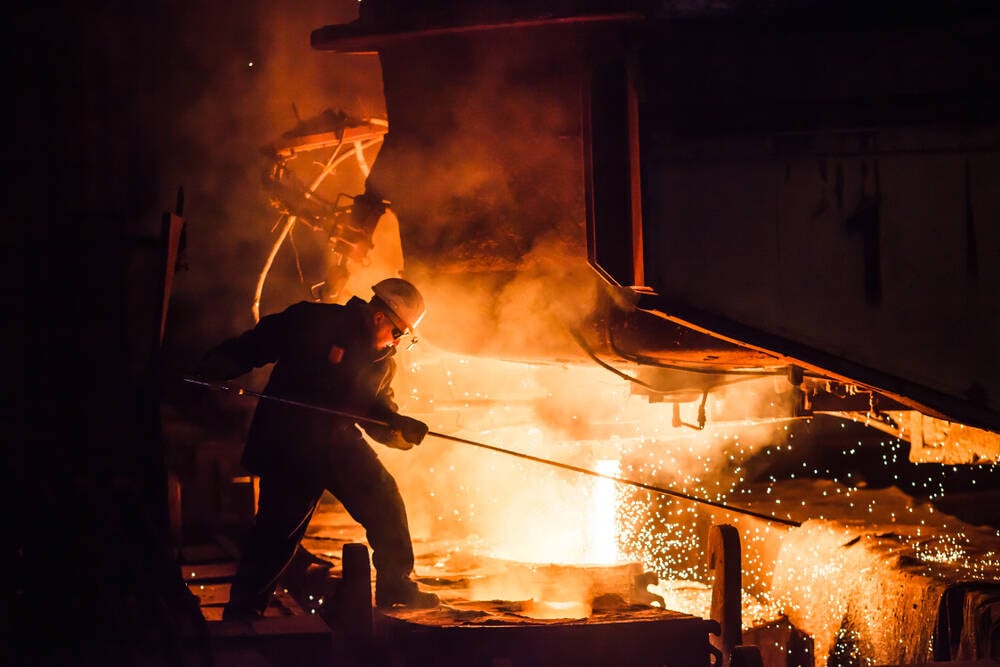
Soaring electricity prices have derailed manufacturing involving silicon and non-ferrous metals in Europe, politicians were warned this week.
Eurometaux, a European metals association, urged action [PDF] from the EU, fearing the region could experience spikes in electricity prices for the next decade if nothing is done to control the situation.
The power crisis has already curtailed production and shut down facilities in silicon and metals industries across EU nations. "After a quadrupling of electricity prices, over half of the EU’s aluminium and zinc smelters are today operating at reduced capacity or have temporarily closed, together with a significant reduction in silicon output," Eurometaux said.
Silicon provider Elkem, headquartered in Norway, also noted [PDF] that silicon prices in Europe reached all-time highs in October and November. That was partially driven by market factors including prices of silicon going up in China and a potential power crisis in Brazil, where the company has production facilities.
This is amid a crunch in global silicon chip supplies as demand outstrips fabrication plant capacity; silicon is also needed for things other than semiconductors.
- EC president promises European Chips Act to quadruple homegrown production by 2030
- Rocketing chip sales growth to ease off this year, reach $680bn, say analysts
- Intel plunking down $20bn for at least two chip factories in Ohio
- With computer brains in short supply, President Biden orders 100-day probe into semiconductor drought
On Thursday, European Commission president Ursula von der Leyen talked about a coherent European Green Deal and legislation to speed up digitalization, which includes increasing semiconductor production in the EU with the European Chips Act.
Europe's ambitious chip fabrication plans may not go as planned without some action by the authorities to prevent disruptive electricity price hikes.
"Metals including aluminium, copper, nickel, zinc, and silicon are all significantly more electricity-intensive to produce than other materials and are priced globally as commodities," Eurometaux added.
The Russian problem
During her address to the World Economic Forum, von der Leyen urged public and private investments in renewable energy: the EU is trying to shift from fossil fuels to cleaner sources.
That said, Europe is in an energy crisis right now for various messy reasons. The bottom line is that it's running low on natural gas supplies, and prices of gas and electricity in the bloc have soared. Toward the end of last year, Russia's state-owned Gazprom reduced its natural gas deliveries to Europe, and said this was in line with the long-term contracts it had with buyers in Europe.
Moscow could increase its fuel export, but hasn't – partly because Europe doesn't want to pay through the nose for the extra last-minute gas, leaving it to rely on gas stores – and over winter, EU nations' gas storage facilities were said to be about half full. The situation is rather tight.
Russia is a major player in Europe's energy market, supplying 41 per cent of EU's natural gas imports in last year's third quarter, according to data [PDF] from the European Commission.
There are now concerns of the gas crisis deepening if Russia invades Ukraine. The Kremlin could try to use its position in the energy market to bend European nations to its will, or punish them, in the lead up to or during any conflict. There's talk of the US government tapping up Qatar to supply gas to Europe.
"Fundamentally, today's gas crisis must serve to accelerate the transition to clean energy," von der Leyen said.
She noted the importance of efforts like oil exploration, but that it was also important to diversify into clean energy to reduce the reliance on imports and stabilize the market.
Wholesale electricity prices in the euro area were €196 per megawatt hour in November, which was close to four times the average in the two years preceding the outbreak of the pandemic, said Isabel Schnabel, a board member of the European Central Bank, in a speech earlier this month.
During the third quarter, coal prices reached the highest in the last two decades, and oil prices reaching a seven-year high.
The European Commission analyzed gas pricing data from the third quarter last year, and wrote that signals indicate "that the market does not anticipate a quick return to the price levels seen in [2020]," according to a study [PDF] released this week.
Eurometaux urged the use of national strategic gas reserves to stabilize the market, and to create conditions and rules for emergency state aid in the event of any crisis emerging from high energy prices. ®
From Chip War To Cloud War: The Next Frontier In Global Tech Competition
The global chip war, characterized by intense competition among nations and corporations for supremacy in semiconductor ... Read more
The High Stakes Of Tech Regulation: Security Risks And Market Dynamics
The influence of tech giants in the global economy continues to grow, raising crucial questions about how to balance sec... Read more
The Tyranny Of Instagram Interiors: Why It's Time To Break Free From Algorithm-Driven Aesthetics
Instagram has become a dominant force in shaping interior design trends, offering a seemingly endless stream of inspirat... Read more
The Data Crunch In AI: Strategies For Sustainability
Exploring solutions to the imminent exhaustion of internet data for AI training.As the artificial intelligence (AI) indu... Read more
Google Abandons Four-Year Effort To Remove Cookies From Chrome Browser
After four years of dedicated effort, Google has decided to abandon its plan to remove third-party cookies from its Chro... Read more
LinkedIn Embraces AI And Gamification To Drive User Engagement And Revenue
In an effort to tackle slowing revenue growth and enhance user engagement, LinkedIn is turning to artificial intelligenc... Read more