

EU Still Getting Its Act Together On European Chips Act Funding
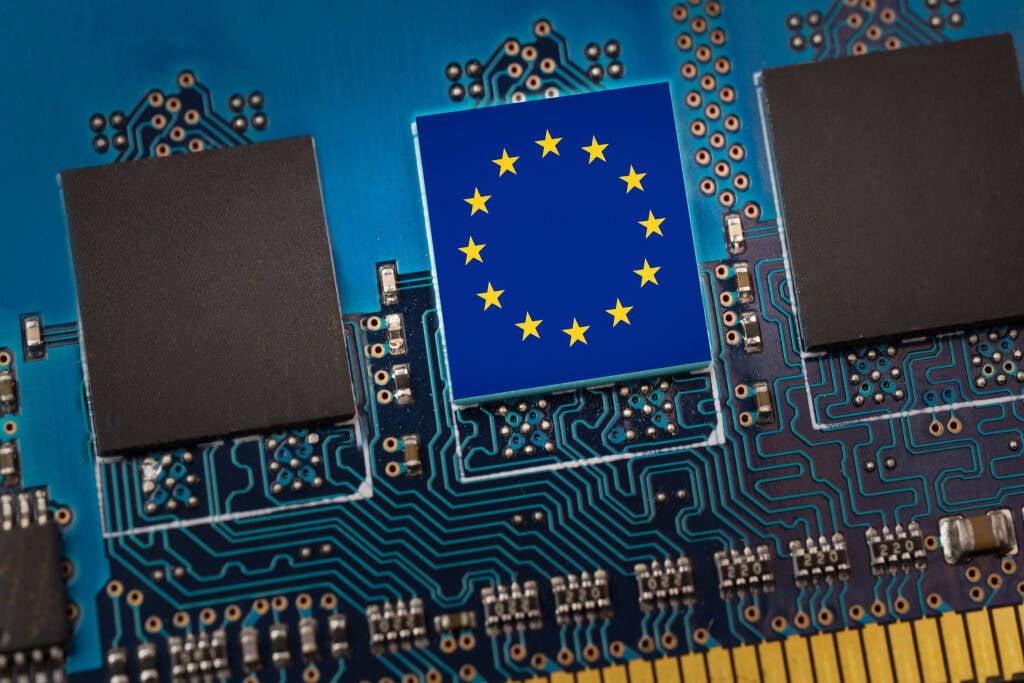
The EU is groping towards a consensus in order to allocate funding for its scheme to revitalize the European semiconductor manufacturing industry, with representatives of member states agreeing an amended version of the proposals.
According to reports, EU ambassadors gave their unanimous backing on Wednesday to an agreement that could unlock the €43 billion ($44.8 billion) funding intended to boost research and development and deliver greater self-reliance in semiconductor supplies for European nations.
EU ministers are set to convene for a meeting of the Competitiveness Council responsible for the internal market and industry on December 1 [PDF], and the agreement on Wednesday is believed to open the way for approval of the Chips Act. However, it will still need to be debated in the European Parliament [PDF] next year before it can become law.
This is the latest move in the saga of the European Chips Act, unveiled earlier this year, which aims to bolster European competitiveness and resilience in semiconductors, with a target of doubling the current market share of the EU to about 20 percent of global semiconductor production by 2030.
One of the sticking points in coming to an agreement had been where the funding would come from. It is understood that the Czech government, which holds the rotating EU Presidency, opted to remove a proposal to reallocate €400 million ($416 million) in funding from the flagship Horizon Europe research program.
There was also said to be disagreement over the framework for allocating funding, with smaller EU nation states protesting that such arrangements typically favor larger economies such as Germany that already have well-established industries.
- EU semiconductor investment not nearly enough, warns chip boss
- US CHIPS Act: Getting the funding is just the start
- Arm founder says the UK has no chance of tech sovereignty
- Intel to get $7.3b for Germany fab site as TSMC dismisses Europe plans
Other changes agreed include allowing subsidies for a broader range of chips rather than simply favoring the most advanced semiconductors. A similar discussion has been taking place in America over the US CHIPS Act, where respondents to a NIST survey highlighted that many of the supply chain issues affecting industries were caused by a shortage of more mundane components such as power management chips.
However, the head of Netherlands-based chipmaker NXP Semiconductors warned back in October that the funding being allocated by the EU for the Chips Act was nowhere near enough of an investment to meet the targets it was setting for 2030.
Speaking at a Global Foundries Technical Summit in Dresden, Germany, NXP CEO Kurt Sievers said it would require something in the region of €500 billion investment for European chipmakers to reach the 20 percent market share proposed, rather than the €43 billion being put forward.
Some chip manufacturers have already announced new facilities in Europe funding. Intel announced plans earlier this year to build a semiconductor manufacturing mega-fab at a site in Magdeburg in eastern Germany, with subsidies coming from the German government.
Infineon also announced in its recent fiscal 2022 earnings results [PDF] that it intends to construct a €5 billion factory for 300mm wafers for analog/mixed-signal and power semiconductors in Dresden, "subject to adequate public funding." ®
From Chip War To Cloud War: The Next Frontier In Global Tech Competition
The global chip war, characterized by intense competition among nations and corporations for supremacy in semiconductor ... Read more
The High Stakes Of Tech Regulation: Security Risks And Market Dynamics
The influence of tech giants in the global economy continues to grow, raising crucial questions about how to balance sec... Read more
The Tyranny Of Instagram Interiors: Why It's Time To Break Free From Algorithm-Driven Aesthetics
Instagram has become a dominant force in shaping interior design trends, offering a seemingly endless stream of inspirat... Read more
The Data Crunch In AI: Strategies For Sustainability
Exploring solutions to the imminent exhaustion of internet data for AI training.As the artificial intelligence (AI) indu... Read more
Google Abandons Four-Year Effort To Remove Cookies From Chrome Browser
After four years of dedicated effort, Google has decided to abandon its plan to remove third-party cookies from its Chro... Read more
LinkedIn Embraces AI And Gamification To Drive User Engagement And Revenue
In an effort to tackle slowing revenue growth and enhance user engagement, LinkedIn is turning to artificial intelligenc... Read more