

Ethiopia Violence: Facebook To Blame, Says Runner Gebrselassie
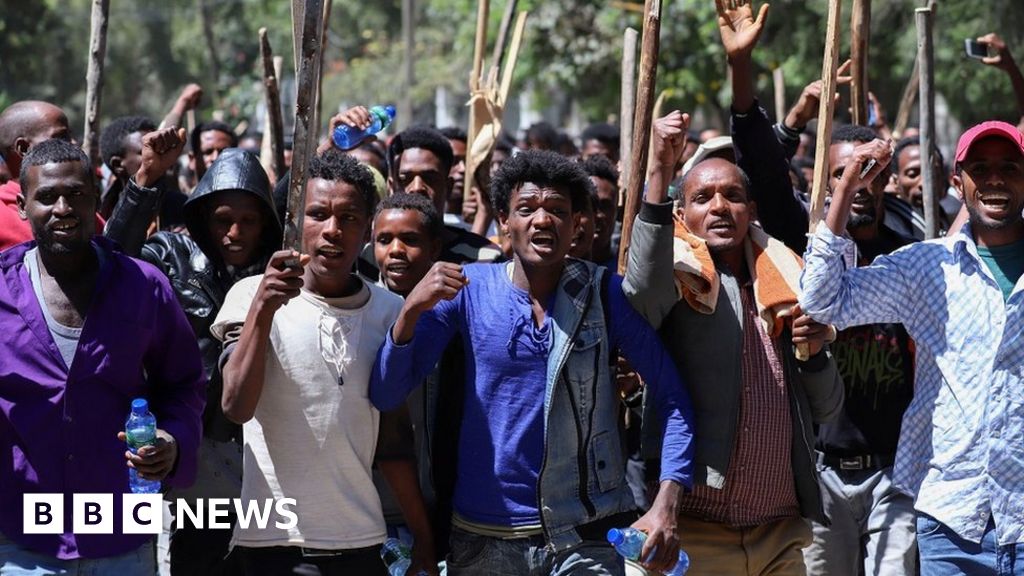
 Image copyright
Reuters
Image copyright
Reuters
Ethiopian running legend Haile Gebrselassie has told the BBC that fake news shared on Facebook was behind violence in which 78 people died.
Trouble was sparked when an influential activist from the Oromo ethnic group, Jawar Mohammed said the authorities were endangering his life by removing his bodyguards.
The violence had ethnic and religious elements, the government said.
Gebrselassie said he could sue Facebook if they fail to remove certain posts.
The double Olympic champion was not explicit about which posts he was referring to, but told the BBC in the capital Addis Ababa that "fake news is easy to spread".
Referring to the death toll, the 46-year-old added that "the main cause I believe was Facebook".
BBC
I know my people, they don't do such awful things"
Days of violence in Ethiopia's Oromia region, which saw some people sheltering in churches, followed the accusations made on Facebook by Mr Jawar.
The police initially denied that it put his life in danger, but Prime Minister Abiy Ahmed later indicated that the police had acted incorrectly.
Graphic images, purporting to show the results of the trouble, began to circulate on social media.
Gebrselassie said he thought the pictures were not of Ethiopians. "I know my people, they don't do such awful things," he said.
Some fake videos had been shared, including one of a claim that a local official was arming young men, the BBC's Kalkidan Yibeltal in Addis Ababa says.
Despite calls by the Nobel Peace Prize winning prime minister for unity, ethnic tensions are threatening to spill out of control.
Gebrselassie, who is now a successful businessman, warned that Ethiopia has "to be careful" saying that the genocide in Rwanda was not that long ago.
He also mentioned the conflicts in Libya, Syria and Yemen as examples of what could happen if things get out of hand.
The authorities have arrested more than 400 people in connection with October's violence and the trouble has subsided.
Facebook has not responded to Gebrselassie's accusations, but the company has a policy of "working to fight the spread of false news".
From Chip War To Cloud War: The Next Frontier In Global Tech Competition
The global chip war, characterized by intense competition among nations and corporations for supremacy in semiconductor ... Read more
The High Stakes Of Tech Regulation: Security Risks And Market Dynamics
The influence of tech giants in the global economy continues to grow, raising crucial questions about how to balance sec... Read more
The Tyranny Of Instagram Interiors: Why It's Time To Break Free From Algorithm-Driven Aesthetics
Instagram has become a dominant force in shaping interior design trends, offering a seemingly endless stream of inspirat... Read more
The Data Crunch In AI: Strategies For Sustainability
Exploring solutions to the imminent exhaustion of internet data for AI training.As the artificial intelligence (AI) indu... Read more
Google Abandons Four-Year Effort To Remove Cookies From Chrome Browser
After four years of dedicated effort, Google has decided to abandon its plan to remove third-party cookies from its Chro... Read more
LinkedIn Embraces AI And Gamification To Drive User Engagement And Revenue
In an effort to tackle slowing revenue growth and enhance user engagement, LinkedIn is turning to artificial intelligenc... Read more