

Equinix To Cut Costs By Cranking Up The Heat In Its Datacenters
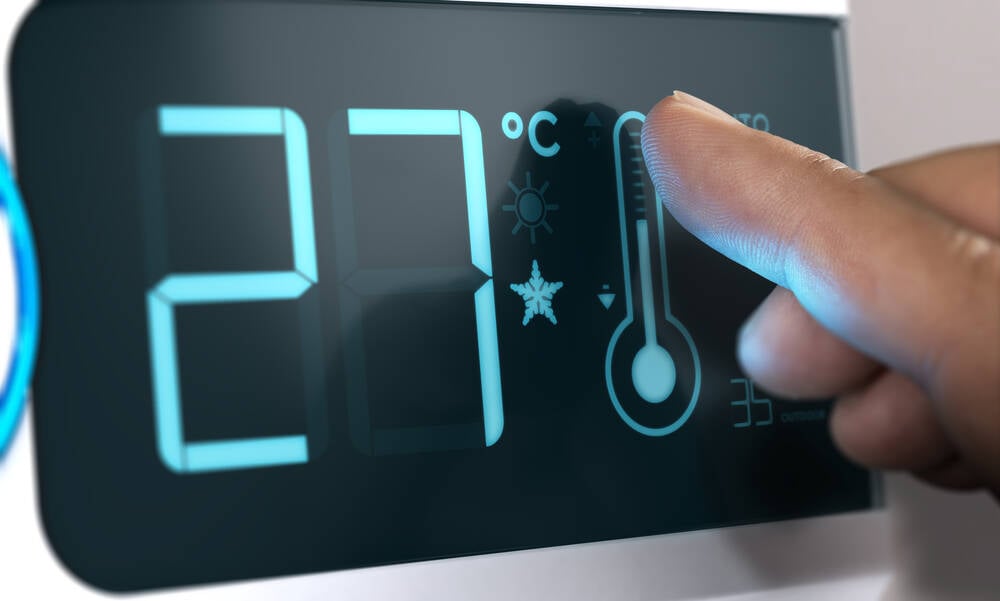
In the hopes of cutting its power bills, Equinix says it's turning the thermostat up in its datacenters.
The colocation provider expects to increase the operating temperature of its server halls to as much as a rather balmy 27C – that's about 80F in freedom units – to align with American Society of Heat, Refrigerating, and Air Conditioning Engineers (ASHRAE) standards.
These rules, which specify the acceptable range of temperature and humidity within a datacenter, actually allow for temperatures up to 32C or 89.6F, according to ASHRAE's latest A1 revision used by Equinix. For reference, depending on location, season, and equipment available, Equinix facilities today seem to range from about 19C (66F) to 25C (77F), from what we can tell.
As it stands, Equinix says cooling accounts for about 25 percent of its total energy usage globally. That's already better than most. As we're previously reported, 30 to 40 percent of a datacenter's energy consumption can be attributed to thermal management systems such as air conditioners.
"Once rolled out across our current global datacenter footprint, we anticipate energy efficiency improvements of as much as 10 percent in various locations," Raouf Abdel, EVP of global operations at Equinix, said in a statement.
In addition to higher ambient temperatures, Equinix also plans to make greater use of outside air to cool its datacenters, a technique sometimes referred to as "free cooling." The idea being, rather than running air conditioners 24/7, datacenters, especially those in cool climates, use outside air instead or more of it. This should, ideally, all lead to lower costs for Equinix.
Actual progress toward this goal will be measured in power usage effectiveness (PUE). The industry standard metric measures how efficient a datacenter is by comparing the amount of power used by compute, storage, or networking equipment against total utilization. The closer the PUE is to 1.0, the more efficient the facility.
- Lessons to be learned from Google and Oracle's datacenter heatstroke
- Equinix would offer more liquid cooling but struggles without standards
- Your top 5 liquid cooling quandaries answered, according to Omdia
- Can gamers teach us anything about datacenter cooling? Lenovo seems to think so
While liquid-cooled datacenters can achieve PUEs as low as 1.03, it's not uncommon for air-cooled facilities to end up closer to 1.5. This may be one of the reasons Equinix is suddenly so interested in liquid and immersion-cooling tech.
Faced with growing energy prices around the world, Equinix's decision to run its datacenters a little hotter isn't all that surprising. But while lower power bills from less active cooling will certainly benefit Equinix's bottom line, convincing customers could be a bit trickier.
The bit barn is selling the idea as "enabling thousands of Equinix customers to reduce their scope 3 carbon emissions associated with their datacenter operations." Scope 3 emissions refer to greenhouse gasses generated by the sale, transportation or use of goods over their lifespan.
While Equinix efforts may help some enterprises move the needle on their sustainability goals, the hotter ambient temperatures within these datacenters could result in thermal challenges and even higher bills for some customers.
For one, depending on the age of customers' systems, some may not handle the higher temperatures as gracefully as newer systems. While ASHRAE standards may allow for higher temperatures within datacenters, it's still important to double-check that the systems can actually handle those operating conditions, Omdia analyst Moises Levy told The Register in an interview.
Second, customers running newer systems, like those using AMD's 400W Epyc 4 CPUs, may find that they need to run their system fans faster and by extension consume more power. On modern systems, fans account for roughly 15 percent of a server's energy consumption, and in hotter climates it can be as high as 20 percent, Lenovo's Scott Tease previously told The Register.
However, Equinix won't be putting these changes into effect overnight. In fact, it appears the colocation provider will start turning up the temperature only after it's finished defining a "multi-year global roadmap" on how to do it. ®
From Chip War To Cloud War: The Next Frontier In Global Tech Competition
The global chip war, characterized by intense competition among nations and corporations for supremacy in semiconductor ... Read more
The High Stakes Of Tech Regulation: Security Risks And Market Dynamics
The influence of tech giants in the global economy continues to grow, raising crucial questions about how to balance sec... Read more
The Tyranny Of Instagram Interiors: Why It's Time To Break Free From Algorithm-Driven Aesthetics
Instagram has become a dominant force in shaping interior design trends, offering a seemingly endless stream of inspirat... Read more
The Data Crunch In AI: Strategies For Sustainability
Exploring solutions to the imminent exhaustion of internet data for AI training.As the artificial intelligence (AI) indu... Read more
Google Abandons Four-Year Effort To Remove Cookies From Chrome Browser
After four years of dedicated effort, Google has decided to abandon its plan to remove third-party cookies from its Chro... Read more
LinkedIn Embraces AI And Gamification To Drive User Engagement And Revenue
In an effort to tackle slowing revenue growth and enhance user engagement, LinkedIn is turning to artificial intelligenc... Read more