

Epson Payments Snafu Leaves Subscribers Unable To Print
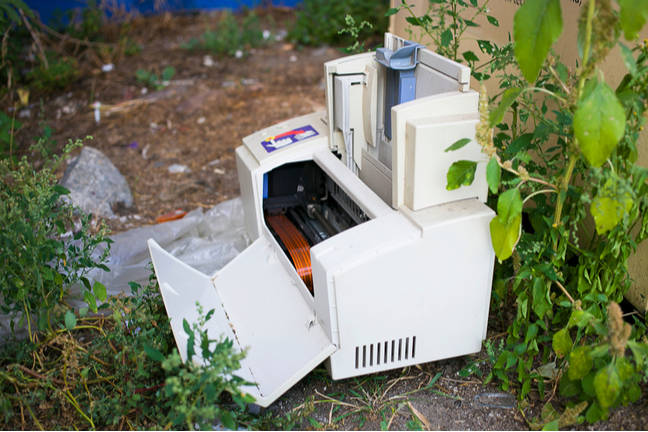
Epson's ReadyPrint subscription-based printing service is designed to take the hassle out of printing but its not working as intended, at least not for everyone.
The service was created to let users print as much as they like without worrying about running out of ink. For a small monthly fee, the firm will send customers refills for their Epson inkjet before they run out.
However, when something goes wrong, the user can also get locked out of their printer, unable to produce any documents, as is the case for one Epson customer who discovered Epson was unable to process his payments.
Reg reader John Lamont signed up for ReadyPrint last year, and the service worked perfectly until February when he got an email informing him that it had not been possible to collect his monthly payment for ReadyPrint, and that Epson would attempt collection again in 14 days.
The email also warned Mr Lamont that his cartridges would stop working following two unsuccessful attempts by Epson to obtain payment for the subscription service.
However, despite Mr Lamont updating his account details, as advised by the email from Epson, the monthly payment was still not taken, and eventually he found himself with a printer that refused to print. The printer simply displayed a message saying: "The ReadyPrint service is unavailable due to an account issue."
Getting in contact with Epson customer services provided a clue. They told Mr Lamont to "please try with a card from another bank if possible. e.g. not RBS or Natwest," so it appeared that the problem is with Epson's back-end systems taking payment from Natwest or RBS accounts.
We contacted Epson, which pointed the finger at Strong Customer Authentication (SCA), the measures that require banks and financial institutions to implement two-factor authentication for some payment transactions.
In a statement, Epson said:
SCA was adopted across Europe as a result of the EU Payment Services Directive 2 (PSD2), and adopted in the UK prior to Brexit. But adoption has not been without its problems as merchants and banks have said they were not given enough time to prepare, and consumer awareness of the new measures also seems to be low.
Epson told us that because of SCA, customers "may receive a text or phone call from your bank when making online transactions asking you to confirm your identity. These should not be ignored as payments could be declined if banks cannot reach you, therefore you should ensure your bank has your up-to-date contact details."
- ITC judge recommends banning toner imports that infringe Canon's IP
- Instant Ump: HP Inc's subscription ink services hiking prices from next month
- Canon: Chip supplies are so bad that our ink cartridges will look as though they're fakes
- The paperless office is back again! (But only because print hardware supplies are jammed)
In other words, Epson claims that it is unable to process ReadyPrint payment transactions for some customers because their own bank is blocking the transaction, effectively passing the blame onto the bank, or possibly the customer for not keeping their bank up to date with their contact details.
However, we have found similar complaints from other users on social media, and the common theme seems to be that they are Natwest/RBS customers.
One Epson customer tweeted: "Hello @EpsonUK, You have a known issue with ReadyPrint taking payments from Natwest, and yet you have disabled MY printer because of a problem which is not my fault. I cannot phone up to pay, and cannot print anything. Please sort this out, I am not the only user affected!"
Why should Natwest customers in particular appear to be affected by this? Epson told us they could not comment, but said: "Banks have been required to have these new checks in place from 14th March 2022, although this will vary in practice as banks have individual definitions of 'high' and 'low' transactional risks. A number of different factors will determine if a payment needs to be verified, including the type of payment, who is being paid, the amount and which bank."
However, Mr Lamont is still placing the blame squarely on Epson for not making it clear to customers what was happening.
"Epson cannot blame the banks if they are aware of the issue then fail to communicate this to their customers, which they have not done," he told us.
"Their solution? Do nothing, then brick their customer's £400 printer when they fail to receive payment, knowing why the payment has failed, and not doing anything to prevent the sorry situation," he added.
We put Mr Lamont in contact with Epson, who promised to help him resolve the issue. However, the latest update we have on the situation is that despite receiving fresh ink cartridges from the company, he is still unable to print anything until the payments issue is resolved.
A UK Finance spokesperson commented: "Strong Customer Authentication (SCA) is an important tool in the fight against fraud, adding an additional layer of protection when people pay online using a card. To ensure SCA works properly, customers should make sure their bank has their correct contact details. If a customer has any specific needs, they should contact their bank to discuss what help is available." ®
From Chip War To Cloud War: The Next Frontier In Global Tech Competition
The global chip war, characterized by intense competition among nations and corporations for supremacy in semiconductor ... Read more
The High Stakes Of Tech Regulation: Security Risks And Market Dynamics
The influence of tech giants in the global economy continues to grow, raising crucial questions about how to balance sec... Read more
The Tyranny Of Instagram Interiors: Why It's Time To Break Free From Algorithm-Driven Aesthetics
Instagram has become a dominant force in shaping interior design trends, offering a seemingly endless stream of inspirat... Read more
The Data Crunch In AI: Strategies For Sustainability
Exploring solutions to the imminent exhaustion of internet data for AI training.As the artificial intelligence (AI) indu... Read more
Google Abandons Four-Year Effort To Remove Cookies From Chrome Browser
After four years of dedicated effort, Google has decided to abandon its plan to remove third-party cookies from its Chro... Read more
LinkedIn Embraces AI And Gamification To Drive User Engagement And Revenue
In an effort to tackle slowing revenue growth and enhance user engagement, LinkedIn is turning to artificial intelligenc... Read more