

Electric Car Chargepoints To Overtake Fuel Pumps
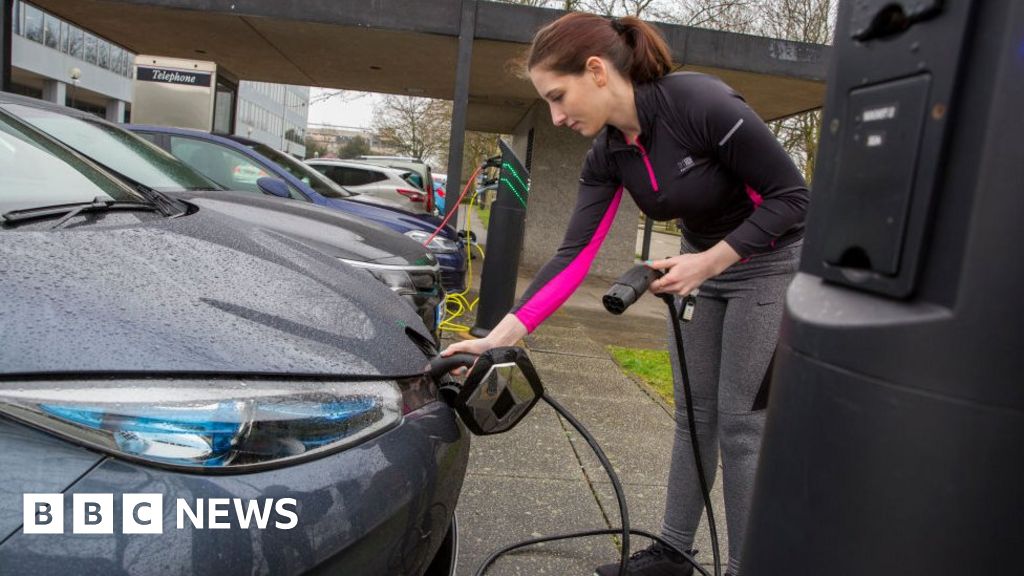
The number of electric vehicle charging points will reach 300,000 by 2030 under government plans but motoring groups say the roll out is not fast enough.
Under the plans, operators will have to ensure drivers can compare prices and pay by contactless card.
But the RAC said the chargepoint target "might sound impressive", but it is concerned the number is "not going to be sufficient" for growing demand.
The UK currently has 30,000 public electric vehicle charging points.
The Department for Transport (DfT) said the number of chargepoints by the end of the decade would be the equivalent to almost five times the number of fuel pumps on UK roads today.
It said the £500m scheme would include £450m to boost public charging stations and on-street charging for people without driveways.
According to Melanie Shufflebotham, chief operations officer of Zap-Map, an EV charging app, 80% of electric vehicle owners have off-street parking.
She went on to say that currently London is the area most "well-served" with on-street overnight charging, due to how built up it is, but that other areas of the country have better access to rapid or ultra-rapid charging.
About a third of all chargers are currently in London.
The funds were previously announced as part of the government's £1.6bn Electric Vehicle Infrastructure Strategy, but the government has now given details about how the money will be spent.
New standards and legislation will mean operators will have to provide real-time data for customers to check the status of chargepoints and apps for customers to find the nearest available one.
They will also be required to have a 99% reliability rate at rapid chargepoints.
Prime Minister Boris Johnson said: "We're powering ahead with plans to help British people go electric, with our expanding charging network making journeys easier right across the country."
However, Sir John Armitt, chairman of the National Infrastructure Commission, which advises the government on major infrastructure, said in a report there was a gap emerging between the government's aspirations on net zero policy and actions taken to reach it.
"We need to turbo-charge the roll out of electric vehicle charging points, accelerating the installation of both rapid and on-street charging facilities so that the 2030 date for the end of the sale of new petrol and diesel cars remains viable, he said.
RAC head of policy Nicholas Lyes said it was "pleasing" to see the government set "ambitious reliability targets on the chargepoints themselves" as many current and would-be electric car drivers "worry that charging units will be out of order when they arrive".
He also warned that the installation timescale of 300,000 chargepoints needed be quicker with drivers looking to switch to electric "en masse" ahead of the 2030 ban on the sale of new petrol and diesel cars.
Image source, Getty Images
The AA said action was needed on the lack of charging points in rural areas.
Edmund King, AA president, said: "As we advance quickly to the 2030 deadline for new zero-emission vehicles, it is vital that we get our charging infrastructure in order. While great progress has been made, there is still much to do to convince drivers on the number, and importantly reliability, of charge posts.
"To bring confidence and power to potential electric car drivers we need more, and more reliable and accessible charge points as soon as possible."
Transport Secretary Grant Shapps told the BBC that the increased number of electric vehicles will eventually lead to road pricing or tolls in place of fuel duty.
Mr Shapps also acknowledged that electric cars are "still a little bit more expensive" to buy than petrol or diesel vehicles.
However, he said that people should invest in electric cars as a way of easing cost of living pressures, by saving on fuel.
Alongside the expansion of the UK's charging network, the government also has plans for at least 6,000 chargepoints across English motorways by 2035 though an existing £950m Rapid Charging fund.
Over the decade between 2011 and 2021 the total number of charge points in the UK jumped from about 1,500 to more than 48,000 both public and private, according to industry figures.
The Society of Motoring Manufacturers and Traders (SMMT) said electrified vehicles made up more than one in every four cars produced in the UK last month, at nearly 16,000 units.
Overall, UK vehicle production slumped in February, from 105,000 units in 2021 to 61,000 units for the same month this year, due to continued global shortages in computer chips used in car production.
From Chip War To Cloud War: The Next Frontier In Global Tech Competition
The global chip war, characterized by intense competition among nations and corporations for supremacy in semiconductor ... Read more
The High Stakes Of Tech Regulation: Security Risks And Market Dynamics
The influence of tech giants in the global economy continues to grow, raising crucial questions about how to balance sec... Read more
The Tyranny Of Instagram Interiors: Why It's Time To Break Free From Algorithm-Driven Aesthetics
Instagram has become a dominant force in shaping interior design trends, offering a seemingly endless stream of inspirat... Read more
The Data Crunch In AI: Strategies For Sustainability
Exploring solutions to the imminent exhaustion of internet data for AI training.As the artificial intelligence (AI) indu... Read more
Google Abandons Four-Year Effort To Remove Cookies From Chrome Browser
After four years of dedicated effort, Google has decided to abandon its plan to remove third-party cookies from its Chro... Read more
LinkedIn Embraces AI And Gamification To Drive User Engagement And Revenue
In an effort to tackle slowing revenue growth and enhance user engagement, LinkedIn is turning to artificial intelligenc... Read more