

Disabled To Get Cost Of Living £150 From September
By Michael Race
Business reporter, BBC News
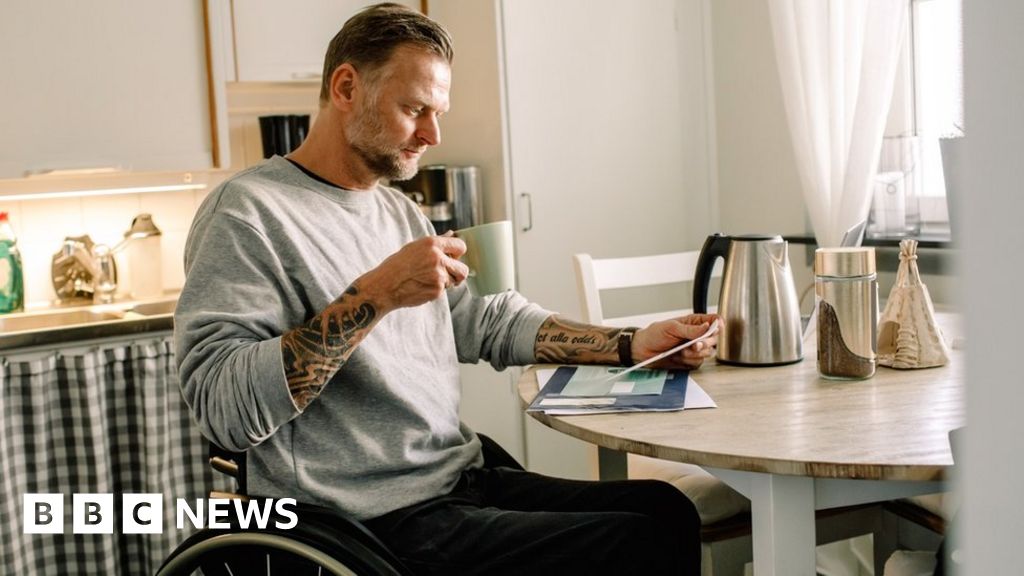
Up to six million disabled people will begin to receive £150 from 20 September to help with the rising cost of living.
The government said within a couple of weeks of the roll-out date, the majority of eligible people will be sent the cash to their bank accounts.
The payment is part of a package of measures introduced to help with the soaring costs of energy and food.
However, critics say the support will not go far enough with household bills set to rise further this winter.
The one-off £150 payment for disabled people is intended to help them with rising prices and the extra costs they face, such as for care and specialist equipment.
Tom Marsland, policy manager at disability equality charity Scope, said the support "isn't going to touch the sides in the face of energy bills predicted to reach more than £4,000 a year by January".
"Many disabled people have no choice but to use more energy to charge vital equipment and keep warm," he said.
"Disabled people need much more financial support. This cannot wait - the government must double the support package now."
The typical gas and electricity bill has been forecast to hit £4,650 a year in January by consultancy Cornwall Insight. It has also estimated bills will go up to £3,554 a year from October from a current £1,971.
Research by Scope earlier this year found disabled people in England and Wales were twice as likely to live in poverty, more than twice as likely to live in a cold house they could not afford to heat, and three times more likely to be unable to afford food.
Rising food costs pushed UK inflation to 10.1% in the 12 months to July, with prices continuing to rise at their fastest rate for more than 40 years.
Citizens Advice chief executive Dame Clare Moriarty welcome the payment but said: "The support announced so far is rapidly being gobbled up by spiralling prices. More must be done to prevent desperate situations this winter, like people turning off vital equipment or wrapping themselves in blankets to keep warm."
Chloe Smith, Minister for Disabled People, Health and Work, said the government was providing the £150 because it understood disabled people could face additional costs.
"This £150 disability payment is on top of the £1,200 most low-income benefit claimants will also receive and alongside wider support targeted at disabled people, including help with transport and prescription costs," she said.
"We know it's a worrying time for some people and I'd urge them to check they are getting all the support on offer."
The government has previously said there would be no new policies before a new prime minister is in place. The new Conservative Party leader - and prime minister - is set to be announced on 5 September.
As well as the disability cost-of-living payment, eight million low-income households have already begun to get support, with the first instalment of payments totalling £650 hitting bank accounts in July.
From October, all UK households will see their energy bill reduced by £400 through monthly instalments over six months, with a reduction of £66 in October and November, and of £67 a month from December to March 2023.
Will this payment help you? Share your experiences by emailing haveyoursay@bbc.co.uk.
Please include a contact number if you are willing to speak to a BBC journalist. You can also get in touch in the following ways:
If you are reading this page and can't see the form you will need to visit the mobile version of the BBC website to submit your question or comment or you can email us at HaveYourSay@bbc.co.uk. Please include your name, age and location with any submission.
From Chip War To Cloud War: The Next Frontier In Global Tech Competition
The global chip war, characterized by intense competition among nations and corporations for supremacy in semiconductor ... Read more
The High Stakes Of Tech Regulation: Security Risks And Market Dynamics
The influence of tech giants in the global economy continues to grow, raising crucial questions about how to balance sec... Read more
The Tyranny Of Instagram Interiors: Why It's Time To Break Free From Algorithm-Driven Aesthetics
Instagram has become a dominant force in shaping interior design trends, offering a seemingly endless stream of inspirat... Read more
The Data Crunch In AI: Strategies For Sustainability
Exploring solutions to the imminent exhaustion of internet data for AI training.As the artificial intelligence (AI) indu... Read more
Google Abandons Four-Year Effort To Remove Cookies From Chrome Browser
After four years of dedicated effort, Google has decided to abandon its plan to remove third-party cookies from its Chro... Read more
LinkedIn Embraces AI And Gamification To Drive User Engagement And Revenue
In an effort to tackle slowing revenue growth and enhance user engagement, LinkedIn is turning to artificial intelligenc... Read more