

Cyber-attacks On Port Of Los Angeles Have Doubled Since Pandemic
By Sam Fenwick
Presenter, BBC World Service
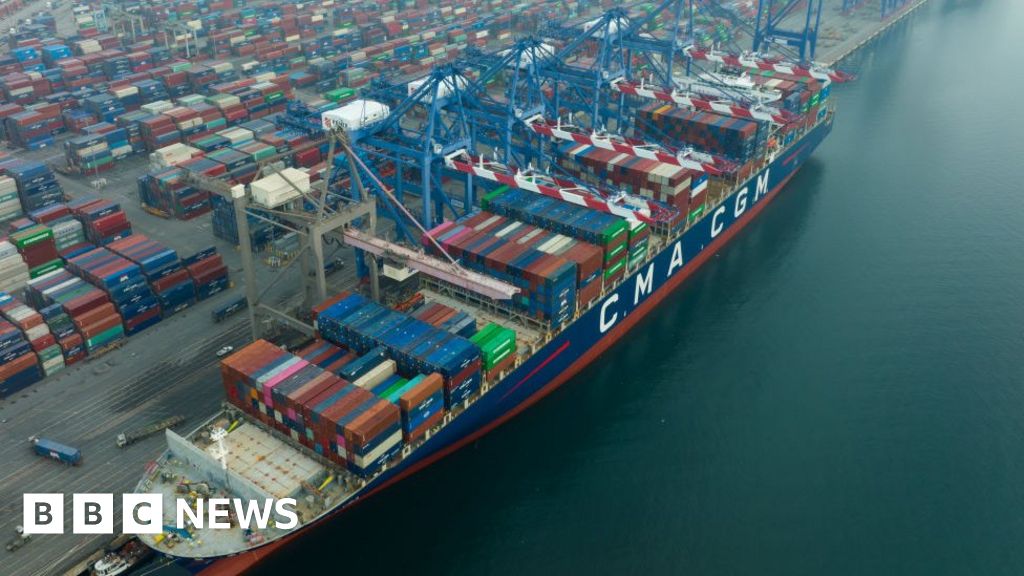
The Port of Los Angeles is now working with the FBI to prevent cyber-attacks
Cyber-attacks on one of the world's busiest ports have nearly doubled since the start of the Covid pandemic.
The number of monthly attacks targeting the Port of Los Angeles is now around 40 million, the port's executive director Gene Seroka told the BBC.
Los Angeles is the busiest port in the western hemisphere, handling more than $250bn (£210bn) of cargo every year.
The threats are believed to come mainly from Europe and Russia, and aim to disrupt the US economy, Mr Seroka said.
"Our intelligence shows the threats are coming from Russia and parts of Europe. We have to stay steps ahead of those who want to hurt international commerce," he told the BBC's World Service.
Seaports move billions of dollars in goods every year, making them a unique target for cyber-criminals.
They face daily ransomware, malware, spear phishing and credential harvesting attacks, with the aim of causing as much disruption as possible and slowing down economies.
Teaming up with the FBI
The Port of Los Angeles is now working with the Federal Bureau of Investigation's cyber-crime team to prevent attacks and improve cyber-security.
The port has invested millions of dollars in cyber-protection, developing one of the world's first Cyber Resilience Centres, which is part of the FBI.
"We must take every precaution against potential cyber-incidents, particularly those that could threaten or disrupt the flow of cargo," said Mr Seroka.
The Cyber Resilience Centre provides enhanced intelligence gathering and heightened protection against cyber-threats within the maritime supply chain.
It is a hub for the port to receive, analyse and share information with those who operate on the dock, such as cargo handlers and shipping lines.
Supply chain blockages
During the pandemic global supply chains slowed down as lockdowns closed factories and workers were forced to stay at home.
The strain on supply chains has since eased, Mr Seroka said. In January 2022 there were 109 container ships queuing for more than two days to get into the Port of Los Angeles. Today there are around 20 waiting to dock.
But Mr Seroka believes the blockages won't clear completely until 2023. "There's so much cargo coming in and not enough space," he said.
"The past two years have proven the vital role that ports hold to our nation's critical infrastructure, supply chains and economy. It's paramount we keep the systems as secure as possible," he added.
You can hear more on this story on World Business Report on BBC World Service at 15:30 BST.
From Chip War To Cloud War: The Next Frontier In Global Tech Competition
The global chip war, characterized by intense competition among nations and corporations for supremacy in semiconductor ... Read more
The High Stakes Of Tech Regulation: Security Risks And Market Dynamics
The influence of tech giants in the global economy continues to grow, raising crucial questions about how to balance sec... Read more
The Tyranny Of Instagram Interiors: Why It's Time To Break Free From Algorithm-Driven Aesthetics
Instagram has become a dominant force in shaping interior design trends, offering a seemingly endless stream of inspirat... Read more
The Data Crunch In AI: Strategies For Sustainability
Exploring solutions to the imminent exhaustion of internet data for AI training.As the artificial intelligence (AI) indu... Read more
Google Abandons Four-Year Effort To Remove Cookies From Chrome Browser
After four years of dedicated effort, Google has decided to abandon its plan to remove third-party cookies from its Chro... Read more
LinkedIn Embraces AI And Gamification To Drive User Engagement And Revenue
In an effort to tackle slowing revenue growth and enhance user engagement, LinkedIn is turning to artificial intelligenc... Read more