

China Hits Back At America With Retaliatory Tariffs, Export Controls On Rare Earth Minerals
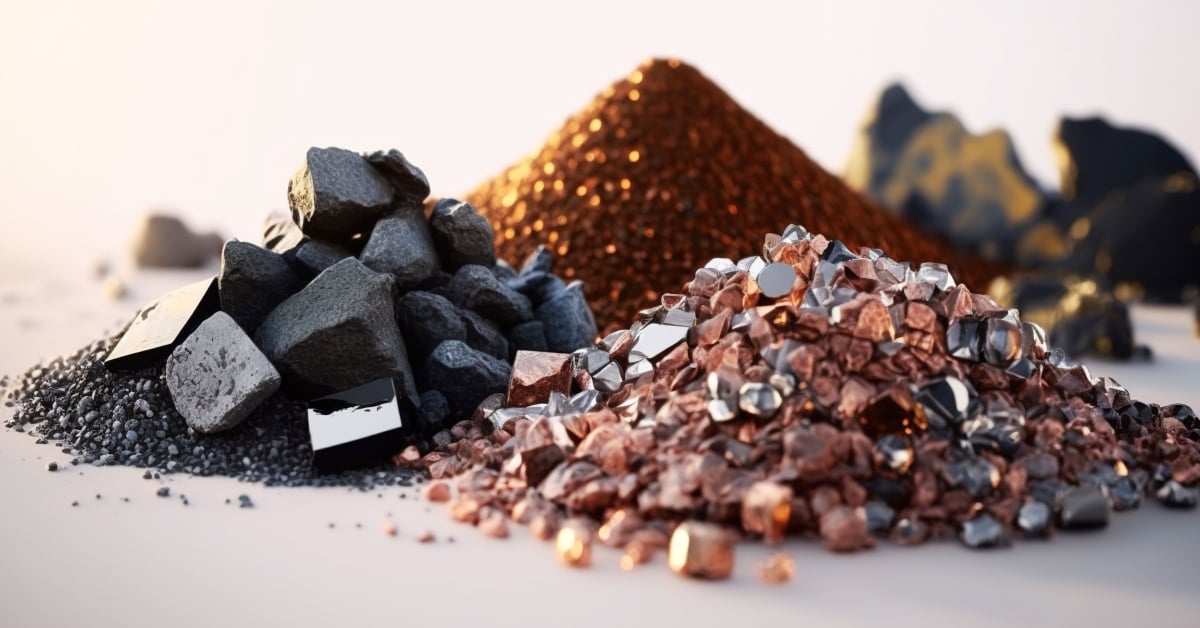
Beijing has responded to the Trump administration's latest round of import taxes with retaliatory tariffs and new restrictions on rare earth minerals.
Effective April 10, the People's Republic of China will enact a 34 percent tariff on all American goods coming into the Middle Kingdom to match the Trump administration's 34 percent additional tariff on Chinese supplies set to go into effect the same day, China's Ministry of Finance said on Friday.
"China urges the United States to immediately cancel its unilateral tariff measures and resolve trade differences through consultation in an equal, respectful and mutually beneficial manner," Beijing added in its announcement.
Alongside tariffs on US imports, China has also restricted the sale of several rare earth minerals to overseas buyers. These, according to China's Ministry of Commerce, include samarium, gadolinium, terbium, dysprosium, lutetium, scandium, and yttrium. These controls, to be clear, don't just impact the US but the world as a whole. Presumably manufacturers have stockpiles so the knock-on effects of these changes won't be immediate, we reckon.
As far as we can tell, samarium is used in lasers and as a neutron absorber in nuclear reactors; gadolinium is used in MRI machines; terbium is used in electronic sensors and speakers; dysprosium is also used in control rods for nuclear reactors; lutetium and scandium are mostly used in research; and yttrium is used in steel and aluminum alloys as a strengthening agent – but also has applications in radar and phosphors for LEDs.
The Middle Kingdom is one of the largest producers of rare earth minerals, responsible for roughly 95 percent of worldwide output, according to the US Geological Survey. As a result, much of the world, including the States, is reliant on Chinese imports of these minerals for everything from electric vehicles to semiconductors and other electronics.
According to a 2020 report from the United States International Trade Commission, the US was reliant on China for roughly 78 percent of its rare earth mineral demand.
- 2011: Chinese giant halts rare earth shipments to hike prices
- 2022: Beijing reminds world it can turn screws on tech supply chains at any time
- 2023: Huge lithium discovery could end world shortages ... Oh, wait, it's in Iran
- 2023: China bans export of rare earth processing kit
This of course isn't the first time China has weaponized its rare earth reserves. In 2023, China enacted export controls on the sale of gallium and germanium, both materials essential to semiconductor manufacturing. A year later Beijing tightened its grip over its rare earth metal supply.
In response to these retaliatory actions, among other things, US markets sunk deeper into the red on Friday. The Dow Jones Industrial average was down 2,231 points at close while the tech-heavy NASDAQ was down 962 points. ®
From Chip War To Cloud War: The Next Frontier In Global Tech Competition
The global chip war, characterized by intense competition among nations and corporations for supremacy in semiconductor ... Read more
The High Stakes Of Tech Regulation: Security Risks And Market Dynamics
The influence of tech giants in the global economy continues to grow, raising crucial questions about how to balance sec... Read more
The Tyranny Of Instagram Interiors: Why It's Time To Break Free From Algorithm-Driven Aesthetics
Instagram has become a dominant force in shaping interior design trends, offering a seemingly endless stream of inspirat... Read more
The Data Crunch In AI: Strategies For Sustainability
Exploring solutions to the imminent exhaustion of internet data for AI training.As the artificial intelligence (AI) indu... Read more
Google Abandons Four-Year Effort To Remove Cookies From Chrome Browser
After four years of dedicated effort, Google has decided to abandon its plan to remove third-party cookies from its Chro... Read more
LinkedIn Embraces AI And Gamification To Drive User Engagement And Revenue
In an effort to tackle slowing revenue growth and enhance user engagement, LinkedIn is turning to artificial intelligenc... Read more