

China Finished 2021 With 4% Global Semiconductor Market Share
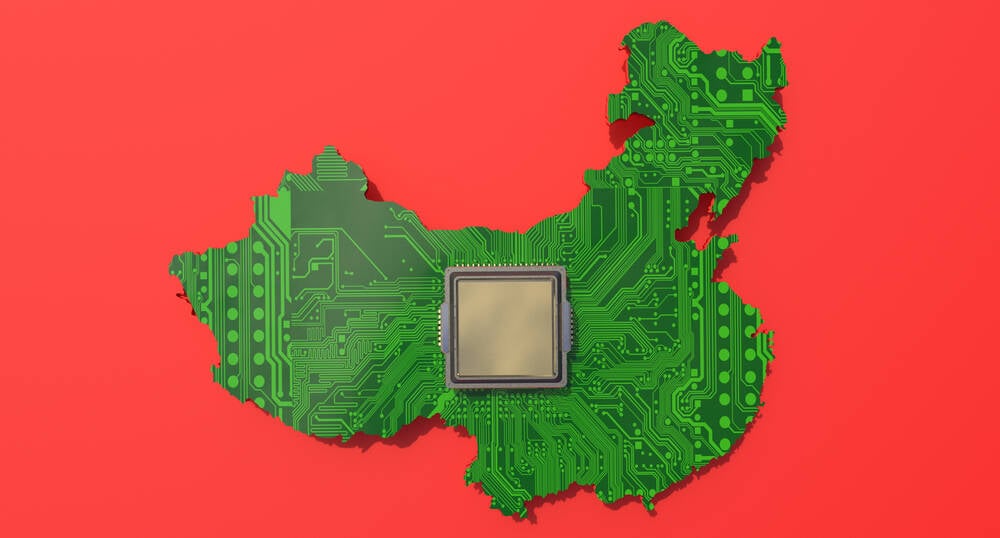
China finished 2021 holding just four percent of global semiconductor market, research firm IC Insights stated on Tuesday.
That figure puts China at the bottom of the firm's lists, behind Japan's six percent share - down from 49 percent in the early 1990s.
The US tops IC Insights' charts with over half of the global market, followed by South Korea with 22 percent, Taiwan with nine percent and Europe with six percent. The research firm calculates those figures by considering market share across fabless IC companies and integrated design and manufacturing (IDM) concerns that both create and make silicon. The USA’s result reflects is strength in both categories, while South Korea, Europe and Japan rely mostly on manufacturers .
“Overall, US-headquartered companies show the most balance with regard to IDM, fabless, and total IC industry market share,” said IC Insights in a summary of its research. US companies may well continue to dominate, given massive subsidies offered to the industry to reflect its strategic importance.
- Taiwan rounds up 60 Chinese tech workers on suspicion of poaching tech and people
- Think tank: US will need to import semiconductor talent to fill new factories
- US Army journal's top paper from 2021 says Taiwan should destroy TSMC if China invades
- Intel CEO made $178m in first 10 months, AMD CEO got a $2m pay rise
The Middle Kingdom’s four percent is a combination of a nine percent share of fabless IC companies, but also reflects its dearth of fabs. The paltry shares suggest Beijing’s self-sufficiency drive is yet to make a dent. Back in October 2020, as Beijing set a goal to become technology self-sufficient by 2035.
The goal included having 70 percent of domestic total semiconductors needs met the Middle Kingdom by 2025, but as of February 2021 US sanctions were biting and only 5.9 percent of silicon was reportedly home grown.
Analyst firm Forrester reckons the current state of China’s zero-COVID strategy is not helping matters, and has predicted a market slow down for the Middle Kingdom.
While Beijing has invested billions of dollars into processor development and manufacturing infrastructure, the investment is yet to pay off, and results so far suggest the country is spinning its gears.
As of 2021, the dominant players in the chip game appear to be Asia-Pacific and North America, with the former’s IC sales market share, as a region, rising out of the ashes from four percent in 1990 to 34 percent as of 2021.
“This increase in share by the Asian IC suppliers equates to a 31-year IC sales CAGR of 15.9 percent, almost double the total IC market CAGR of 8.2 percent over this same time period,” said IC Insights.
Meanwhile, North America's share rose from 38 percent to 54 percent.®
From Chip War To Cloud War: The Next Frontier In Global Tech Competition
The global chip war, characterized by intense competition among nations and corporations for supremacy in semiconductor ... Read more
The High Stakes Of Tech Regulation: Security Risks And Market Dynamics
The influence of tech giants in the global economy continues to grow, raising crucial questions about how to balance sec... Read more
The Tyranny Of Instagram Interiors: Why It's Time To Break Free From Algorithm-Driven Aesthetics
Instagram has become a dominant force in shaping interior design trends, offering a seemingly endless stream of inspirat... Read more
The Data Crunch In AI: Strategies For Sustainability
Exploring solutions to the imminent exhaustion of internet data for AI training.As the artificial intelligence (AI) indu... Read more
Google Abandons Four-Year Effort To Remove Cookies From Chrome Browser
After four years of dedicated effort, Google has decided to abandon its plan to remove third-party cookies from its Chro... Read more
LinkedIn Embraces AI And Gamification To Drive User Engagement And Revenue
In an effort to tackle slowing revenue growth and enhance user engagement, LinkedIn is turning to artificial intelligenc... Read more