

China Chip Imports Down 12.4% As Tech Trade War With US Intensifies
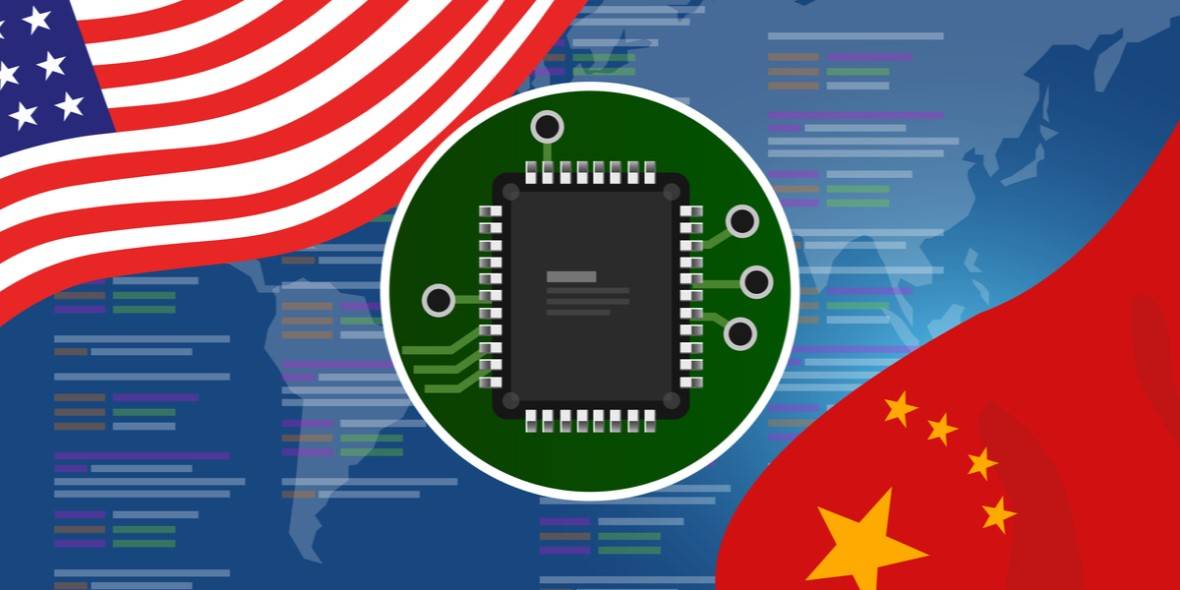
The chip wars appear to be biting in China, as the country’s semiconductor imports dropped 12.4 percent in the month of September, according to official customs data published by the country.
China’s semiconductor imports stood at 47.6 billion chips last month, compared with 54.3 billion chips for the same period last year, according official figures released this week. This also contrasts with the first nine months of 2021, when imports reportedly increased 23.7 per cent.
US sanctions against China have been ongoing for some time before the latest export controls were announced this month, which chiefly targeted China’s ability to make its own chips by importing chip design and manufacturing tools. However, tensions between the two countries along with the chip shortages following the pandemic caused many companies in China to stockpile supplies during 2021.
The figures released by China’s National Bureau of Statistics also showed that the country’s own domestic chip output dropped 16.4 per cent during September, to 26.1 billion units.
- Intel sued over historic DEC chip site's future
- China dumps dud chips on Russia, Moscow media moans
- China doesn't need to take Taiwan's fabs to escape US trade bans
- SK hynix, Samsung, TSMC granted one-year reprieve from China chip restrictions
Meanwhile, the US is already considering implementing additional export controls, this time focused on limiting China’s access to technology around quantum computing and artificial intelligence software, according to the South China Morning Post, which quotes “people familiar with the situation”.
US officials are said to be still determining how best to frame the controls concerning quantum computing, which will likely focus on technology to control error rates. While quantum is still at an embryonic stage, it seems that America hopes to stop China from getting ahead in the race to exploit it, given its potential to boost some complex computational tasks.
The US government has already put restrictions on sales to China of hardware from AMD and Nvidia that might be used in AI and supercomputing, comprising the latest GPU accelerator products from the two companies.
In a further blow to China, Taiwanese chipmaking giant TSMC has apparently suspended production of silicon for Chinese startup Biren, designer of the country’s native GPU technology, because of US restrictions. According to Bloomberg, TSMC is said to be unsure whether Biren’s products fall under the rules for restrictions, but has ceased production anyway in order to ensure it is in compliance with US regulations.
Chinese chipmaker Yangtze Memory Technologies Corp (YMTC) is also asking any employees in key technical positions that are US passport holders to leave the company, in order to comply with the latest sanctions from The Whitehouse, the FT reports. The new rules require any US citizen or entity to seek permission from the Department of Commerce for any involvement in the development or manufacture of chips in China.
YMTC was already among the companies hit by the new controls which have restricted sales of chipmaking equipment to China.
The FT notes that China will struggle to maintain its rapid expansion in artificial intelligence and supercomputing without access to US technology, but the sanctions may ultimately prove futile in the very long term, since they will only drive Beijing to double-down on developing its own native technologies that the US has no control over. ®
From Chip War To Cloud War: The Next Frontier In Global Tech Competition
The global chip war, characterized by intense competition among nations and corporations for supremacy in semiconductor ... Read more
The High Stakes Of Tech Regulation: Security Risks And Market Dynamics
The influence of tech giants in the global economy continues to grow, raising crucial questions about how to balance sec... Read more
The Tyranny Of Instagram Interiors: Why It's Time To Break Free From Algorithm-Driven Aesthetics
Instagram has become a dominant force in shaping interior design trends, offering a seemingly endless stream of inspirat... Read more
The Data Crunch In AI: Strategies For Sustainability
Exploring solutions to the imminent exhaustion of internet data for AI training.As the artificial intelligence (AI) indu... Read more
Google Abandons Four-Year Effort To Remove Cookies From Chrome Browser
After four years of dedicated effort, Google has decided to abandon its plan to remove third-party cookies from its Chro... Read more
LinkedIn Embraces AI And Gamification To Drive User Engagement And Revenue
In an effort to tackle slowing revenue growth and enhance user engagement, LinkedIn is turning to artificial intelligenc... Read more