

CEO Secrets: 'Recruit Staff Early To Grow Your Business Fast'
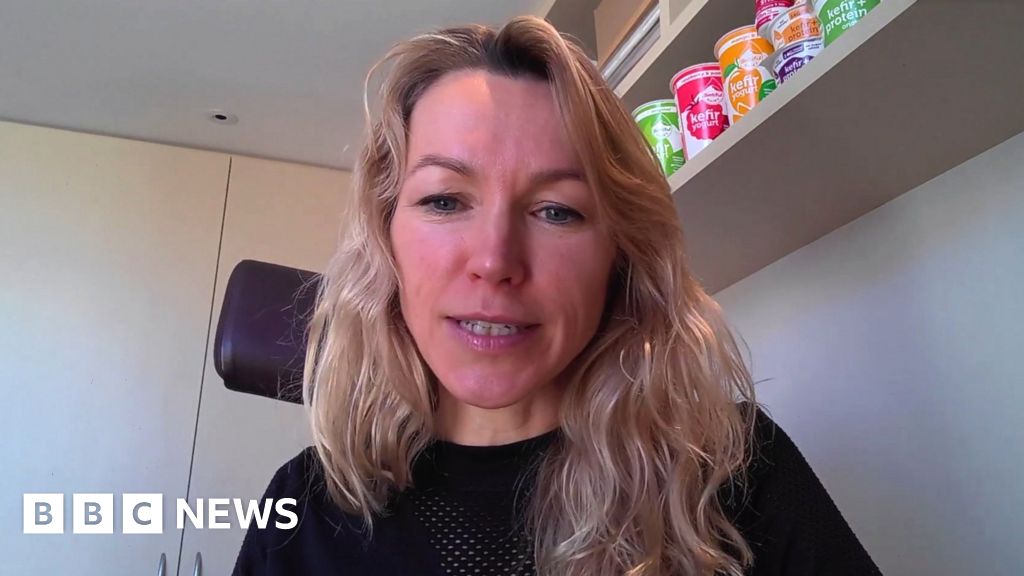
Kefir is a drink made from fermented milk which comes from the Caucasus and has been drunk for over 2,000 years.
Natasha Bowes drank it as a child growing up in Russia and, after a sixteen-year career in financial services, she decided to try selling the drink in the UK and Western Europe.
Natasha started Biotiful in 2012, and her business now sells 300,000 bottles of kefir a week. It has proved a hit amongst customers from Eastern Europe and the Middle East and amongst health food enthusiasts because of the strains of bacteria it contains.
However, says Natasha, her firm might have grown even faster had she not spent the first two and a half years trying to run Biotiful on her own.
"If I had taken on staff earlier," she says, "I could have got to the £1 million sales mark in half the time."
Kefir has a consistency halfway between milk and yoghurt. But whereas yoghurt might contain one or two strains of bacteria, kefir contains more than 40.
image copyrightBiotiful
Natasha had to import all the milk germ cultures from Russia, and it took her nine months to learn how to make it. She then spent another four months trialling production and developing different variations.
"Cherry was the first flavour we created," she says, "and it remains the most popular."
The first shops to sell Biotiful's kefir were organic food shops and high-end stores such as Fortnum and Masons, Harrods and Selfridges.
"I felt if I positioned the product as a premium product from the outset, and targeted the most discerning consumers, then I would have the best possible start and get the best possible feedback," she says.
Natasha spent hours doing sampling sessions at stores and getting customers' views. But she was also overseeing all other aspects of the business. She did not want to take on staff until she was sure the firm was making a healthy profit.
"I was doing everything myself: management of production, sales, marketing, operations, finance - the whole lot."
The problem with this, says Natasha, is that she had too little time to concentrate on her main task as company boss - getting her product onto the shelves.
"The first team members I brought in were [in] marketing and operations. That freed me up to focus on what really mattered. That was, in the early days in particular, all about distribution and sales."
After this, Natasha started selling her kefir through supermarkets and started exporting it to France and the Middle East. She now employs just under 30 staff.
"My biggest regret is hesitating to hire people. I felt I could only justify taking on staff when I sure the business was profitable," says Natasha. "But then again, not taking people on sooner definitely holds up growth of our business."
So at exactly what stage should entrepreneurs recruit their first employees?
"I believe one should seriously consider starting to take on staff into the business when you know, as an entrepreneur, that you have a viable proposition and when you have stablished your early sales," she says.
"The business doesn't have to be making a profit yet. You just have to be sure that it is on course to. Because you cannot really deliver on the big mission, the ambition of building the brand of the business, without support."
From Chip War To Cloud War: The Next Frontier In Global Tech Competition
The global chip war, characterized by intense competition among nations and corporations for supremacy in semiconductor ... Read more
The High Stakes Of Tech Regulation: Security Risks And Market Dynamics
The influence of tech giants in the global economy continues to grow, raising crucial questions about how to balance sec... Read more
The Tyranny Of Instagram Interiors: Why It's Time To Break Free From Algorithm-Driven Aesthetics
Instagram has become a dominant force in shaping interior design trends, offering a seemingly endless stream of inspirat... Read more
The Data Crunch In AI: Strategies For Sustainability
Exploring solutions to the imminent exhaustion of internet data for AI training.As the artificial intelligence (AI) indu... Read more
Google Abandons Four-Year Effort To Remove Cookies From Chrome Browser
After four years of dedicated effort, Google has decided to abandon its plan to remove third-party cookies from its Chro... Read more
LinkedIn Embraces AI And Gamification To Drive User Engagement And Revenue
In an effort to tackle slowing revenue growth and enhance user engagement, LinkedIn is turning to artificial intelligenc... Read more