

CEO Secrets: 'I Started My Firm For Under £500 As A Bet'
By Jeremy Howell
Business reporter, BBC News
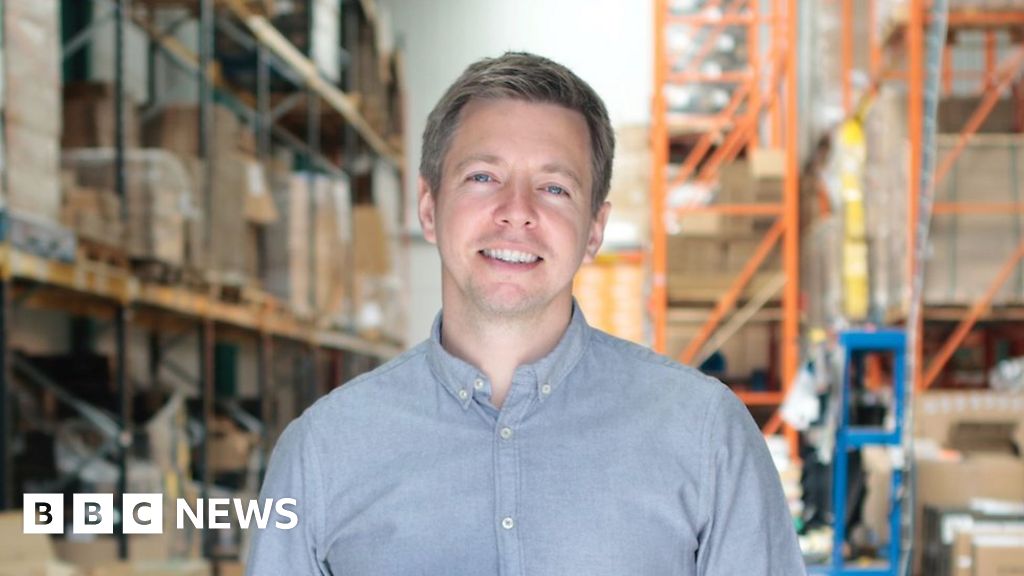
"It's really important that you don't just go and buy the best-looking website, or furnish your team with loads of really cool merchandise," says the CEO of Snaffling Pig, Nick Coleman.
"I started my company as a bet for £500. Now it turns over £6m a year."
Snaffling Pig sells a traditional British pub snack - pork crackling - in a variety of flavours and an array of packages, in bags, jars and even in Christmas advent calendars and Easter eggs.
"Our total sales equate to eight million packets of crackling a year. That includes 2.1 million packets of crackling in our advent calendars," says Nick.
"We didn't think of reinventing the wheel. We just put a new spin on an old product and moved it out of the pub and into the gift market so we could sell it on the High Street and online."
image copyrightSnaffling Pig
Nick was running a medical supplies company when his business partner bet him that he could not start a new firm on a £500 budget.
"He said he would buy me a steak dinner when I had that business making a million pounds a year," he says. "Eighteen months later, he paid up."
Nick started Snaffling Pig in Yattenden in Berkshire on a shoestring. He found an existing pork crackling maker in the Midlands and asked him to make a variety of flavours such as chilli and fennel and then packaged up the product in the cheapest way possible.
"We were taking flavoured extractions, pouring it into see-through bags and just putting a little label on that said Snaffling Pig," says Nick.
"We went pub to pub, selling that look and that product. Then we poured the revenue back into expanding our production and our market."
Nick spent his £500 start-up budget on a designer to create the Snaffling Pig logo. He did his own market research by touring pubs and talking to landlords.
image copyrightSnaffling Pig
"We found that fennel sells badly, but salt and vinegar sells well. And we found out how the pub industry operates. Countryside pubs tend to be owner-operated, where the landlord can decide whether or not to sell your product. With city pubs, you have to try and get a contract centrally.
"My strategy was to get into one pub and get the turnover going before getting contracts with big centralised corporations. It is better to have thousands of customers spending a little bit rather than relying on one big buyer. It's more secure."
Nick says that when it came to the pork crackling itself, he employed a principle which is popular amongst app makers, of putting onto the market a "minimum viable product".
"We release things as quick as we can. They're not perfect," he says. "It's almost like a scattergun approach. Whatever sticks we then do more of, and we improve the product. It means that if we need to change recipes, we haven't spent too much money. And that enables us to move really fast."
Nick does not see the need of raising as much money as possible up front: "So many firms think they have to spend a fortune on market research. You just need to get a product and hit the street. You'll soon learn where to take it.
"You find your feet as you go along."
From Chip War To Cloud War: The Next Frontier In Global Tech Competition
The global chip war, characterized by intense competition among nations and corporations for supremacy in semiconductor ... Read more
The High Stakes Of Tech Regulation: Security Risks And Market Dynamics
The influence of tech giants in the global economy continues to grow, raising crucial questions about how to balance sec... Read more
The Tyranny Of Instagram Interiors: Why It's Time To Break Free From Algorithm-Driven Aesthetics
Instagram has become a dominant force in shaping interior design trends, offering a seemingly endless stream of inspirat... Read more
The Data Crunch In AI: Strategies For Sustainability
Exploring solutions to the imminent exhaustion of internet data for AI training.As the artificial intelligence (AI) indu... Read more
Google Abandons Four-Year Effort To Remove Cookies From Chrome Browser
After four years of dedicated effort, Google has decided to abandon its plan to remove third-party cookies from its Chro... Read more
LinkedIn Embraces AI And Gamification To Drive User Engagement And Revenue
In an effort to tackle slowing revenue growth and enhance user engagement, LinkedIn is turning to artificial intelligenc... Read more