

CEO Secrets: 'Have A Plan B In Case Things Don't Work Out'
By Jeremy Howell
Business reporter, BBC News
"I'm so happy that we came up with a 'Plan B' on day one of the business," says Natalie Quail, the chief executive of SmileTime, "because we seriously needed it when the pandemic hit."
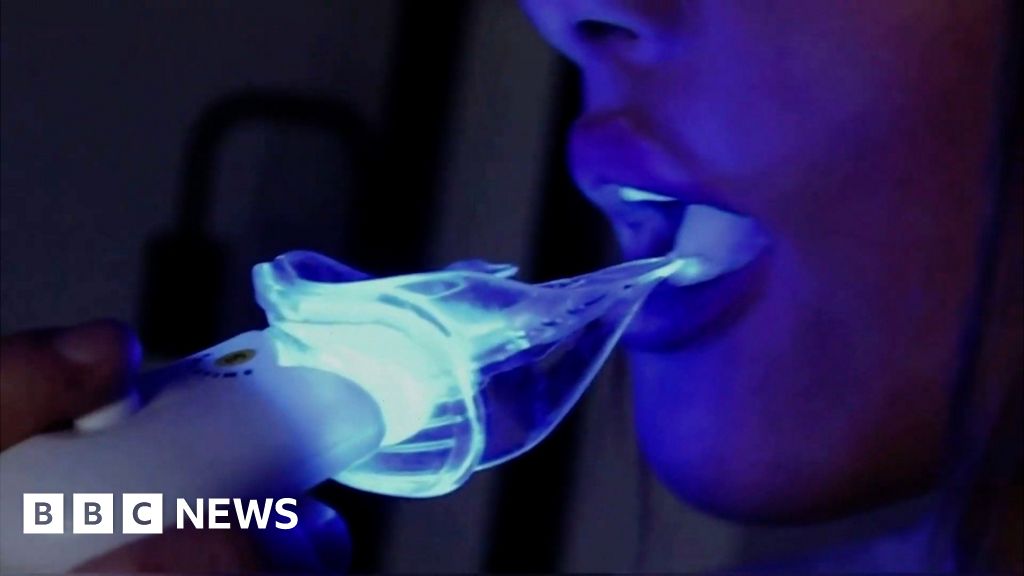
In 2019, Natalie set up SmileTime after a seven-year career as a tax lawyer. Her firm sells teeth-whitening kits and other dental cosmetic products.
Sales soared to over a £1m in its first year in its main markets of the UK and rest of Europe, thanks in large part to the lockdown of 2020.
But the lockdown was also a critical point for the firm's survival. It has all its products made in China and supplies were in danger of grinding to a halt.
"On the one hand, we had a surge in demand," says Natalie. "Dentists were closed but people were still wanted their teeth whitened because they were going on Zoom.
"All of a sudden, we learnt our factories in China were shutting because workers were going into isolation. We didn't know how long the lockdown would last. Some people in China were saying it would be for a few weeks. Others said it would last for six months."
image copyrightSmileTime
Natalie worried that she would have to turn customers away - even if the lockdown was quickly lifted.
"We were reliant on the products being delivered from China regularly by air freight. We were at the end of a long supply line and might not have been able to get our goods into customer hands.
"Many of our competitors, on the other hand, made their products locally, in Europe. That can effectively kill a business."
Crucially, Natalie had foreseen potential problems with such a long supply chain when she launched her firm and had drawn up contingency plans.
"We thought initially that the risk might be trade sanctions against China, or that other western countries might be drawn into the US tariff war with China."
So she asked manufacturers in the UK and Europe whether they would take over production of her dental kits in an emergency.
"This meant that as soon as we saw China going into lockdown, we contacted all those local suppliers who we knew could plug a short-term disruption gap and put them on stand-by."
In the event, China let its factories open again before SmileTime ran out of stock. However, the contingency plans still saved Natalie and her colleagues hours of management time.
"What it meant was we didn't have to panic and spend a great deal of time and money trying to fix up local suppliers in a rush," she says.
"If you have an emergency but you don't have a back-up, the instinct is to panic. And it's hard to make a good Plan B when you are panicking.
"It was comforting for us to know that there were people who could take up the slack for us - having their names and contacts on hand."
Natalie's advice to fellow entrepreneurs is to make contingency plans for a business right at the outset - and especially if products are being manufactured abroad.
"Obviously, a pandemic was not anticipated," she says. "But there could be disruptions globally due to war, or due to weather conditions which could disrupt our business. Our back-up plan can help us in all those scenarios, for sure."
From Chip War To Cloud War: The Next Frontier In Global Tech Competition
The global chip war, characterized by intense competition among nations and corporations for supremacy in semiconductor ... Read more
The High Stakes Of Tech Regulation: Security Risks And Market Dynamics
The influence of tech giants in the global economy continues to grow, raising crucial questions about how to balance sec... Read more
The Tyranny Of Instagram Interiors: Why It's Time To Break Free From Algorithm-Driven Aesthetics
Instagram has become a dominant force in shaping interior design trends, offering a seemingly endless stream of inspirat... Read more
The Data Crunch In AI: Strategies For Sustainability
Exploring solutions to the imminent exhaustion of internet data for AI training.As the artificial intelligence (AI) indu... Read more
Google Abandons Four-Year Effort To Remove Cookies From Chrome Browser
After four years of dedicated effort, Google has decided to abandon its plan to remove third-party cookies from its Chro... Read more
LinkedIn Embraces AI And Gamification To Drive User Engagement And Revenue
In an effort to tackle slowing revenue growth and enhance user engagement, LinkedIn is turning to artificial intelligenc... Read more