

CEO Secrets: CitizenLab Founder Shares Her Business Advice
By Dougal Shaw
Business reporter, BBC News
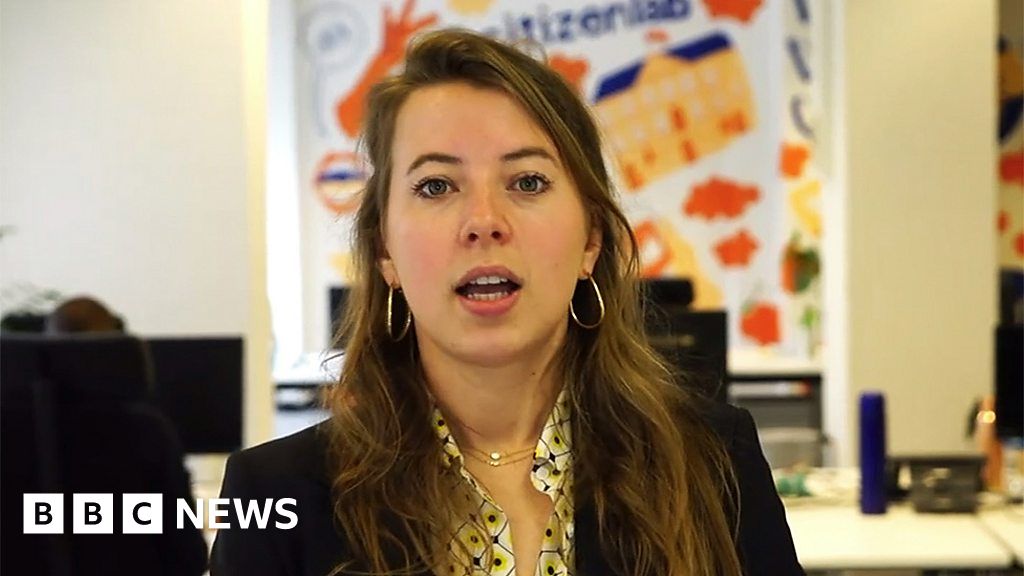
The speed at which you can get your primary product out to your customers will often determine your success, or failure, in business, says Aline Muylaert co-founder of CitizenLab. She spoke to BBC News as part our business advice series CEO Secrets.
"When building a business, the most important virtue is speed," says 27 year-old Muylaert, speaking from the CitizenLab headquarters in Brussels, Belgium.
"Speed is more important than perfection."
CitizenLab is a digital platform primarily used by local governments to help them engage people online and make informed decisions.
It allows voters to take part in online debates and have their say on policy ideas and budgeting decisions. Users can help shape policy on things like the provision of bicycle lanes, or outdoor spaces for children, for example.
image copyrightCitizenLab
Some public bodies use the platform too, to connect with their grassroots members, like Sport England, or INJUV, Chile's National Youth Institute.
The technology is used by more than 300 municipalities, in cities like Vancouver, Seattle, Utrecht and London, where it is integrated into existing government websites.
The platform is proving particularly attractive because it makes it easier to reach a wider range of people versus traditional in-person approaches such as town hall debates or paper surveys, says Muylaert.
Instead of the "middle-aged, well-educated, white guy" demographic, says Muylaert, which can traditionally dominate the local government agenda, clients are also able to reach a much younger audience - the majority of their users are aged under 45.
"The real challenge, in terms of inclusion, isn't actually age, though," says Muylaert, "it is reaching those [people from] lower social-economic backgrounds and those who face language barriers."
The company was founded in 2015 by Muylaert and two fellow students while they were still studying at the Solvay Business School in Brussels.
"The pandemic, and the response to it, has meant that government started playing a bigger role in people's lives," explains Muylaert, "so we've seen that people are more willing to engage in policy-making." The business has grown from three clients in 2016, to more than 380 in 2021.
Although the pandemic has been "a rollercoaster ride" for the start-up, a focus on speed helped the company grow rapidly from the outset, she adds.
"We built our MVP [Minimum Viable Product] in less than three months and that's really fast," she says.
"I think you need to build fast, fail fast and learn from that."
This philosophy has helped to attract more clients, according to Muylaert.
She believes it makes clients appreciate that you are a leading innovator in your sector. "It gives you an edge.
The world of tech companies remains dominated by men and many other female guests on CEO Secrets have shared their experiences of sexism while trying to grow their tech businesses.
But Muylaert says this has not been an issue for her. "I've always felt supported by my male co-founders and male investors."
It helps that the government-technology space and public sector already have a high number of women working within them, she adds. A bigger diversity issue, she says, is creating fair opportunities for people of colour and people from disadvantaged social backgrounds.
"The fact that I'm a woman gives me a stage, it actually opened many opportunities for me.
"I believe everyone can be a feminist, so you have to find people to work with who also believe in that."
You can follow CEO Secrets series producer Dougal on Twitter: @dougalshawbbc
From Chip War To Cloud War: The Next Frontier In Global Tech Competition
The global chip war, characterized by intense competition among nations and corporations for supremacy in semiconductor ... Read more
The High Stakes Of Tech Regulation: Security Risks And Market Dynamics
The influence of tech giants in the global economy continues to grow, raising crucial questions about how to balance sec... Read more
The Tyranny Of Instagram Interiors: Why It's Time To Break Free From Algorithm-Driven Aesthetics
Instagram has become a dominant force in shaping interior design trends, offering a seemingly endless stream of inspirat... Read more
The Data Crunch In AI: Strategies For Sustainability
Exploring solutions to the imminent exhaustion of internet data for AI training.As the artificial intelligence (AI) indu... Read more
Google Abandons Four-Year Effort To Remove Cookies From Chrome Browser
After four years of dedicated effort, Google has decided to abandon its plan to remove third-party cookies from its Chro... Read more
LinkedIn Embraces AI And Gamification To Drive User Engagement And Revenue
In an effort to tackle slowing revenue growth and enhance user engagement, LinkedIn is turning to artificial intelligenc... Read more