

Central Bank Boss Warns Sri Lanka Faces Shutdown
By Rajini Vaidyanathan & Patrick Jackson
BBC News, Colombo and London
Nandalal Weerasinghe is trying to negotiate a bailout package
The governor of Sri Lanka's central bank, Nandalal Weerasinghe, has warned that the country may shut down if no stable government is formed soon.
There is a "lot of uncertainty" over whether enough foreign exchange can be found to pay for essential petroleum, he told the BBC's Newsnight programme.
Progress on getting an international bailout package depended on having a stable administration, he said.
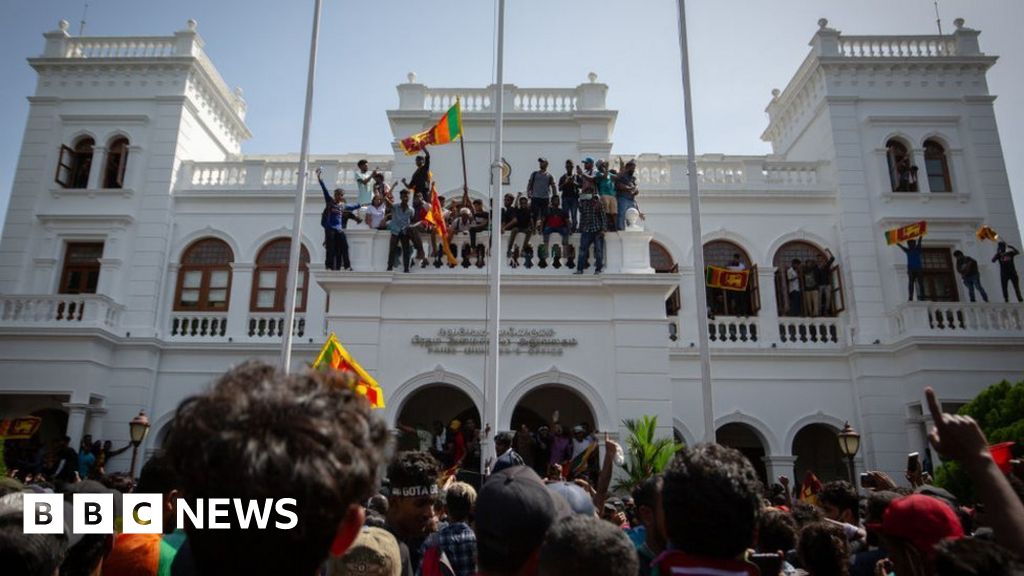
The country is in the grip of mass unrest over an economic crisis.
President Gotabaya Rajapaksa has fled abroad and acting president Ranil Wickremesinghe has imposed a curfew for a second day.
Sri Lanka has seen its economy collapse and the cost of food, fuel and other basic supplies skyrocket for ordinary people.
Many blame the Rajapaksa administration for mishandling the crisis and see Mr Wickremesinghe, who became prime minister in May, as part of the problem.
Nandalal Weerasinghe, who himself only took over as governor of the central bank in April, said he did not "see a way forward" on how to provide essentials without a stable administration.
"We have been able to finance at least three shipments of diesel probably until the end of this month and some one or two shipments of petrol, but beyond that, there's a lot of uncertainty whether we even will be able to provide sufficient foreign exchange to finance essential petroleum for this country," he said.
"If that doesn't happen, then it will be like [the] whole country will be closed down. So that's why I need a prime minister, president, cabinet, who can make decisions... Without that, all people will be suffering."
Mr Weerasinghe has been holding talks with the International Monetary Fund on a bailout.
"We hope to be able to make good progress in our discussion with the creditors for debt structuring, but the timing for that process [depends] on how soon there will be a stable administration," he said.
Once a stable government was in place, Sri Lanka could come out of the crisis somewhere "within three or four or five months", he suggested.
The governor of the central bank has been seen as a potential new president himself, but he appeared to rule that out, saying, "I have no interest in… taking any political position."
South Asia Correspondent Rajini Vaidyanathan meets one family struggling to get fuel in Sri Lanka
From Chip War To Cloud War: The Next Frontier In Global Tech Competition
The global chip war, characterized by intense competition among nations and corporations for supremacy in semiconductor ... Read more
The High Stakes Of Tech Regulation: Security Risks And Market Dynamics
The influence of tech giants in the global economy continues to grow, raising crucial questions about how to balance sec... Read more
The Tyranny Of Instagram Interiors: Why It's Time To Break Free From Algorithm-Driven Aesthetics
Instagram has become a dominant force in shaping interior design trends, offering a seemingly endless stream of inspirat... Read more
The Data Crunch In AI: Strategies For Sustainability
Exploring solutions to the imminent exhaustion of internet data for AI training.As the artificial intelligence (AI) indu... Read more
Google Abandons Four-Year Effort To Remove Cookies From Chrome Browser
After four years of dedicated effort, Google has decided to abandon its plan to remove third-party cookies from its Chro... Read more
LinkedIn Embraces AI And Gamification To Drive User Engagement And Revenue
In an effort to tackle slowing revenue growth and enhance user engagement, LinkedIn is turning to artificial intelligenc... Read more