

Catch Of The Day... For Google, Anyway: Transatlantic Cornwall Cable Hauled Ashore
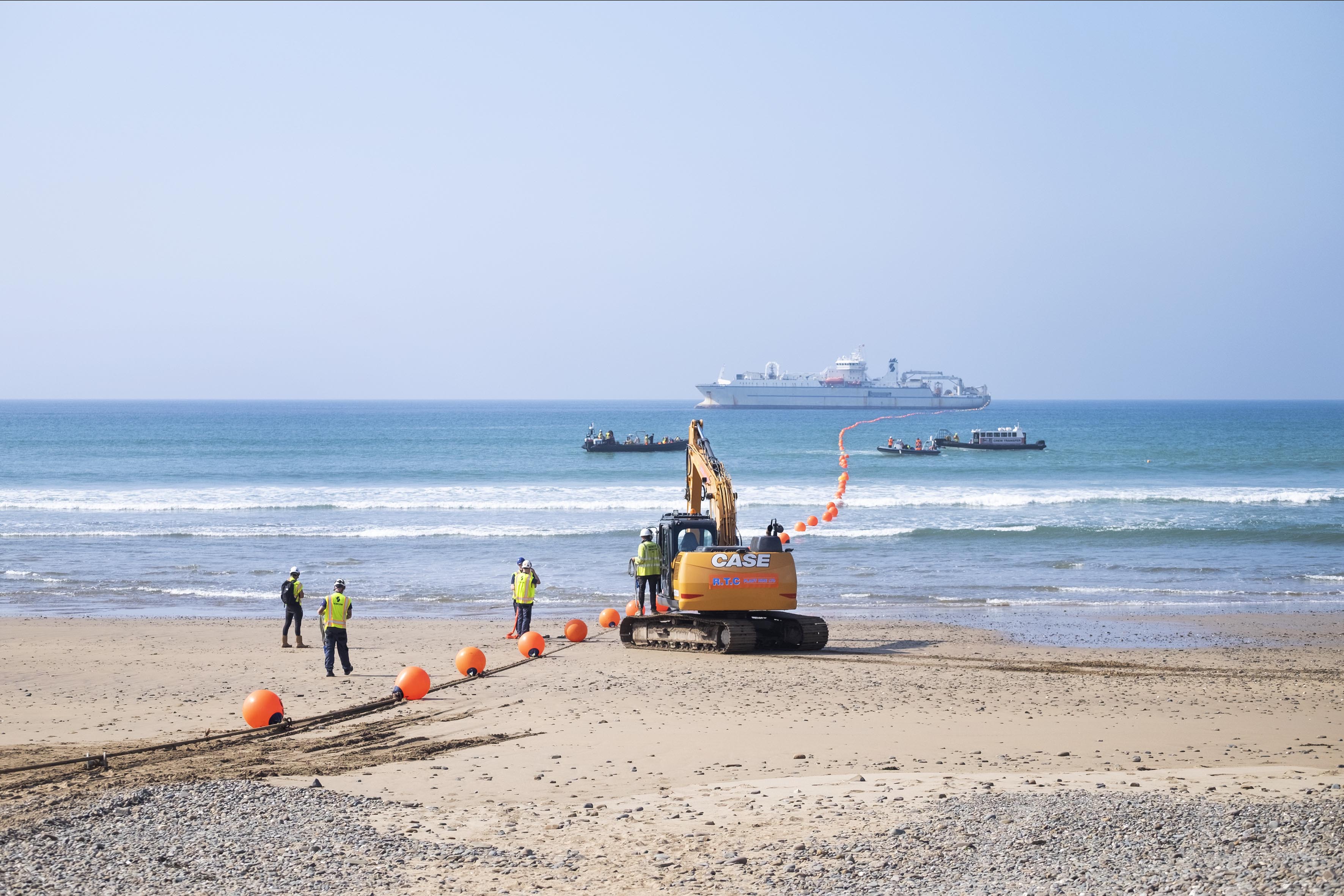
Google's newest transatlantic subsea cable has finally been hauled ashore in Cornwall, more than a year after the megacorp revealed plans to connect the UK and US.
The arrival of the Grace Hopper cable – named after the computer science pioneer – brings the 16-fibre pair (32 fibres) Google-funded cable to Bude on the picturesque northern coast of Cornwall.
Once all plumbed in, the cable is expected to be able to carry around 340Tbps of capacity – that's about the same as 17.5 million people streaming 4K videos all at the same time.
The cable came ashore at Crooklets Beach late yesterday afternoon, just a short seaside donkey ride from GCHQ's Bude listening post on the cliffs overlooking the sea.
Those behind the project claim the investment was necessary due to the increased capacity on network infrastructure and to power Google's ever-growing services.
In a blog posted to mark Grace Hopper's arrival, the firm said: "Grace Hopper represents a new generation of trans-Atlantic cable coming to the UK shores and is one of the first new cables to connect the US and the UK since 2003. Grace Hopper will connect the UK to help meet the rapidly growing demand for high-bandwidth connectivity and services."
The cable line is marked out by buoys (click to enlarge)
Grace Hopper joins Google's other privately owned cables, including Curie, which links the US to Panama and Chile; Equiano, connecting Portugal, Nigeria, and South Africa; Dunant, which joins the US and France; and Havfrue, which links the US and Denmark.
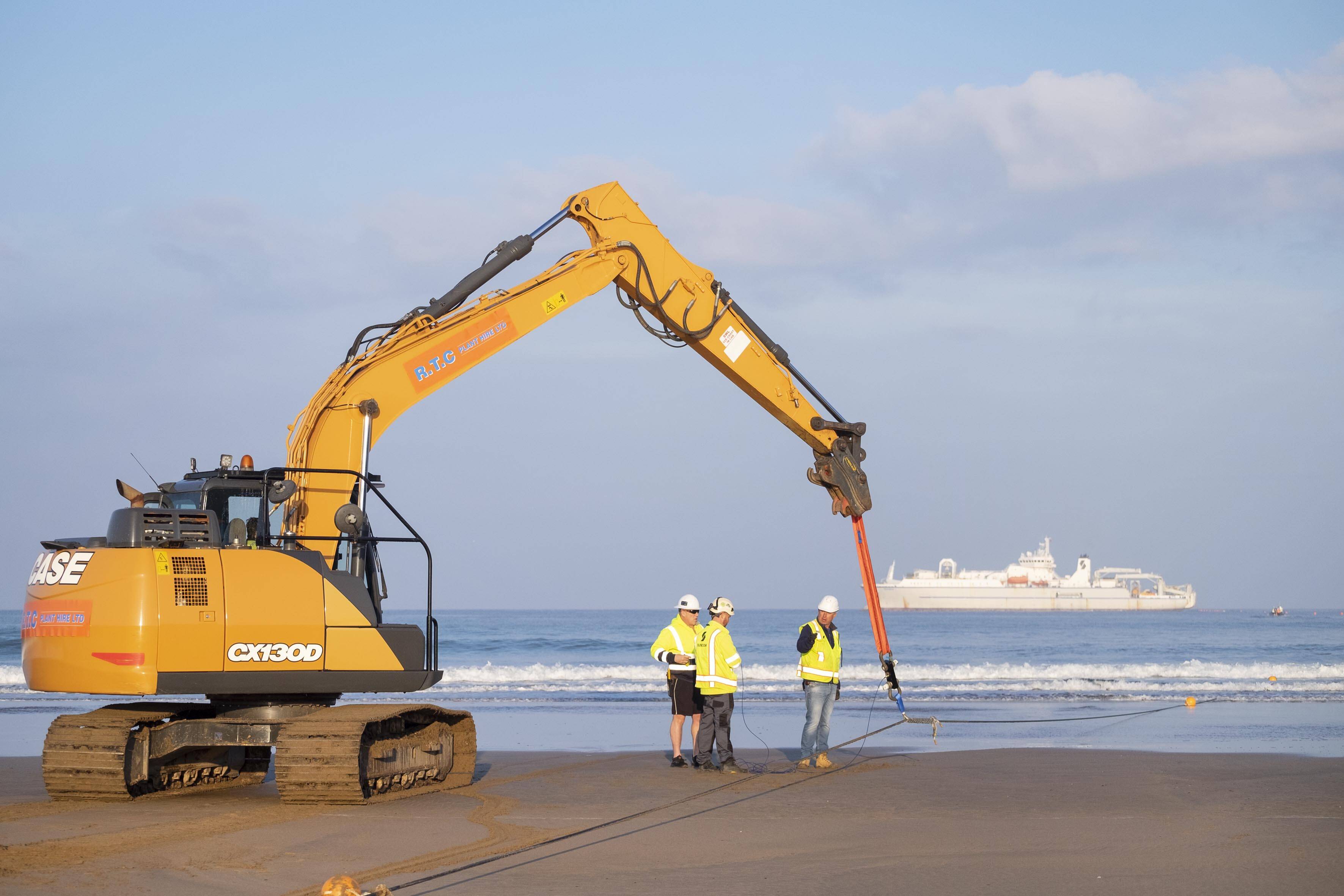
The excavator gingerly lifts up the cable line (click to enlarge)
Of added interest to cable enthusiasts is news that the Grace Hopper cable was split mid-ocean – with one half diverted to Bilbao in Spain where it reached landfall earlier this month and the other to Bude.
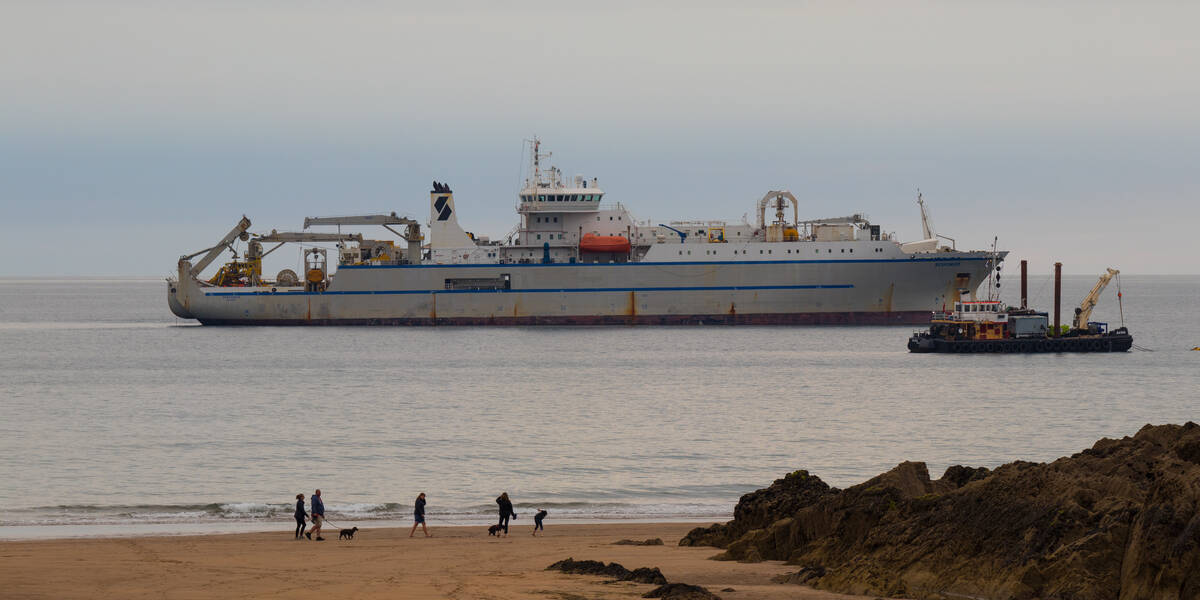
A cable-laying ship, with support vessel, pictured back in July 2021, near Crooklets Beach, waiting to complete the undersea cable Grace Hopper project (click to enlarge)
Once connected, the Iberian hook-up forms part of an agreement signed last year by Google Cloud and O2 UK parent firm Telefónica to expand services in southern Europe. As part of the agreement, Google plans to launch a cloud region in Spain as well as jointly developing 5G services using Google Cloud's Mobile Edge Computing platform. ®
From Chip War To Cloud War: The Next Frontier In Global Tech Competition
The global chip war, characterized by intense competition among nations and corporations for supremacy in semiconductor ... Read more
The High Stakes Of Tech Regulation: Security Risks And Market Dynamics
The influence of tech giants in the global economy continues to grow, raising crucial questions about how to balance sec... Read more
The Tyranny Of Instagram Interiors: Why It's Time To Break Free From Algorithm-Driven Aesthetics
Instagram has become a dominant force in shaping interior design trends, offering a seemingly endless stream of inspirat... Read more
The Data Crunch In AI: Strategies For Sustainability
Exploring solutions to the imminent exhaustion of internet data for AI training.As the artificial intelligence (AI) indu... Read more
Google Abandons Four-Year Effort To Remove Cookies From Chrome Browser
After four years of dedicated effort, Google has decided to abandon its plan to remove third-party cookies from its Chro... Read more
LinkedIn Embraces AI And Gamification To Drive User Engagement And Revenue
In an effort to tackle slowing revenue growth and enhance user engagement, LinkedIn is turning to artificial intelligenc... Read more