

Car Production In July Hits Lowest Level Since 1956
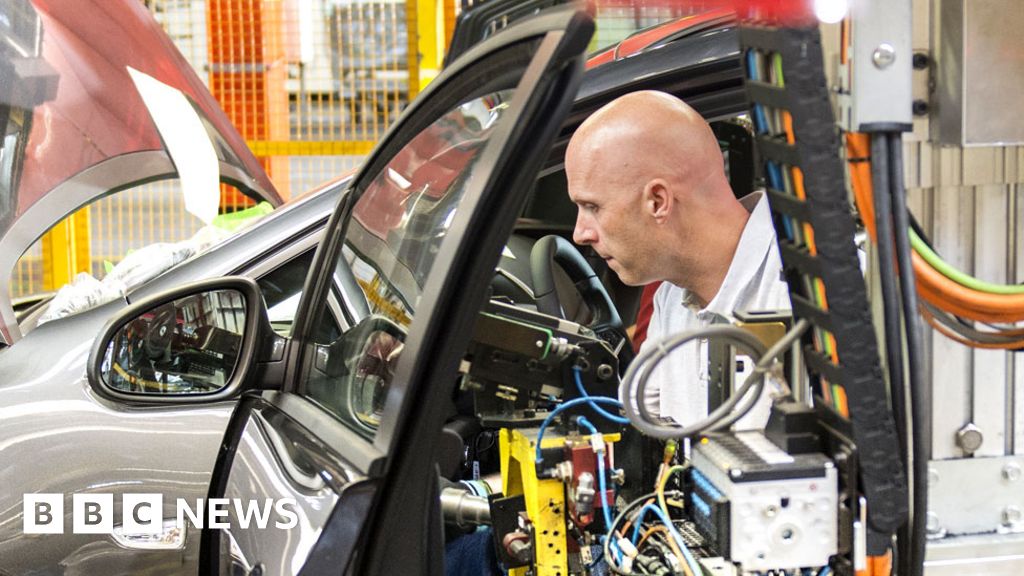
UK car production fell sharply last month, marking the worst July performance for the industry since 1956, a trade group has said.
The global microchip shortage, staff being affected by the so-called pingdemic, and shutdowns meant just 53,438 cars were built in the month.
That was a drop of 37.6% compared to July last year, the Society of Motor Manufacturers and Traders (SMMT) said.
Overall car production in the year to date is almost a fifth higher than during 2020 at 552,361 vehicles, but that is still 28.7% down on 2019 pre-pandemic levels.
SMMT boss Mike Hawes said the July figures "lay bare the extremely tough conditions UK car manufacturers continue to face".
"While the impact of the 'pingdemic' will lessen as self-isolation rules change, the worldwide shortage of semiconductors shows little sign of abating," he said.
New cars often include dozens of microchips - also called semiconductors - but a shortage has put pressure on a number of carmakers, who are competing directly with tech companies and the consumer electronics sector for supply.
At the beginning of the pandemic, many car manufacturers cancelled orders due to fears of a long downturn in sales. However, as demand started to recover, companies found themselves at the back of the queue for microchips.
Manufacturers have had to grapple with absent workers as coronavirus restrictions eased due to employees being pinged by the NHS Covid app.
Analysts at Goldman Sachs have predicted that the automotive sector is set to be hit hard by the chip shortage, with up to $20bn (£14bn) wiped off global carmakers' operating profits in 2021.
The SMMT also revealed that car exports from the UK fell 37.4% in July, with just over 45,000 vehicles shipped overseas.
However, demand for alternatively-fuelled models is picking up. More than a quarter of all cars made in July were either battery electric or hybrid electric, the SMMT said, the highest share on record.
"The UK automotive industry is doing what it can to keep production lines going, testament to the adaptability of its workforce and manufacturing processes," Mr Hawes added.
"But government can help by continuing the supportive Covid measures currently in place and boosting our competitiveness with a reduction in energy levies and business rates for a sector that is strategically important in delivering net zero."
The car industry is a vital part of the UK economy accounting for £78.9bn turnover.
It employs some 180,000 people in manufacturing and 864,000 across the wider supply chain. More than 30 manufacturers build around 70 car models in the UK.
The BBC is not responsible for the content of external sites.
From Chip War To Cloud War: The Next Frontier In Global Tech Competition
The global chip war, characterized by intense competition among nations and corporations for supremacy in semiconductor ... Read more
The High Stakes Of Tech Regulation: Security Risks And Market Dynamics
The influence of tech giants in the global economy continues to grow, raising crucial questions about how to balance sec... Read more
The Tyranny Of Instagram Interiors: Why It's Time To Break Free From Algorithm-Driven Aesthetics
Instagram has become a dominant force in shaping interior design trends, offering a seemingly endless stream of inspirat... Read more
The Data Crunch In AI: Strategies For Sustainability
Exploring solutions to the imminent exhaustion of internet data for AI training.As the artificial intelligence (AI) indu... Read more
Google Abandons Four-Year Effort To Remove Cookies From Chrome Browser
After four years of dedicated effort, Google has decided to abandon its plan to remove third-party cookies from its Chro... Read more
LinkedIn Embraces AI And Gamification To Drive User Engagement And Revenue
In an effort to tackle slowing revenue growth and enhance user engagement, LinkedIn is turning to artificial intelligenc... Read more