

BT Strike: Thousands Of Workers To Take Action For Two Days
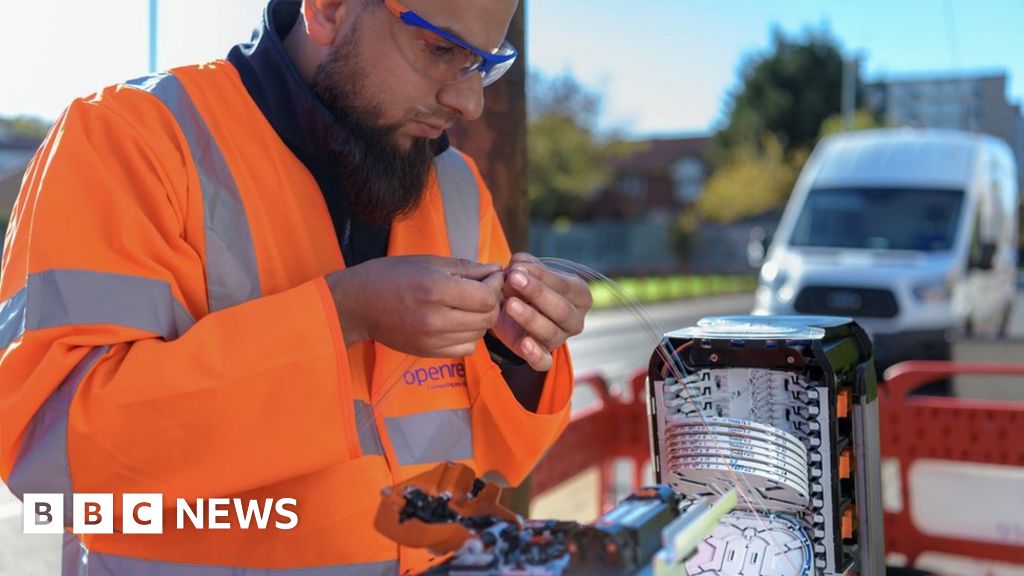
More than 40,000 workers at telecoms giant BT are to take part in two 24-hour strikes in a row over pay, their union has announced.
The Communication Workers Union (CWU), which represents the employees at BT, said that company bosses had "stuck two fingers up" to key workers.
The strikes will take place on 29 July and 1 August.
BT said it had made its best pay offer and would not be re-opening the 2022 pay review.
Those striking are largely Openreach engineers and call centre workers.
When the union voted to strike last month, BT said that it was disappointed and would "work to keep our customers and the country connected" if staff walked out.
The company has offered employees a £1,500 per year pay increase, which the union claims is effectively a pay cut considering rampant inflation.
CWU general secretary Dave Ward said: "For the first time since 1987, strike action will now commence at BT Group."
"This is not a case of an employer refusing to meet a union's demands - this is about an employer refusing to meet us whatsoever," he said.
"The serious disruption this strike may cause is entirely down to Philip Jansen and his friends, who have chosen to stick two fingers up to their own workforce."
The union said the strike action was likely to affect the roll-out of ultra-fast broadband, and could cause significant issues for those working from home.
"These are the same workers who kept the country connected during the pandemic. Without CWU members in BT Group, there would have been no home-working revolution, and vital technical infrastructure may have malfunctioned or been broken when our country most needed it."
BT said it had engaged in "exhaustive discussions" with the union, before finally deciding on a £1,500 payment which is said is its "highest pay award in more than 20 years" for workers.
BT said in a statement: "We have tried and tested processes for large scale colleague absences to minimise any disruption for our customers and these were proved during the pandemic."
From Chip War To Cloud War: The Next Frontier In Global Tech Competition
The global chip war, characterized by intense competition among nations and corporations for supremacy in semiconductor ... Read more
The High Stakes Of Tech Regulation: Security Risks And Market Dynamics
The influence of tech giants in the global economy continues to grow, raising crucial questions about how to balance sec... Read more
The Tyranny Of Instagram Interiors: Why It's Time To Break Free From Algorithm-Driven Aesthetics
Instagram has become a dominant force in shaping interior design trends, offering a seemingly endless stream of inspirat... Read more
The Data Crunch In AI: Strategies For Sustainability
Exploring solutions to the imminent exhaustion of internet data for AI training.As the artificial intelligence (AI) indu... Read more
Google Abandons Four-Year Effort To Remove Cookies From Chrome Browser
After four years of dedicated effort, Google has decided to abandon its plan to remove third-party cookies from its Chro... Read more
LinkedIn Embraces AI And Gamification To Drive User Engagement And Revenue
In an effort to tackle slowing revenue growth and enhance user engagement, LinkedIn is turning to artificial intelligenc... Read more