

BMW Cars Found To Contain More Than A Dozen Flaws
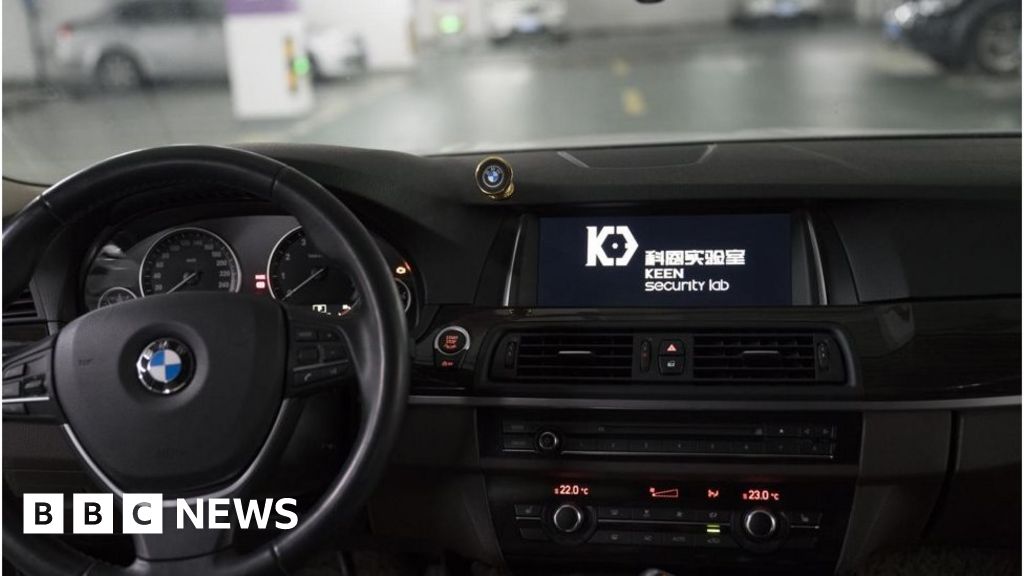
 Image copyright
Keen Lab
Image copyright
Keen Lab
BMW's car computer systems have been found to contain 14 separate flaws, according to a study by a Chinese cyber-security lab.
They could, in theory, let hackers take at least partial control of affected vehicles while in use.
The researchers identified ways to compromise the cars by plugging in infected USB sticks, as well via contactless means including Bluetooth and the vehicles' own 3G/4G data links.
BMW is working on fixes.
Its customers have been advised to keep an eye out for software updates and other counter-measures from the German company over the coming months.
Keen Lab - a division of the Chinese technology giant Tencent - began its investigation in January 2017 and shared its findings with BMW just over a year later.
It said the vulnerabilities were found mostly within three different parts of the cars' electronics:
- the internet-connected infotainment systems - which provide sat-nav guidance, radio-station playback, car diagnostic information, and in some cases voice-recognition services
- the telematics control unit - the electronics and software that allow a vehicle's location to be tracked
- the central gateway module - the information bridge that controls the flow of data between the vehicle's various electrical components
The researchers are holding back their full findings until 2019, to give BMW more time to tackle the problems.
But they described one scenario in which a rogue mobile data transmitter could be used to exploit vulnerabilities in the infotainment and telematics parts.
"Technically speaking, it's possible to launch the attack from hundreds of metres, even when the car is in the driving mode," they wrote, adding that attackers could then create "backdoors" to inject diagnostic messages that could in turn affect the driver's control.
Several models of BMW cars are said to be affected, including at least some of its i, X, 3, 5 and 7 Series designs.
BMW has verified all the reported vulnerabilities, and awarded Keen Lab with an "IT research" prize earlier this week for its work.
"We have been working closely with Tencent for months to understand and address any cyber-security issues," said a spokesman for the car manufacturer.
"It has been a collaborative relationship and an important one as this kind of security has now become such an important topic for manufacturers."
One independent expert said this approach was to be welcomed.
"Modern cars have an extraordinary amount of software running essential systems as well as infotainment systems," said Prof Alan Woodward, from the University of Surrey.
"It's not surprising that researchers are paying particular attention to such systems, nor that they find flaws.
"BMW is not the first nor will it be the last manufacturer to have such flaws in their cars."
From Chip War To Cloud War: The Next Frontier In Global Tech Competition
The global chip war, characterized by intense competition among nations and corporations for supremacy in semiconductor ... Read more
The High Stakes Of Tech Regulation: Security Risks And Market Dynamics
The influence of tech giants in the global economy continues to grow, raising crucial questions about how to balance sec... Read more
The Tyranny Of Instagram Interiors: Why It's Time To Break Free From Algorithm-Driven Aesthetics
Instagram has become a dominant force in shaping interior design trends, offering a seemingly endless stream of inspirat... Read more
The Data Crunch In AI: Strategies For Sustainability
Exploring solutions to the imminent exhaustion of internet data for AI training.As the artificial intelligence (AI) indu... Read more
Google Abandons Four-Year Effort To Remove Cookies From Chrome Browser
After four years of dedicated effort, Google has decided to abandon its plan to remove third-party cookies from its Chro... Read more
LinkedIn Embraces AI And Gamification To Drive User Engagement And Revenue
In an effort to tackle slowing revenue growth and enhance user engagement, LinkedIn is turning to artificial intelligenc... Read more