

Bias Toward Office Staff Will Cost You: Your WFH Crew Could Walk, Say Execs
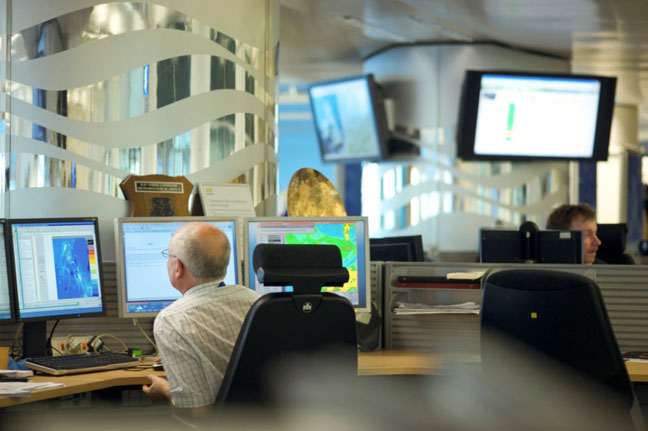
Canalys Channels Forum Businesses need to reassess the metrics they apply to determine how productive employees are in the world of hybrid work – or risk staff leaving for a corporate culture that is more flexible and trusting.
Proximity bias, when a boss assumes an underling is more effective simply because they are in the office, reared its head more frequently over the past two-plus years as people have worked from home during government lockdowns.
At the Canalys EMEA Channel Forum in Barcelona, Kirk Skaugen, executive vice president at Lenovo, said that during his recent travels in the US he encountered a CEO who was trying to head off trouble by enacting a new HR policy.
"One company that I won't [name] is actually making their employees sign an agreement that they're less productive when they work from home because they're worried that there'll be a micro inequity bias in two years when everybody that's in the office gets promoted."
Life for some in management was "easier when everyone was in the office," he added. "In Lenovo, we have flexible vacation. We have no vacation limits, some people love that, some people think it is incredibly stressful because they don't know how much to take."
Aongus Hegarty, president for international markets at Dell Technologies, said the biggest issue tech vendors and their customers are facing is the "industry-wide skills gap."
"I think you have to offer choice and flexibility," he told the panel. "I think if you go down a path of 'mandatory in the office, you must be here' etc. you are going to see attrition even in a down economy, because there are lots of companies that are going to be flexible."
- People are coming out of retirement due to cost-of-living crisis
- Soaring costs, inflation nurturing generation of 'quiet quitters' among under-30s
- This always-on culture we're in is awful. How do we stop it? Oh, sorry, hold on – just had another notification
- Does the boss want those 2 hours of your free time back? A study says fighting through crowds to office each day hurts productivity
"By being flexible and giving that choice, you will attract a much broader geographic scale. If you open up your lenses from a diversity perspective, you'll attract a much broader set of people skills, competencies, experiences."
In a related topic, Microsoft recently published research showing that 85 percent of business leaders said they have a hard time knowing if their staff are being more productive when working remotely, even though 87 percent of staff said things were fine. So a disconnect remains, leading to productivity paranoia.
Proximity bias indicates that some managers need to change with the world, said Kobi Elbaz, HP's global channels chief. "I think we need to look about how we measure performance outcomes in a different way, it's not about if you're in the office."
He claimed HP had learned to be more flexible in the pandemic.
"We allow more flexibility about where they can attend, what time they can do the task… So I think there is a journey that we all need to take also in the way we manage, and leadership processes and HR processes, in every organization."
Gustavo Möller-Hergt, chairman and CEO at Swiss-based distributor ALSO, was blisteringly honest in his assessment of the situation, saying: "Proximity was the way I learned to manage."
"I believe we don't have today the KPIs and the ways to manage [in] this hybrid world. And maybe some generations, like my generation, do not understand that this is absolutely necessary for the future." ®
From Chip War To Cloud War: The Next Frontier In Global Tech Competition
The global chip war, characterized by intense competition among nations and corporations for supremacy in semiconductor ... Read more
The High Stakes Of Tech Regulation: Security Risks And Market Dynamics
The influence of tech giants in the global economy continues to grow, raising crucial questions about how to balance sec... Read more
The Tyranny Of Instagram Interiors: Why It's Time To Break Free From Algorithm-Driven Aesthetics
Instagram has become a dominant force in shaping interior design trends, offering a seemingly endless stream of inspirat... Read more
The Data Crunch In AI: Strategies For Sustainability
Exploring solutions to the imminent exhaustion of internet data for AI training.As the artificial intelligence (AI) indu... Read more
Google Abandons Four-Year Effort To Remove Cookies From Chrome Browser
After four years of dedicated effort, Google has decided to abandon its plan to remove third-party cookies from its Chro... Read more
LinkedIn Embraces AI And Gamification To Drive User Engagement And Revenue
In an effort to tackle slowing revenue growth and enhance user engagement, LinkedIn is turning to artificial intelligenc... Read more