

'At Least' 6.5 Exabytes Lost After Contamination Hits Kioxia/WD 3D NAND Fabs
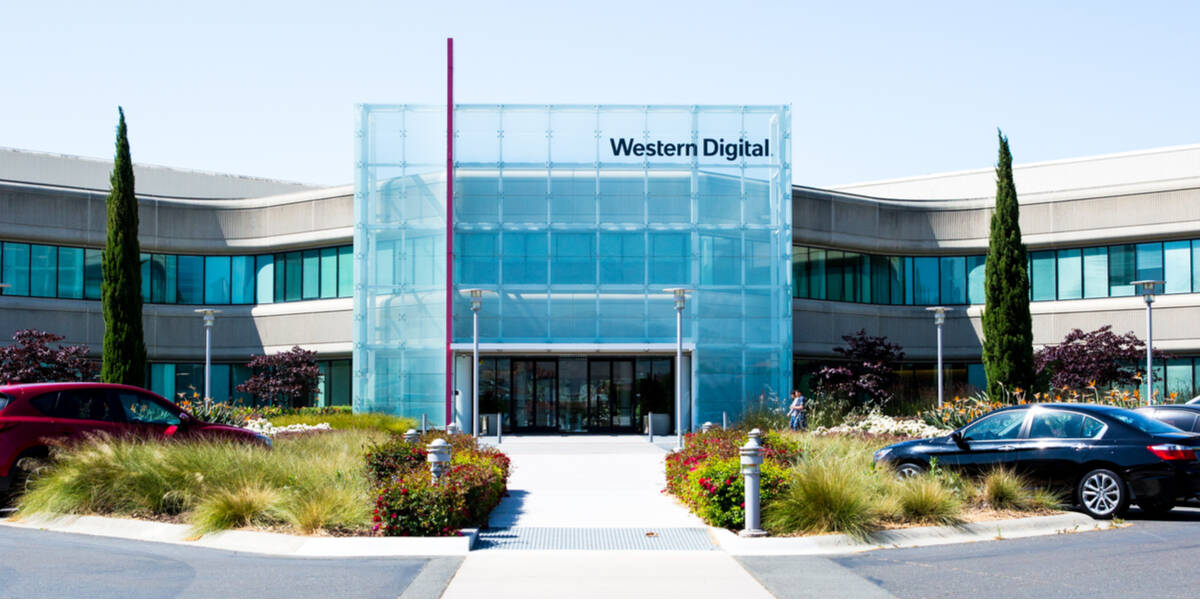
Production at Kioxia and Western Digital's 3D NAND fabrication facilities in Japan is being disrupted by chemical contamination, with at least 6.5 exabytes of capacity lost.
The two companies operate a joint venture which has six fabs at Yokkaichi in Mie province, employing some 8,000 people, and a seventh fab at Kitakami in Iwate province.
A Kioxia statement says that, in late January, a chemical used in 3D NAND production was found to be contaminated and production was affected. Measures are being taken to restore normal production. Manufacture of 2D NAND is not affected.
Western Digital Corp confirmed soon after that production operations at both the Yokkaichi and Kitakami joint venture flash fabrication facilities were affected.
WD said in a statement:
The contaminated chemical substance and its supplier were not identified.
Video showing Kioxia and WD's Yokkaichi plant
Wells Fargo analyst Aaron Rakers pointed out that WD takes about 40 per cent of the JV's output and, by extension, Kioxia will also suffer a production capacity loss, meaning a potential reduction of production output of up to 16EB.
WD shipped around 24EB of NAND in 2021's fourth quarter, meaning it's potentially lost the equivalent of 27 per cent of that quarter's output. Clearly its NAND revenues in the current quarter will be reduced by this production loss and the same will be true for Kioxia.
Rakers estimated NAND demand last quarter was about 160EB. Assuming that demand level carries through to the current quarter, up to 10 per cent of that demand won't be satisfied and 3D NAND prices will probably rise as a result.
- Dear chip designers, if you're struggling to get components made, try 28nm. Supply set to overtake demand
- Toshiba decides Twoshiba's the best strategy, cans plan to create Threeshiba crowd
- As Samsung breaks ground on new EUV semi foundry, SK Hynix mulls expanding its logic and contract fab businesses
- Party on Semiconductor Street as worldwide 2021 revenues top record half a trillion dollars
Before this incident, research house TrendForce had forecast that the NAND flash market would see a slight oversupply the entire year and average price from Q1 to Q2 would face downward pressure. "The impact of WDC's material contamination issue is significant and Samsung's experience during the previous lockdown of Xi'an due to the pandemic has also retarded the magnitude of the NAND flash price slump," it said.
In addition, according to TrendForce, the combined WDC/Kioxia NAND Flash market share in the 3Q21 was as high as 32.5 per cent.
The analyst suggested: "The consequences of this latest incident may push the price of NAND Flash in Q2 to spike 5~10 per cent."
If the affected chemical was a gas or liquid then tanks used to store it, and pipes used to deliver it around the plant and into machines, will have to be emptied and cleaned, and then tanks restocked. The machines themselves will have to be cleaned. This will take time.
Rakers pointed out: "It is unclear to what extent the chemical impacts could have affected the fab manufacturing equipment."
In other words, the lost production capacity could be greater than 16EB and the period needed to regain normal operations longer than otherwise. ®
From Chip War To Cloud War: The Next Frontier In Global Tech Competition
The global chip war, characterized by intense competition among nations and corporations for supremacy in semiconductor ... Read more
The High Stakes Of Tech Regulation: Security Risks And Market Dynamics
The influence of tech giants in the global economy continues to grow, raising crucial questions about how to balance sec... Read more
The Tyranny Of Instagram Interiors: Why It's Time To Break Free From Algorithm-Driven Aesthetics
Instagram has become a dominant force in shaping interior design trends, offering a seemingly endless stream of inspirat... Read more
The Data Crunch In AI: Strategies For Sustainability
Exploring solutions to the imminent exhaustion of internet data for AI training.As the artificial intelligence (AI) indu... Read more
Google Abandons Four-Year Effort To Remove Cookies From Chrome Browser
After four years of dedicated effort, Google has decided to abandon its plan to remove third-party cookies from its Chro... Read more
LinkedIn Embraces AI And Gamification To Drive User Engagement And Revenue
In an effort to tackle slowing revenue growth and enhance user engagement, LinkedIn is turning to artificial intelligenc... Read more