

At-home Food Selling Concerning, Says Food Standards Agency
By Dougal Shaw
Business reporter, BBC News
image copyrightGetty Images & Nextdoor
There has been a "concerning" rise in food businesses operating out of people's homes during lockdown, according to the food safety watchdog.
Many of them are selling food through social media, putting further pressure on a hygiene inspection system that is under strain because of the crisis.
And other experts are also worried.
"Little food businesses are popping up like mushrooms in lockdown," said Julie Barratt from the Chartered Institute of Environmental Health (CIEH).
"There are rank outsiders operating off the radar, who think, 'Oh, my mum can cook', and confuse cooking with catering," she added. They sell to locals on apps such as Whatsapp, Instagram and Nextdoor.
Many are failing to register as food businesses, meaning their hygiene arrangements are not checked by local authorities.
But even those that do register are often not getting an inspection - despite new businesses usually being a priority - because the system is struggling to keep up during the pandemic.
Hygiene inspections ceased completely during the first lockdown and since then a scaled-back operation has focused on high-risk cases.
Local authorities are using video calls in a bid to clear the backlog. They allow basic issues to be resolved and reduce the time environmental health officers need to spend on-site. They could be used, for example, to ensure there is a separate sink for washing hands.
But these video calls can never be as effective as in-person, surprise inspections, says Ms Barratt.
They are unable to reveal things such as ingredients past their use-by date, or rat droppings under the cooker.
Indeed, a challenge posed by the new legion of at-home businesses is that even if a physical inspection is required, a 24-hour warning has to be given because it is a private address, so the surprise element is lost.
Resources 'stretched'
About 44% of new food businesses started since the first lockdown are home-based, according to a new centralised online registration system used by nearly 200 local authorities, the Food Standards Agency (FSA) has revealed.
The full picture will be clearer when all local authorities report their registration figures in the new financial year in April.
"The growth of at-home food businesses is a concern," the FSA said.
"Local authority resources are already stretched and many are finding it difficult to keep on top of the workload [these at-home food businesses] are generating," says Michael Jackson, the FSA's head of regulatory compliance.
Some people are starting food businesses from their home because they have lost work and need to generate income - including professional chefs who have been hit by the closure of restaurants.
Others are on furlough and have time to set up "side hustles". Takeaway eating and the idea of cooking for neighbours in need has also become more common in lockdown.
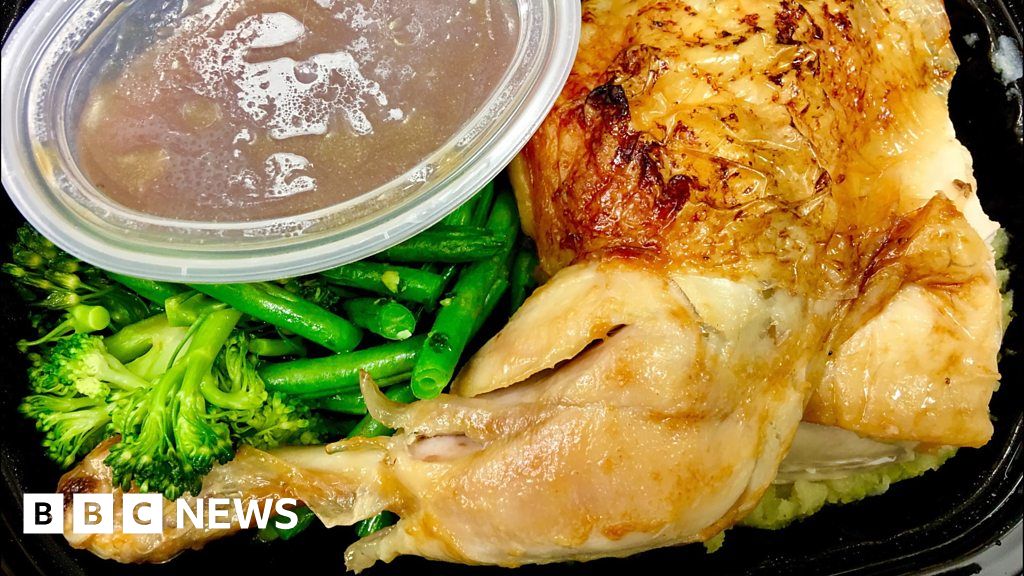
As well as social media platforms, websites such as Olio and Cook My Grub also now allow this new army of at-home food entrepreneurs to find customers, selling everything from cakes to Sunday roasts.
Inspection rules
Every new food business must register before it starts selling food. Once registered with the local authority, an environmental health officer can visit in person and this eventually leads to an official food hygiene rating of 0-5 (or pass-fail in Scotland). The business can still trade prior to gaining its rating.
However, the rating is a vital tool for customers to gauge the safety of an establishment and can be a selling point.
Indeed, many new at-home food businesses that are well-run and take hygiene seriously are frustrated that they haven't been able to secure a rating yet, due to the backlog.
The FSA described the situation with inspections as "at the edge of our risk appetite" back in early December, before the current lockdown was announced.
There have been no reported outbreaks of food poisoning connected to new at-home businesses so far. However, the FSA wants the public to be aware of the risks.
"Our advice to people when ordering food online is to check that the business has a food hygiene rating and choose only those with a rating of 3 or above, this can be checked on our website," says Mr Jackson of the FSA.
"If a consumer has any doubts about a food seller or a food product, they should report them to the local authority," he adds.
"Where sellers do not follow the rules, they may be fined, imprisoned for up to two years, or both."
However, others think the system itself needs an overhaul to protect the public.
The law should be changed so that food businesses of any type cannot trade until they have been inspected and rated, says the CIEH's Ms Barratt.
You can follow Dougal on Twitter: @dougalshawbbc
From Chip War To Cloud War: The Next Frontier In Global Tech Competition
The global chip war, characterized by intense competition among nations and corporations for supremacy in semiconductor ... Read more
The High Stakes Of Tech Regulation: Security Risks And Market Dynamics
The influence of tech giants in the global economy continues to grow, raising crucial questions about how to balance sec... Read more
The Tyranny Of Instagram Interiors: Why It's Time To Break Free From Algorithm-Driven Aesthetics
Instagram has become a dominant force in shaping interior design trends, offering a seemingly endless stream of inspirat... Read more
The Data Crunch In AI: Strategies For Sustainability
Exploring solutions to the imminent exhaustion of internet data for AI training.As the artificial intelligence (AI) indu... Read more
Google Abandons Four-Year Effort To Remove Cookies From Chrome Browser
After four years of dedicated effort, Google has decided to abandon its plan to remove third-party cookies from its Chro... Read more
LinkedIn Embraces AI And Gamification To Drive User Engagement And Revenue
In an effort to tackle slowing revenue growth and enhance user engagement, LinkedIn is turning to artificial intelligenc... Read more