

Asia Stock Markets Slide On US Interest Rate Fears
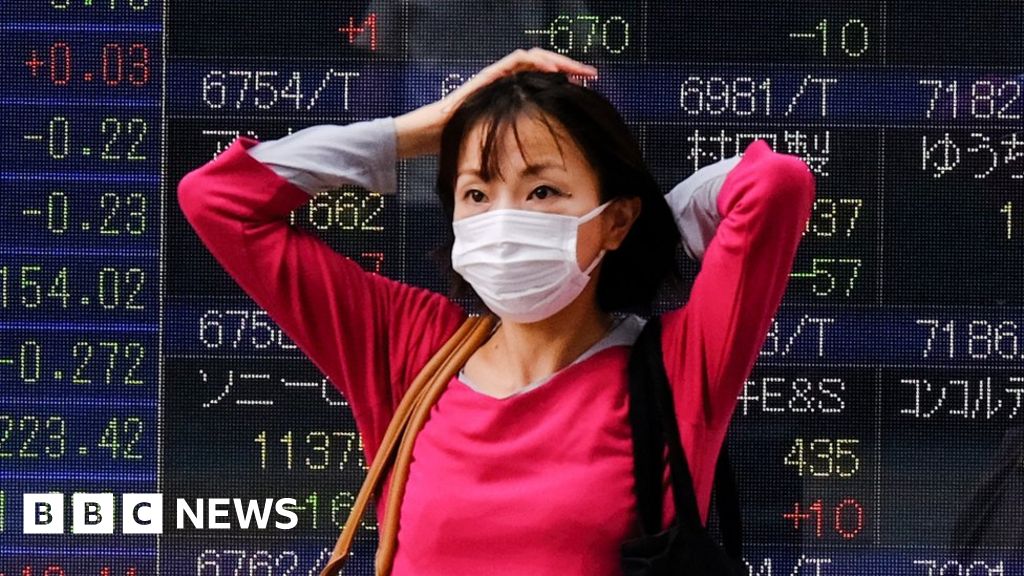
Shares in Asia have fallen after the chairman of the US central bank said it would continue to raise interest rates to tackle soaring prices.
Jerome Powell warned that the Federal Reserve's policies will cause "some pain to households and businesses".
Higher interest rates make borrowing more expensive for individuals and companies, which could slow economic growth as well as inflation.
Japan's Nikkei 225 index closed 2.7% lower on Monday in Tokyo.
Elsewhere in the Asia-Pacific region, the Kospi in South Korea and Australia's ASX 200 were both down by around 2%, while the Hang Seng in Hong Kong was 0.8% lower.
That came after the main share indexes in New York each fell by more than 3% on Friday after Mr Powell's remarks.
During a highly-anticipated speech at a conference in Jackson Hole, Wyoming, Mr Powell said the Federal Reserve was likely to continue raising interest rates in the coming months and could keep them high "for some time".
He said that, while the hikes would come at a cost to American households and businesses, "a failure to restore price stability would mean far greater pain".
Inflation in the world's largest economy by gross domestic product (GDP) is at a four-decade high.
"Fed Chair Powell went for the jugular, conveying (an) unflinching assault on inflation," Vishnu Varathan, head of economics and strategy at Mizuho Bank, said in a note.
"Justification for this unrelentingly hawkish posture was as plain as it was unequivocal," he added.
Investors are also concerned that the Chinese economy is slowing, Dan Wang, chief economist at Hang Seng Bank China, told the BBC.
"The economic perspective has worsened in China due to prolonged Covid control, which means further policy rate cuts have to take place. Domestic demand is too weak without further rate cuts in China," she said.
China's central bank cut its lending rates earlier this month after economic growth slowed sharply in the second quarter of this year.
Power shortages in the Sichuan province have also hit major manufacturers of cars and smartphones in China.
Over the weekend, official data showed that profits of China industrial firms had fallen by 1.1% from January to July, from a year earlier.
A crisis in the country's property market is also proving to be a major challenge to government efforts to keep the economy growing.
From Chip War To Cloud War: The Next Frontier In Global Tech Competition
The global chip war, characterized by intense competition among nations and corporations for supremacy in semiconductor ... Read more
The High Stakes Of Tech Regulation: Security Risks And Market Dynamics
The influence of tech giants in the global economy continues to grow, raising crucial questions about how to balance sec... Read more
The Tyranny Of Instagram Interiors: Why It's Time To Break Free From Algorithm-Driven Aesthetics
Instagram has become a dominant force in shaping interior design trends, offering a seemingly endless stream of inspirat... Read more
The Data Crunch In AI: Strategies For Sustainability
Exploring solutions to the imminent exhaustion of internet data for AI training.As the artificial intelligence (AI) indu... Read more
Google Abandons Four-Year Effort To Remove Cookies From Chrome Browser
After four years of dedicated effort, Google has decided to abandon its plan to remove third-party cookies from its Chro... Read more
LinkedIn Embraces AI And Gamification To Drive User Engagement And Revenue
In an effort to tackle slowing revenue growth and enhance user engagement, LinkedIn is turning to artificial intelligenc... Read more